-
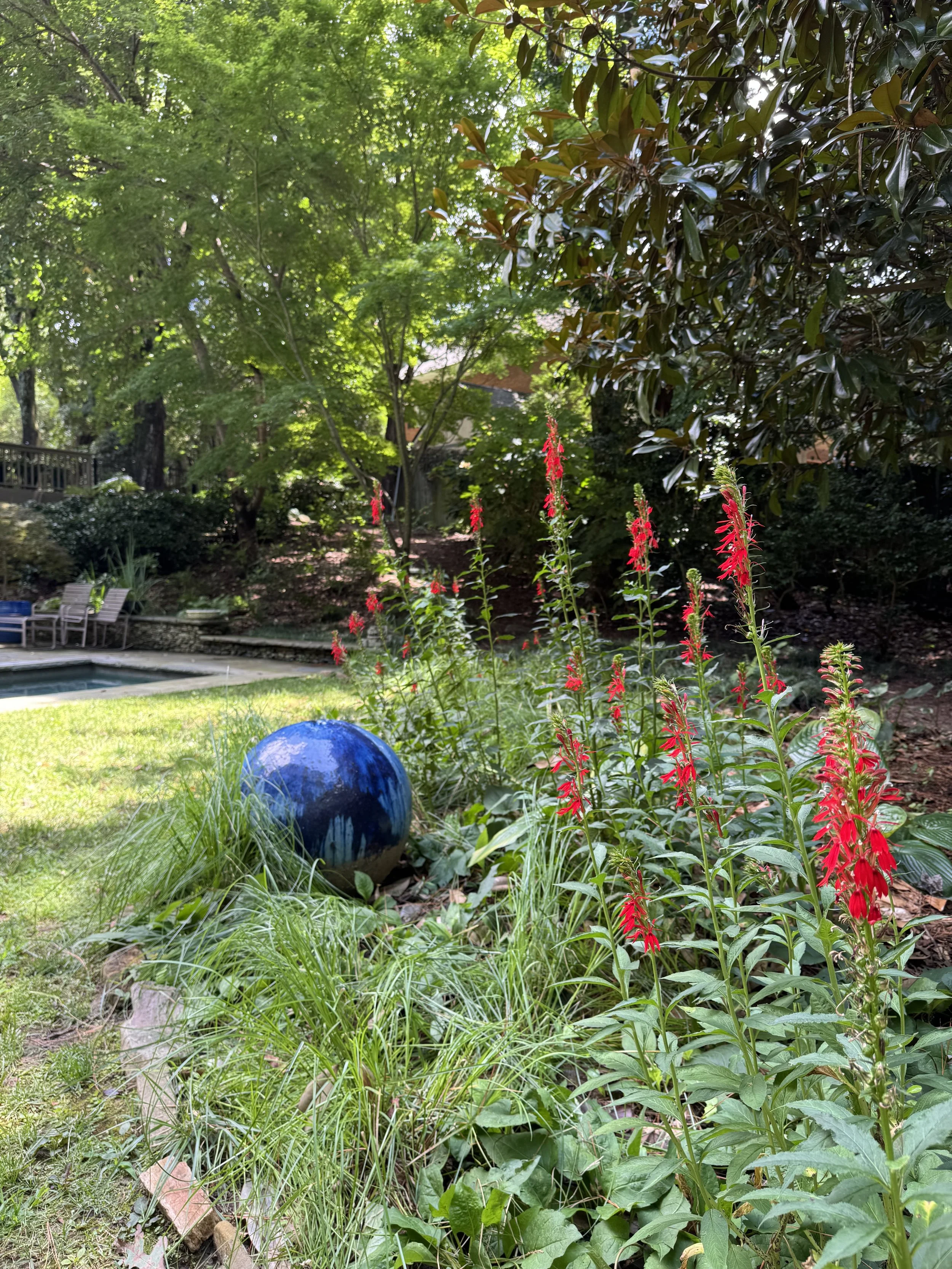
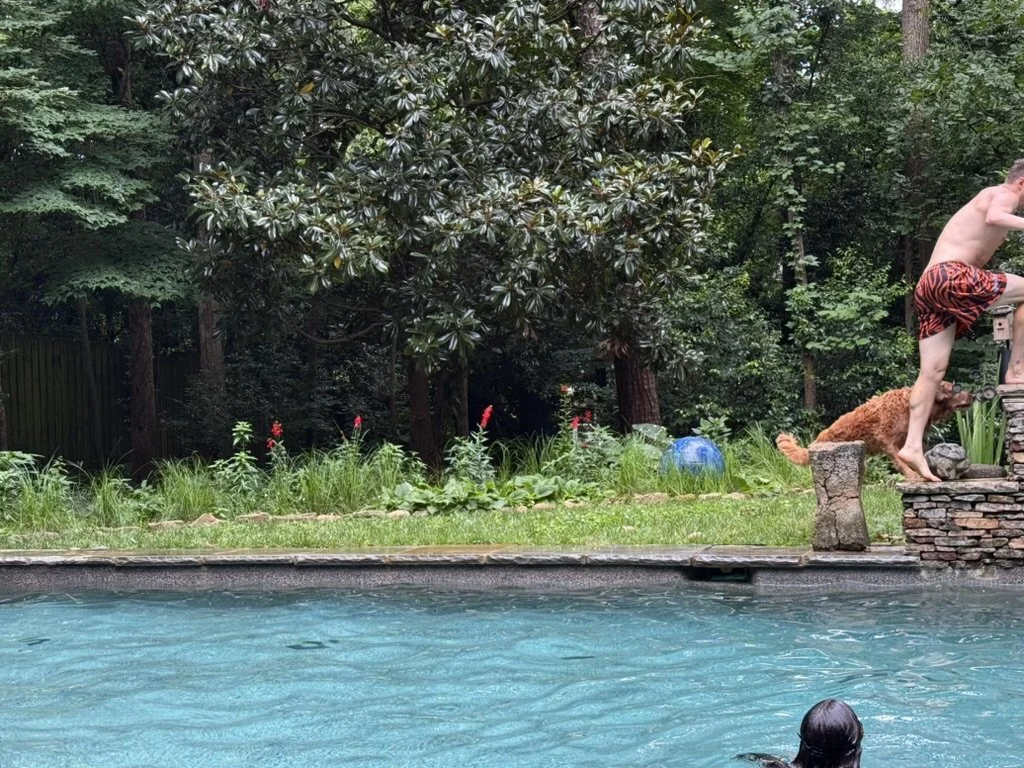
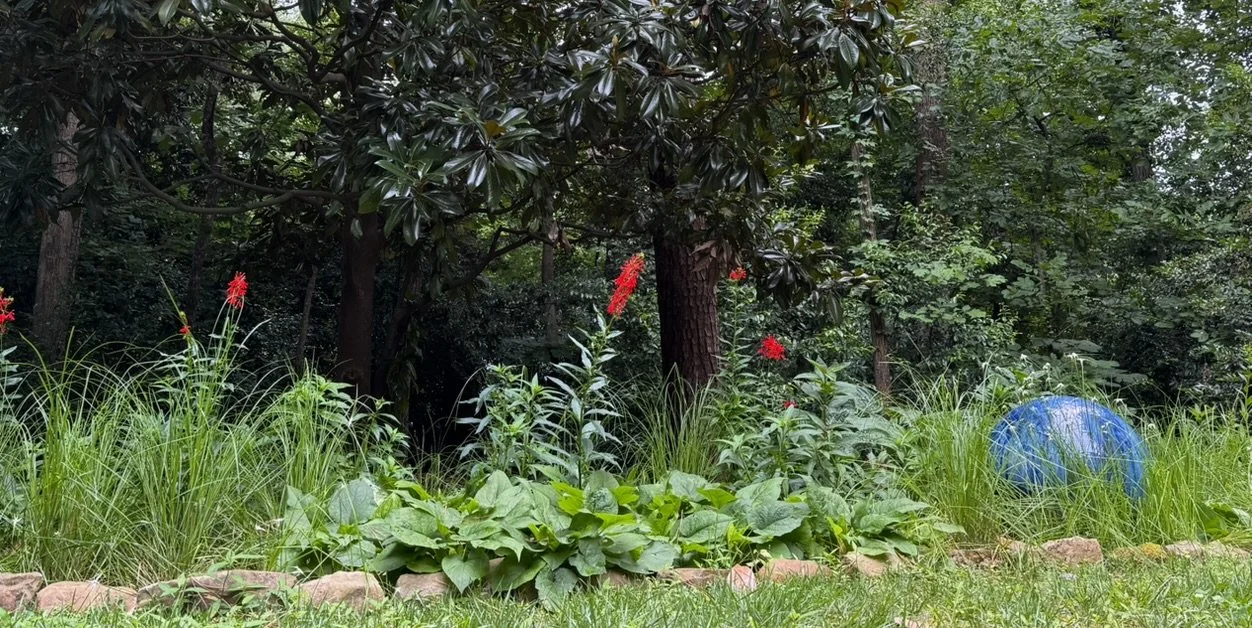
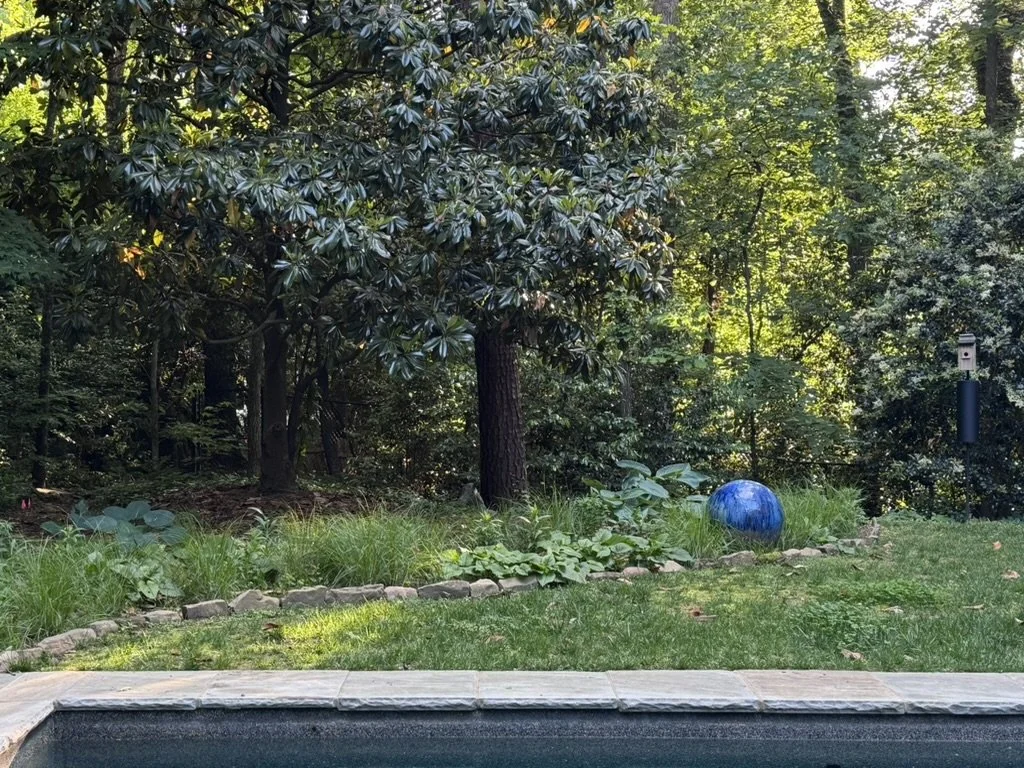
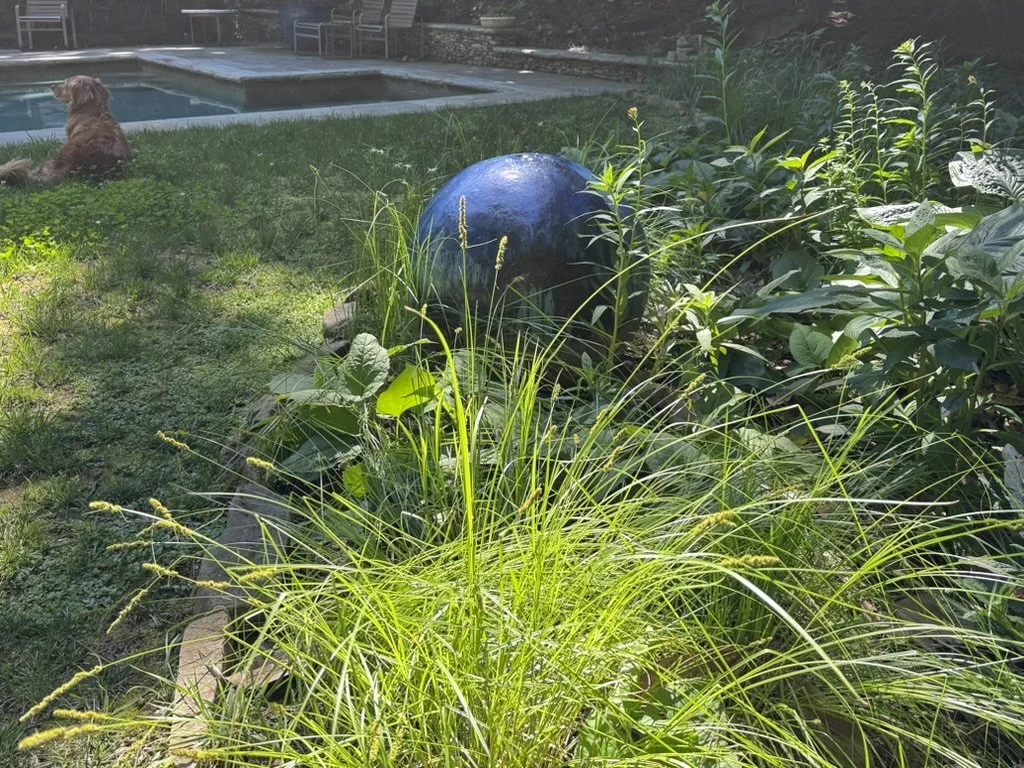
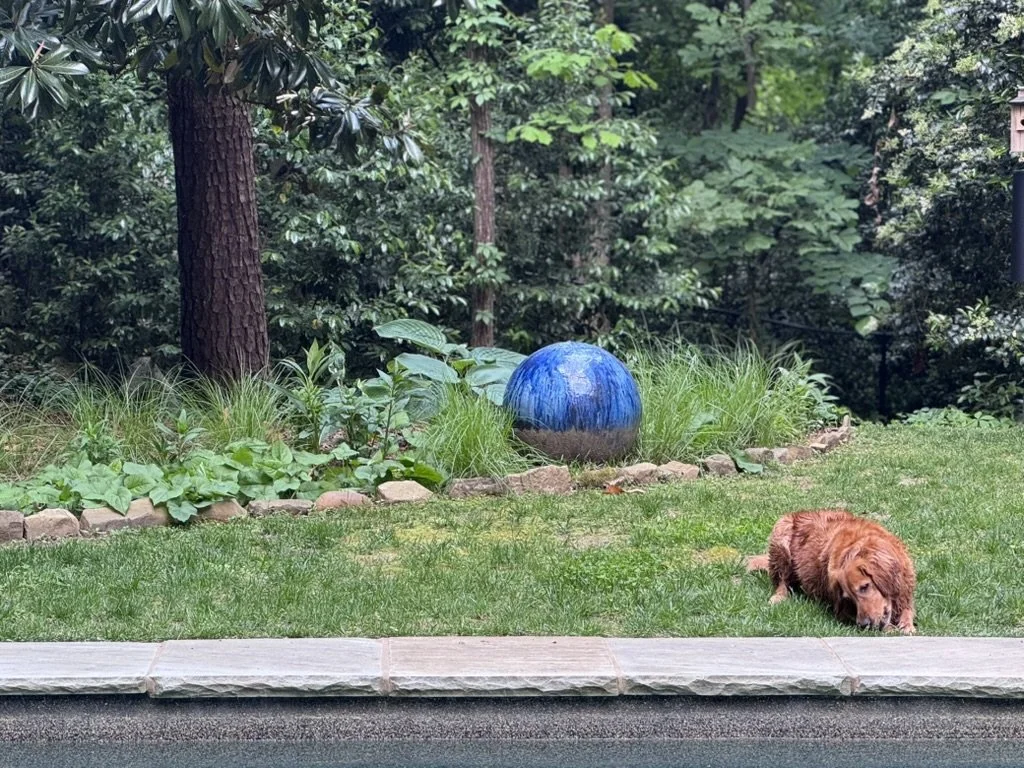
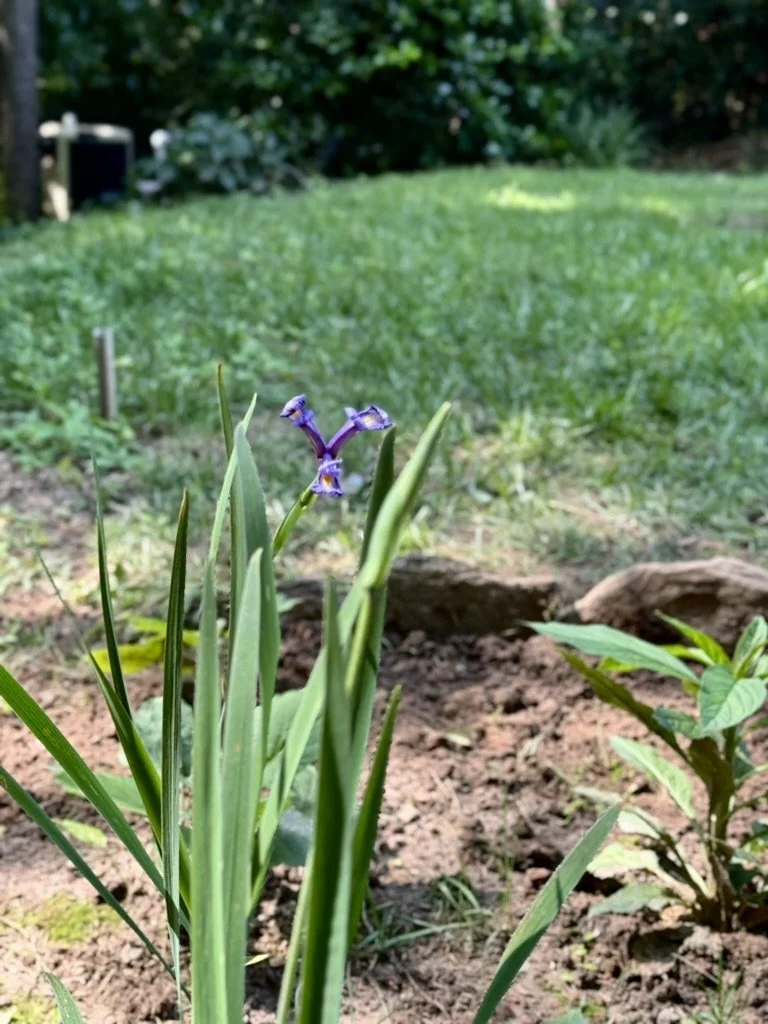
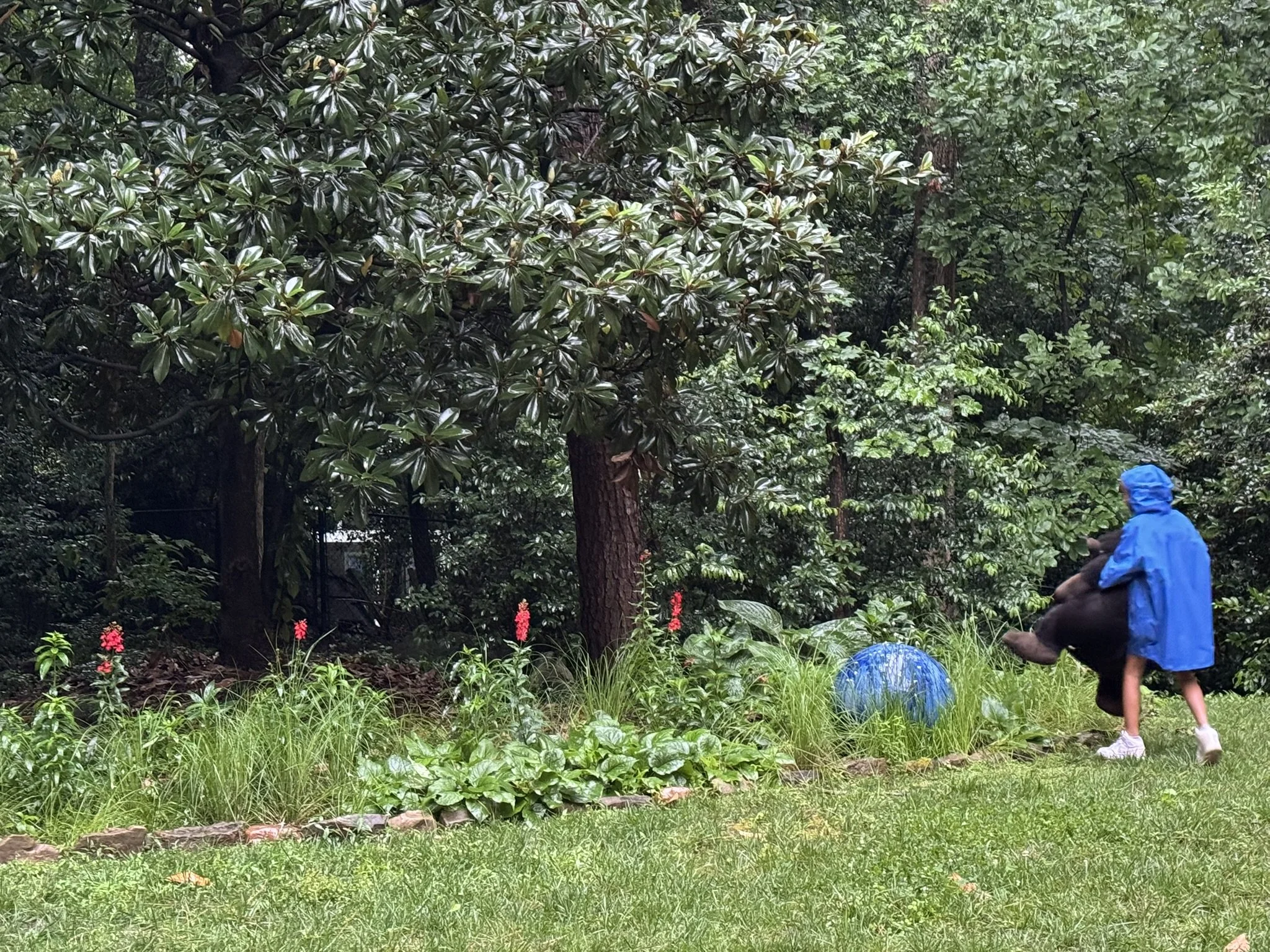
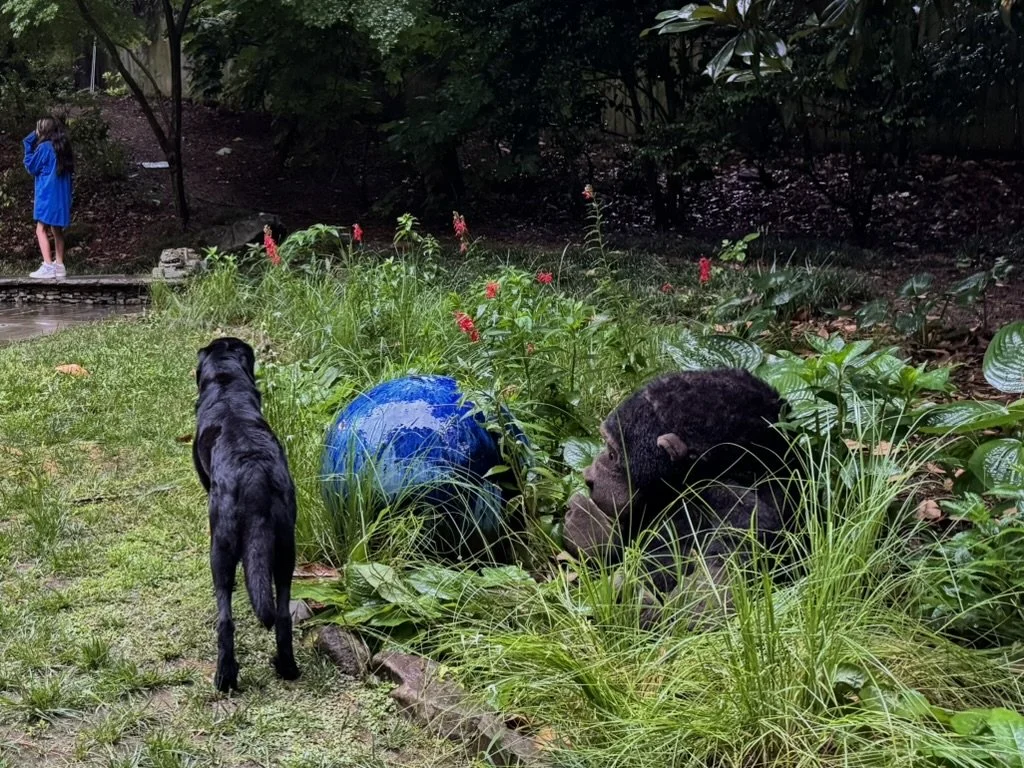
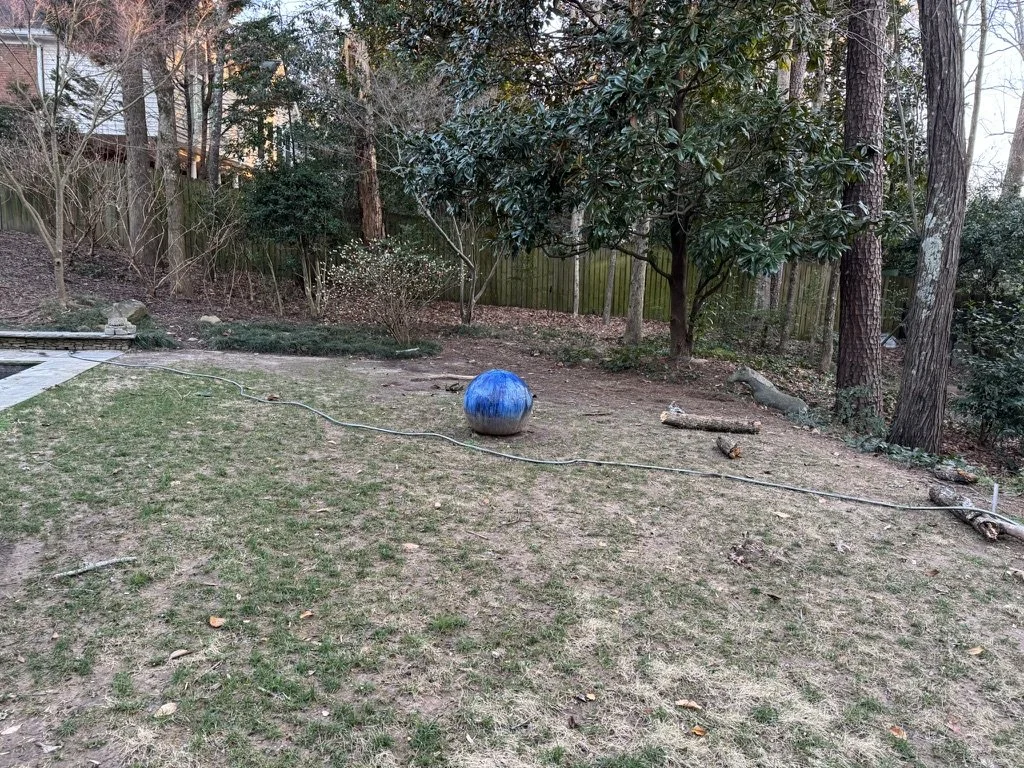
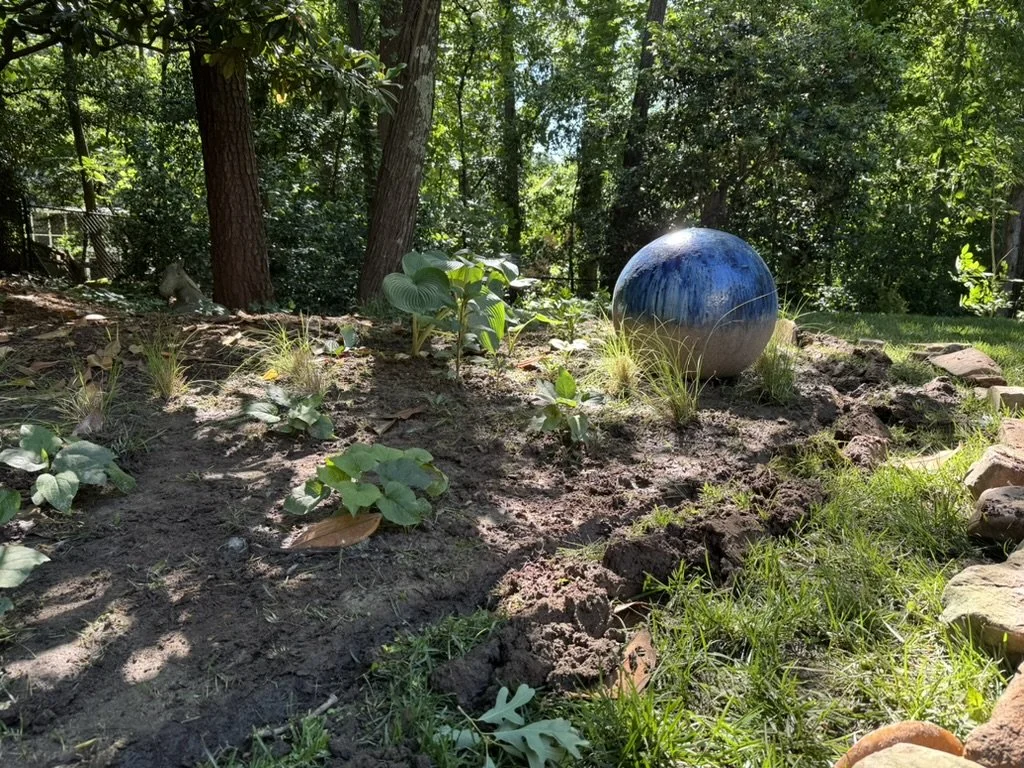
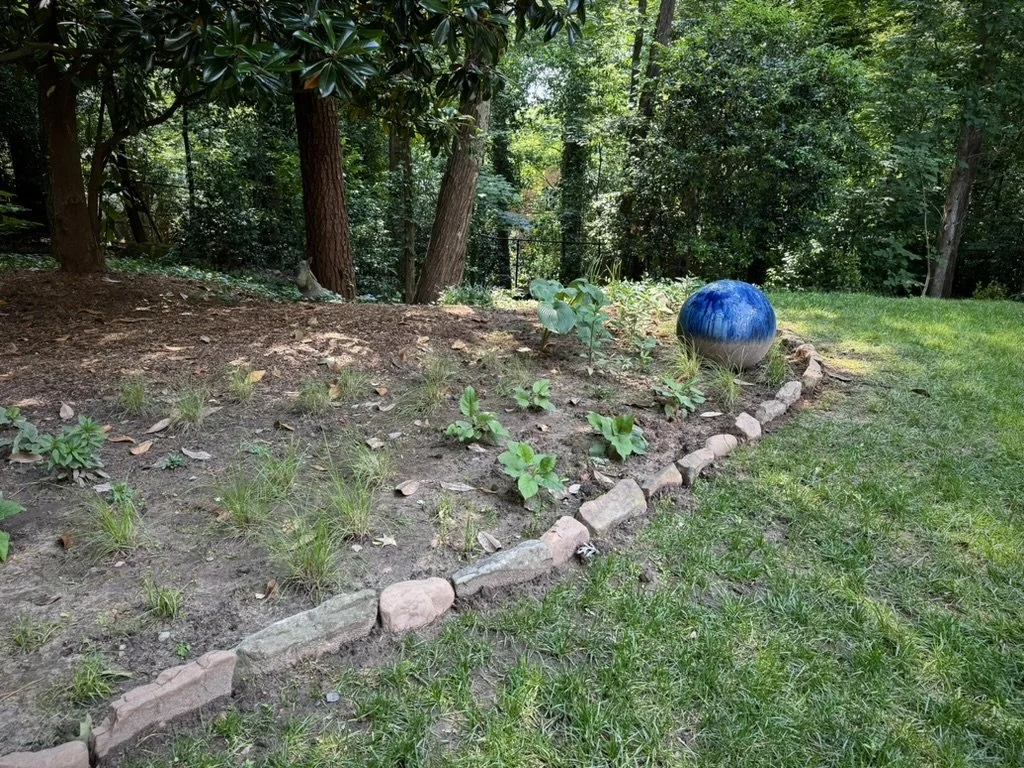
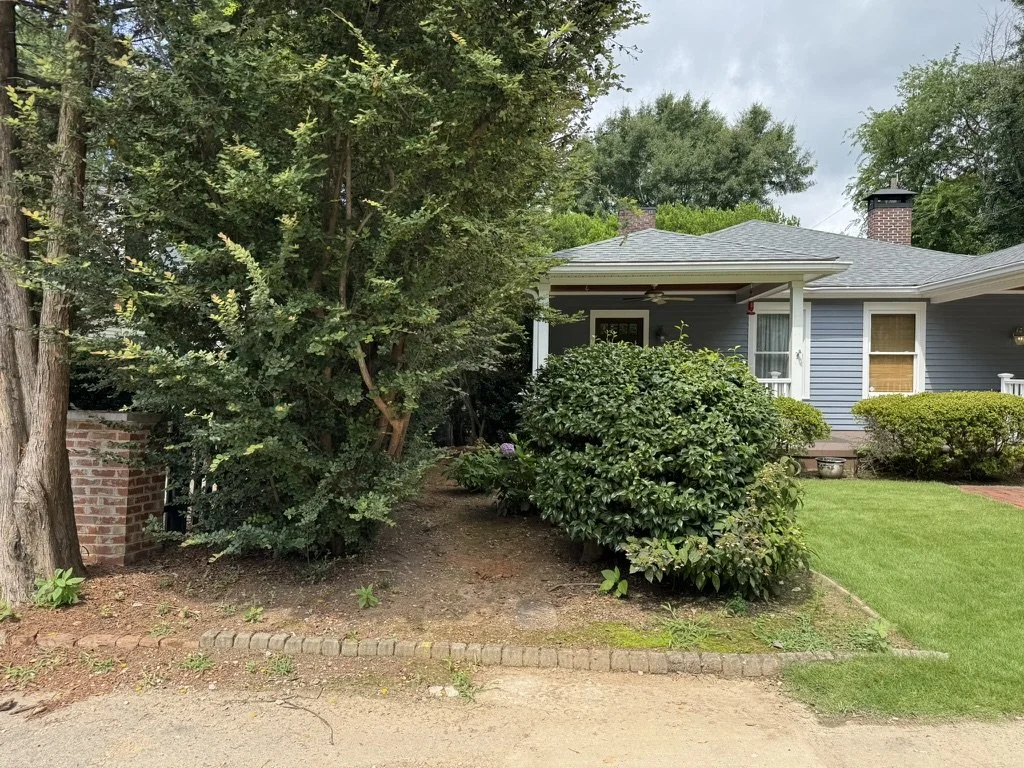
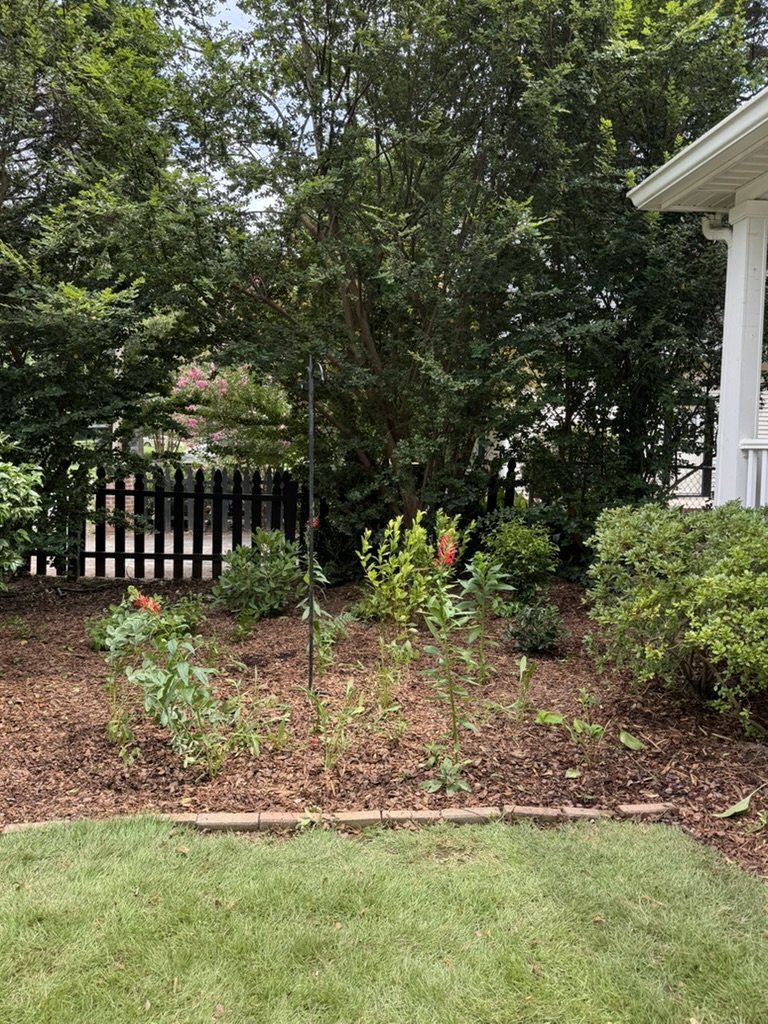
This site had been challenging for decades. No plants would establish, the bed flooded in rain, and the soil cracked in dry weather. A French drain didn’t help, and the only plants that seemed to tolerate the area were liriope.
But the dirt reminded me of the banks of the Chattahoochee, silt with a little sand sitting on top of clay. I thought of river scours and of riparian floodplains that sometimes dry out and sometimes get inundated. There’s a fair amount of shade from the tree canopy, but this is fine. There are plenty of places in the Southeastern Piedmont with shade and occasional flooding.
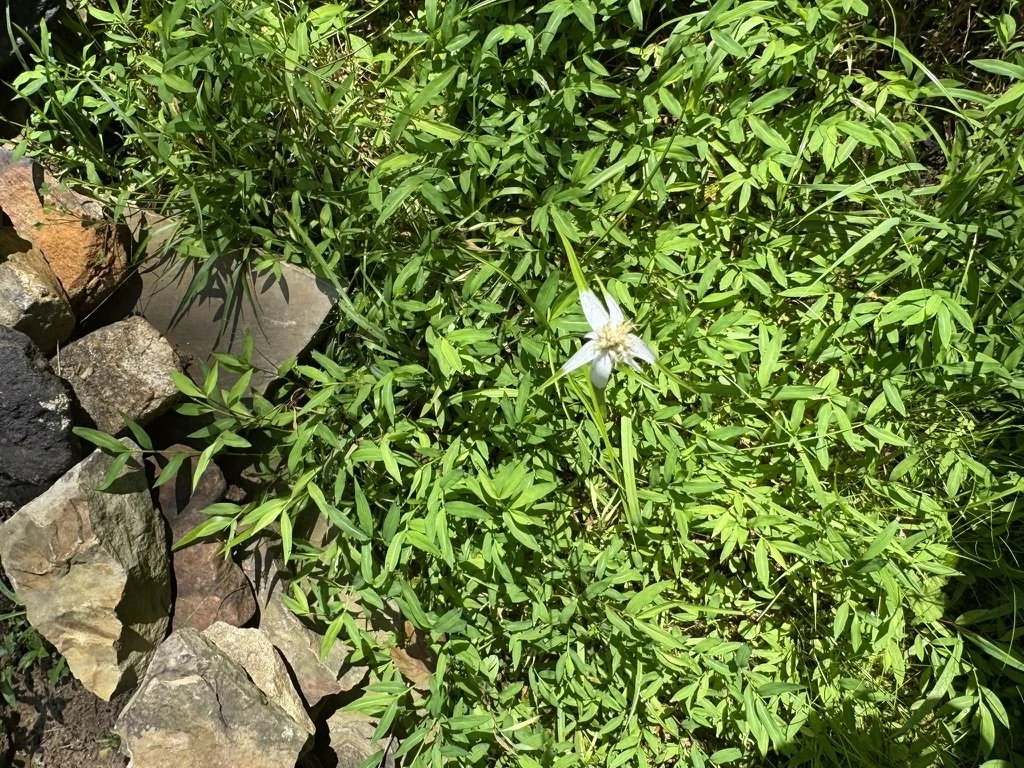
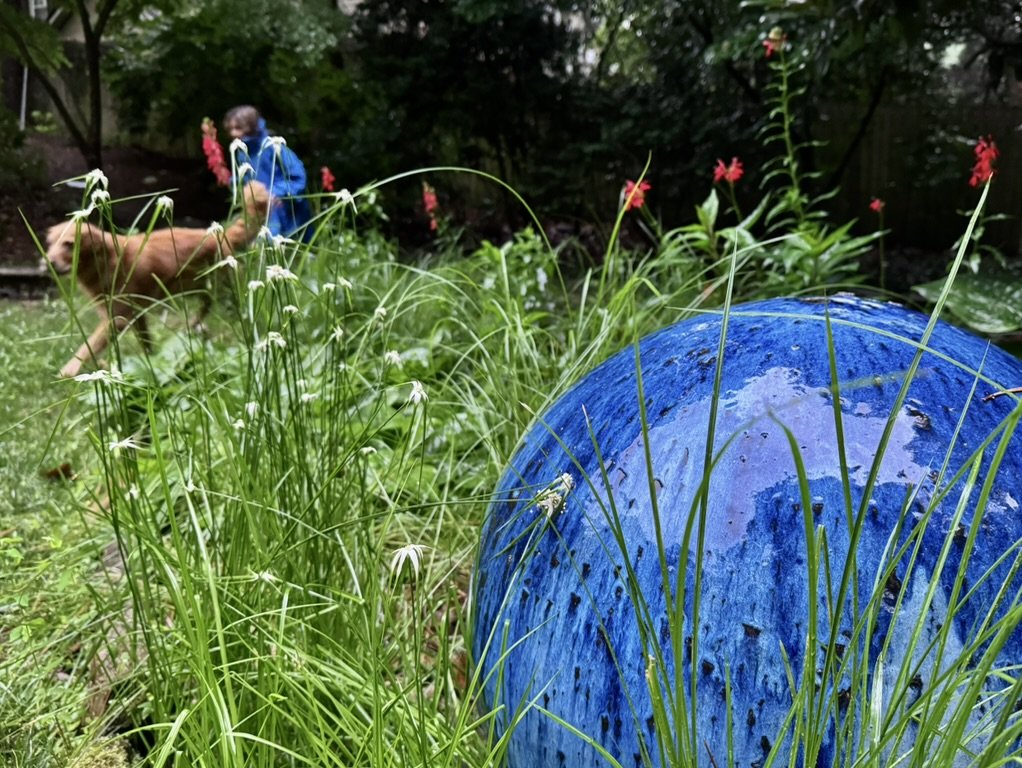
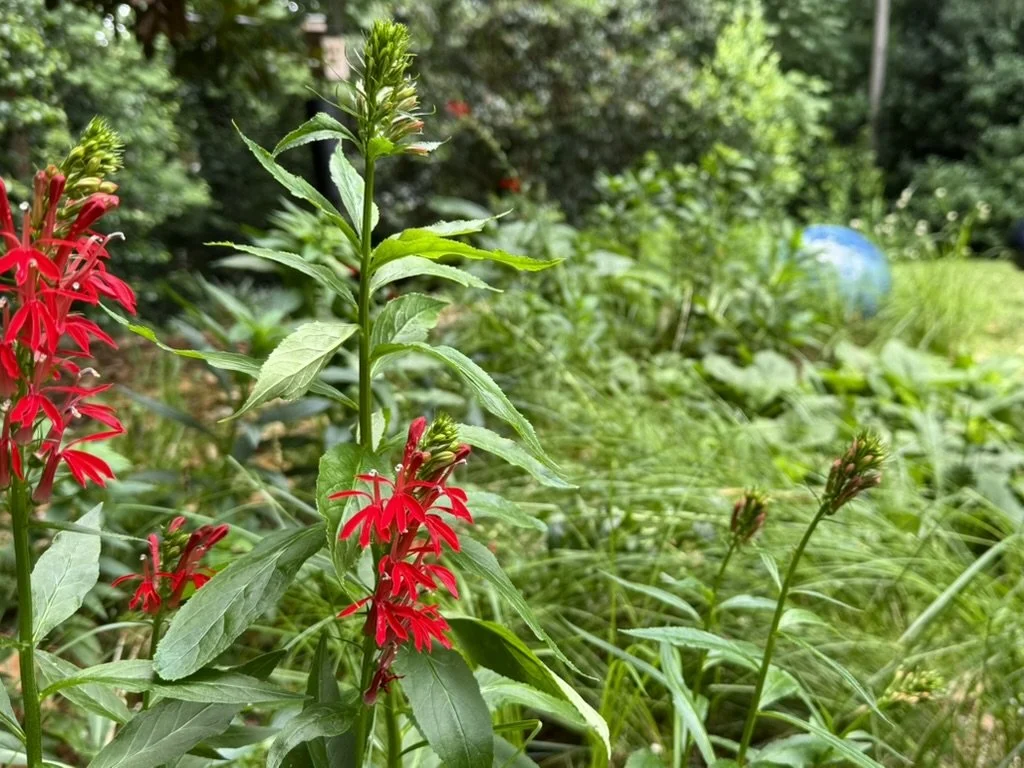
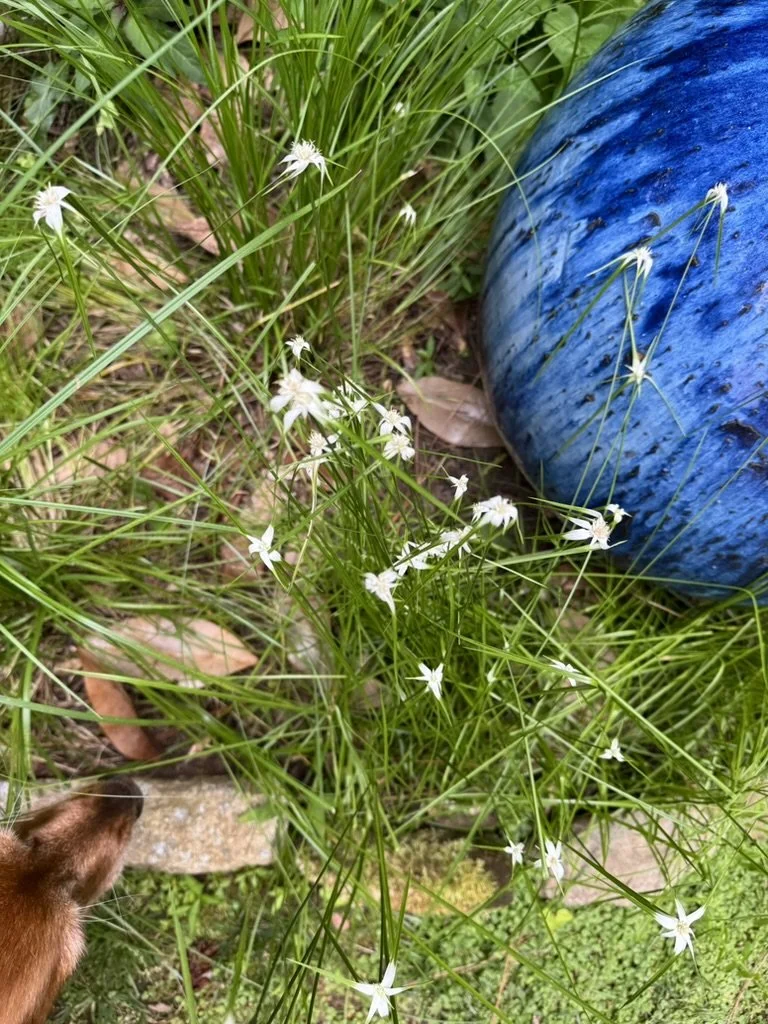
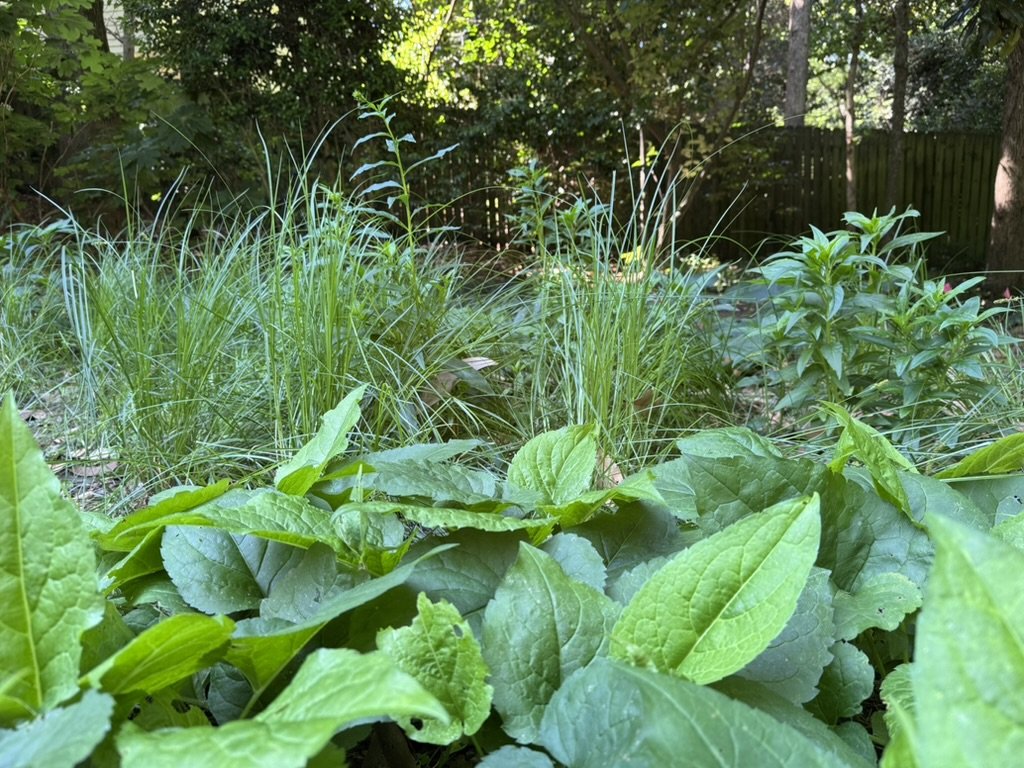
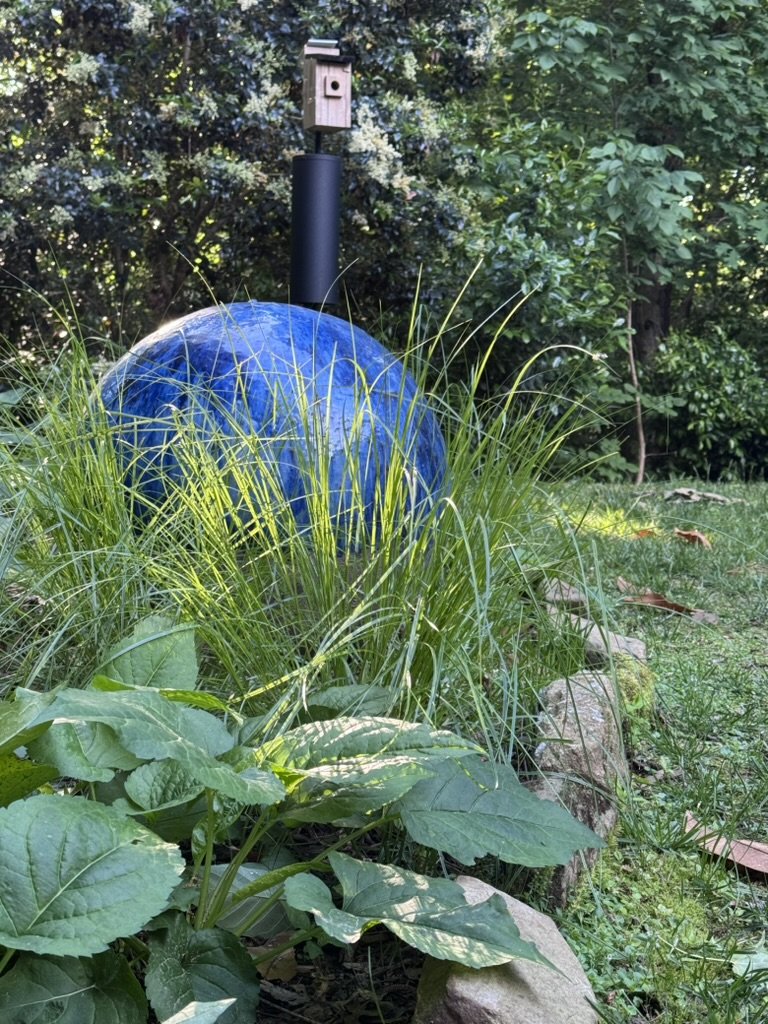
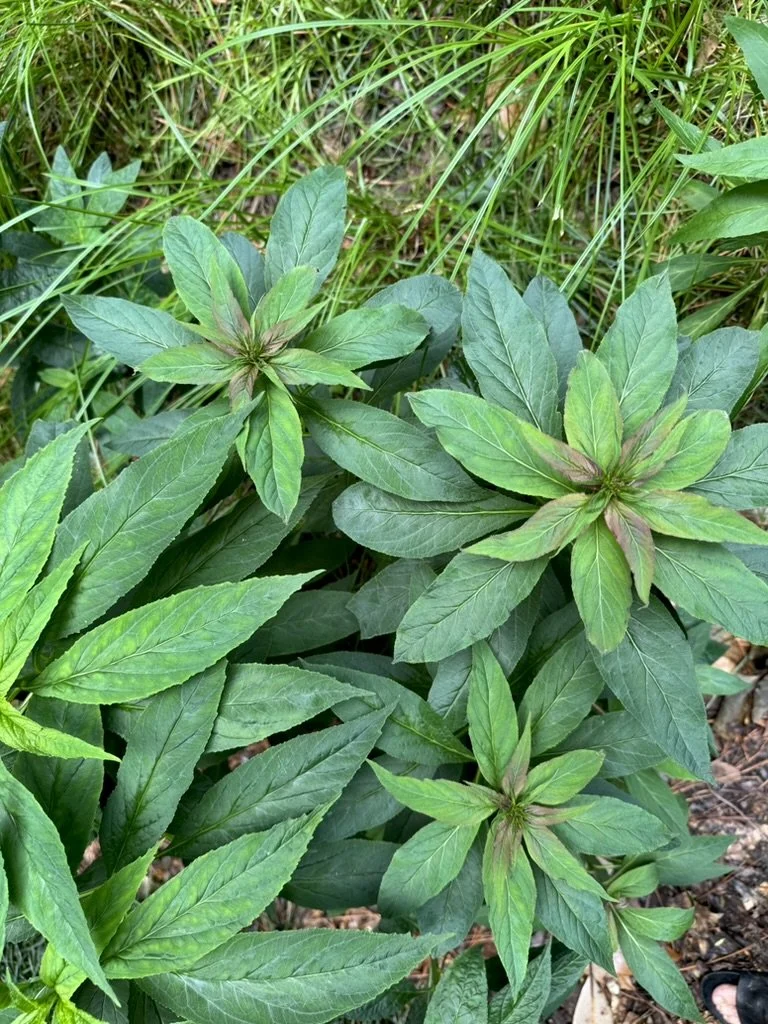
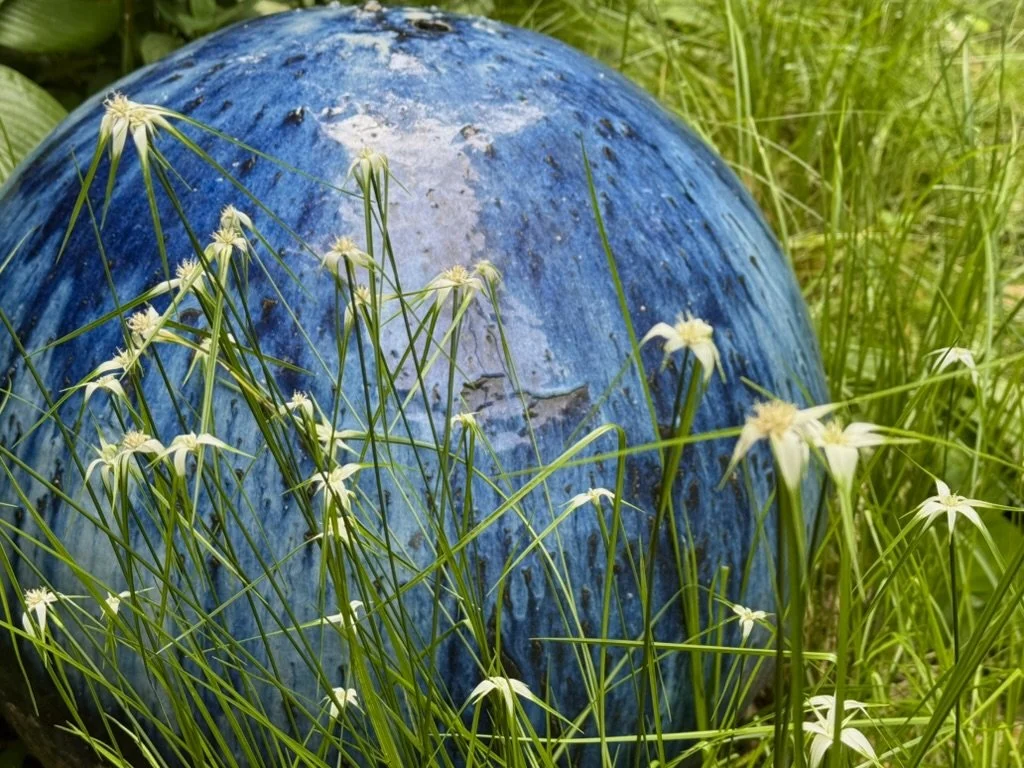
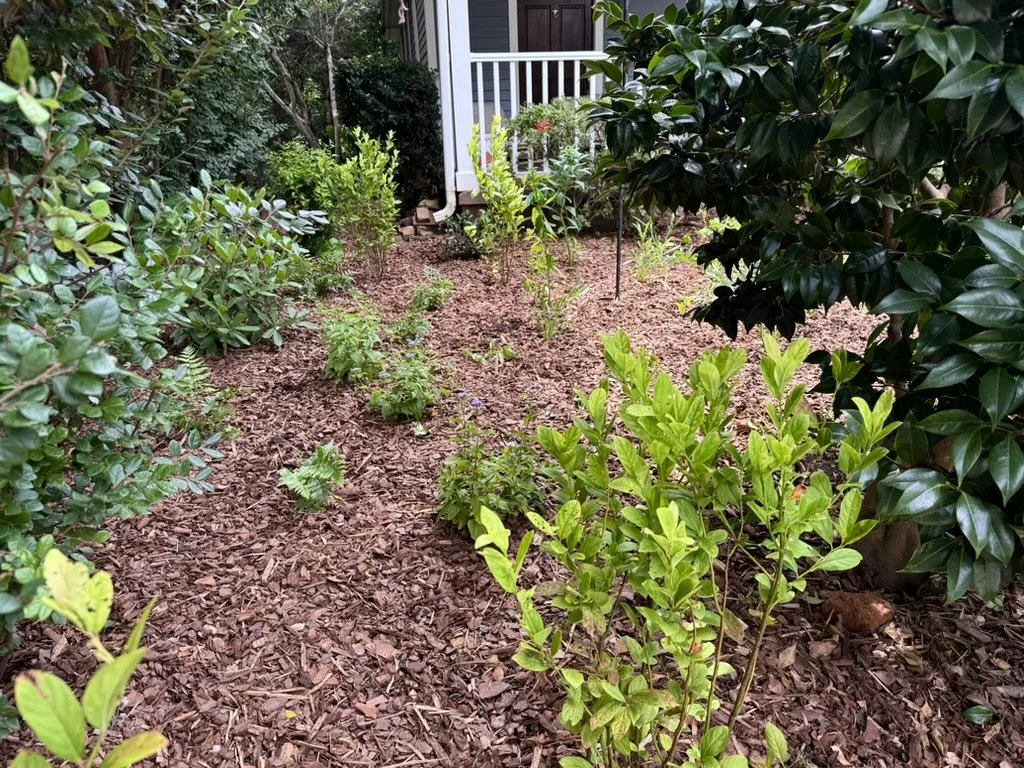
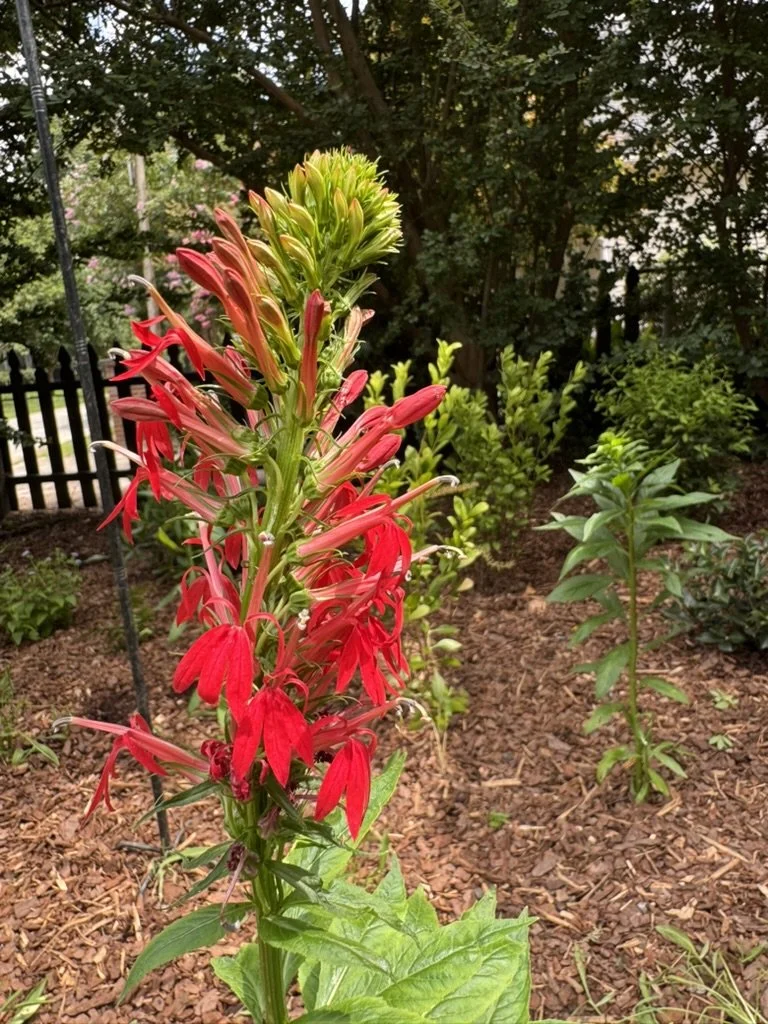
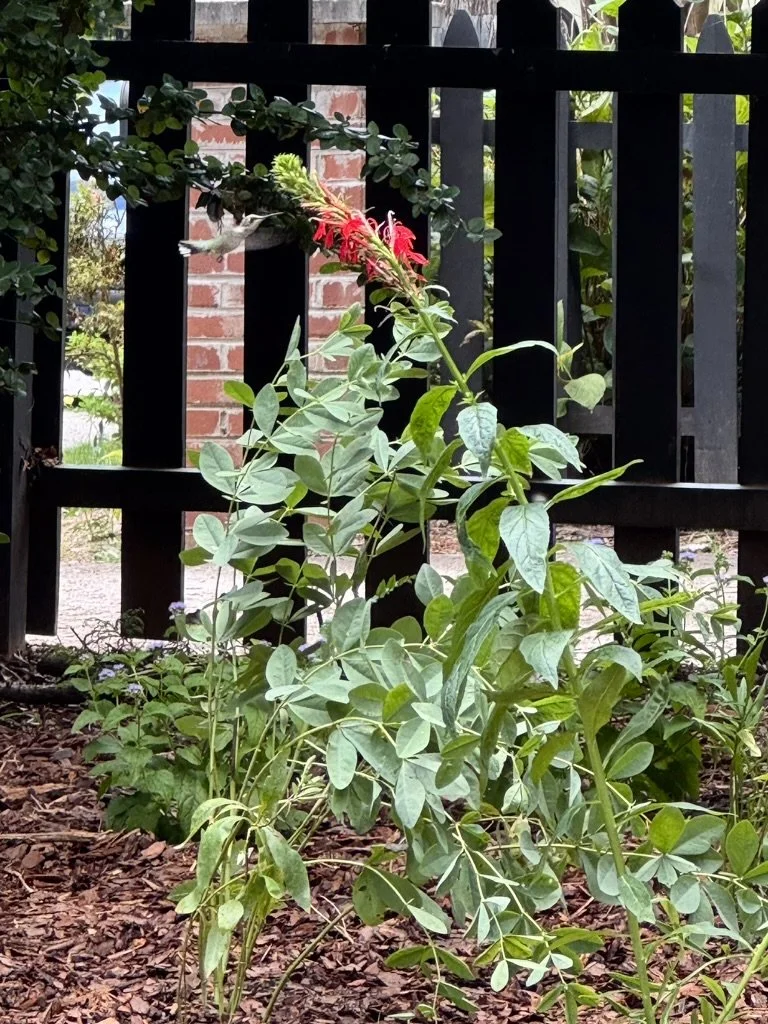
The plant palette is minimal. Fast-growing cardinal flower only needs a couple hours of light to bloom. Fox sedge thrives in a range of moisture and shade conditions. I’ve heard white-top sedge called a “ditch plant” because it grows spontaneously in the ditches that line roadsides. This is ideal: it’s tough, likes a range of conditions, and has pointy, white bracts that look like wily flower petals. Lastly, I borrowed big leaf aster from North Georgia for its voluminous foliage and rhizomes that spread, filling in gaps.
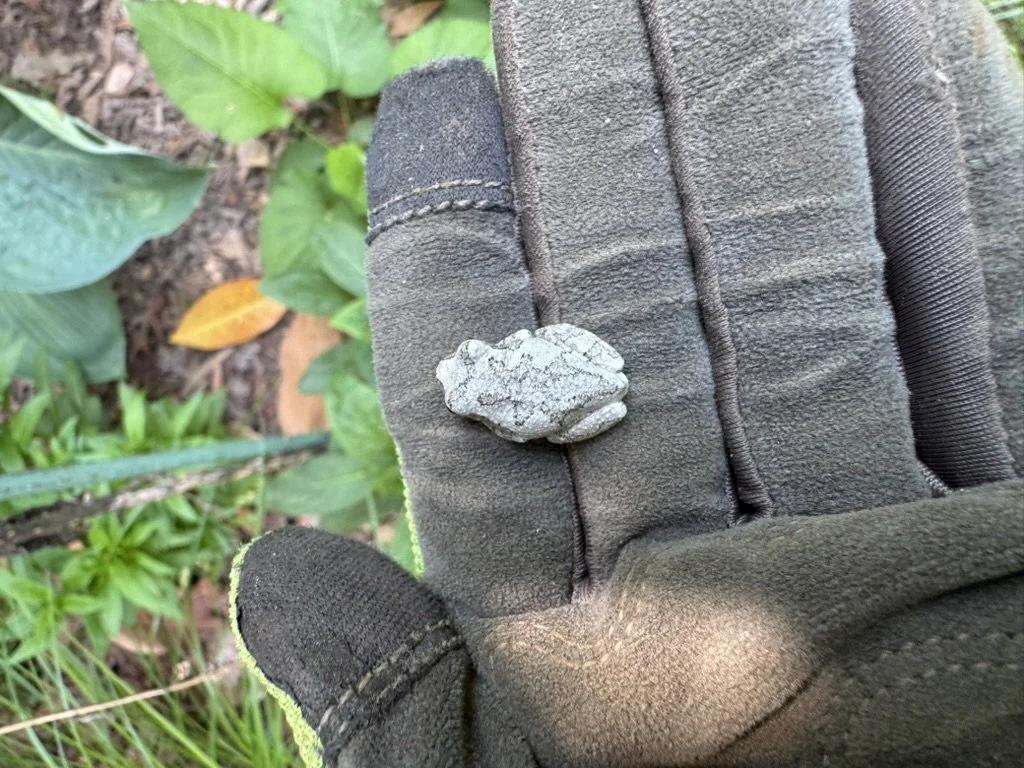
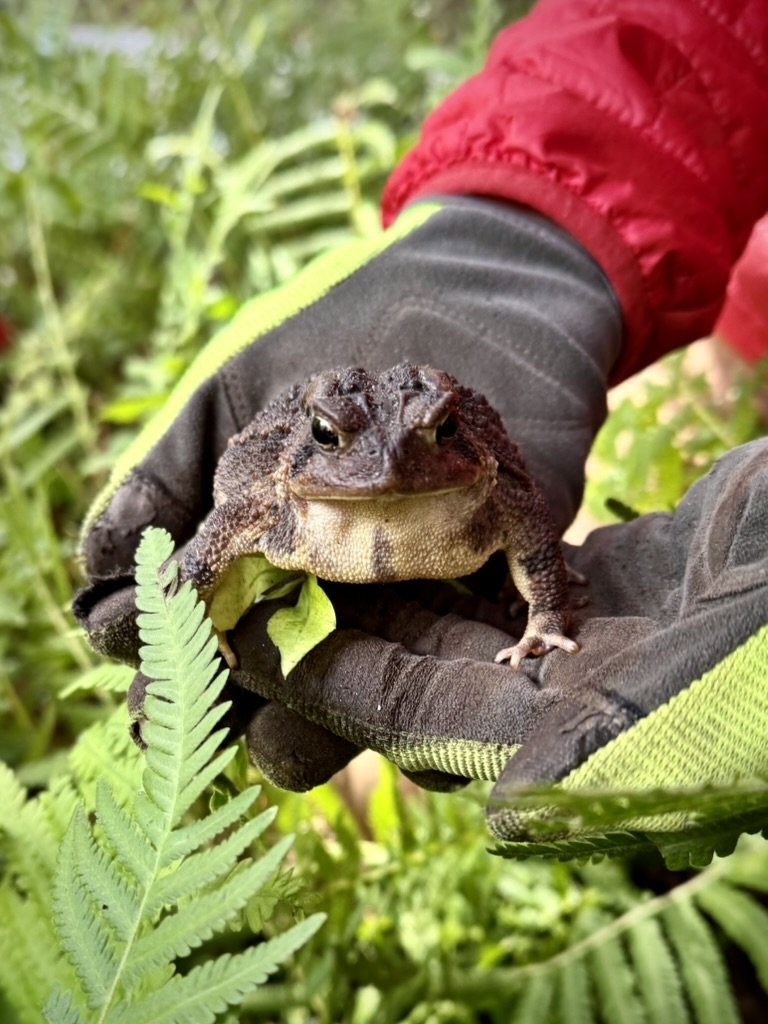
In the first year, the plants in the bed grew twice as fast as I thought they would. I’m happy to report that they’re still thriving. Hummingbirds drink daily from the cardinal flower, and frogs, salamanders, and lizards take cover under all the growth.
Click the + to expand project descriptions
-
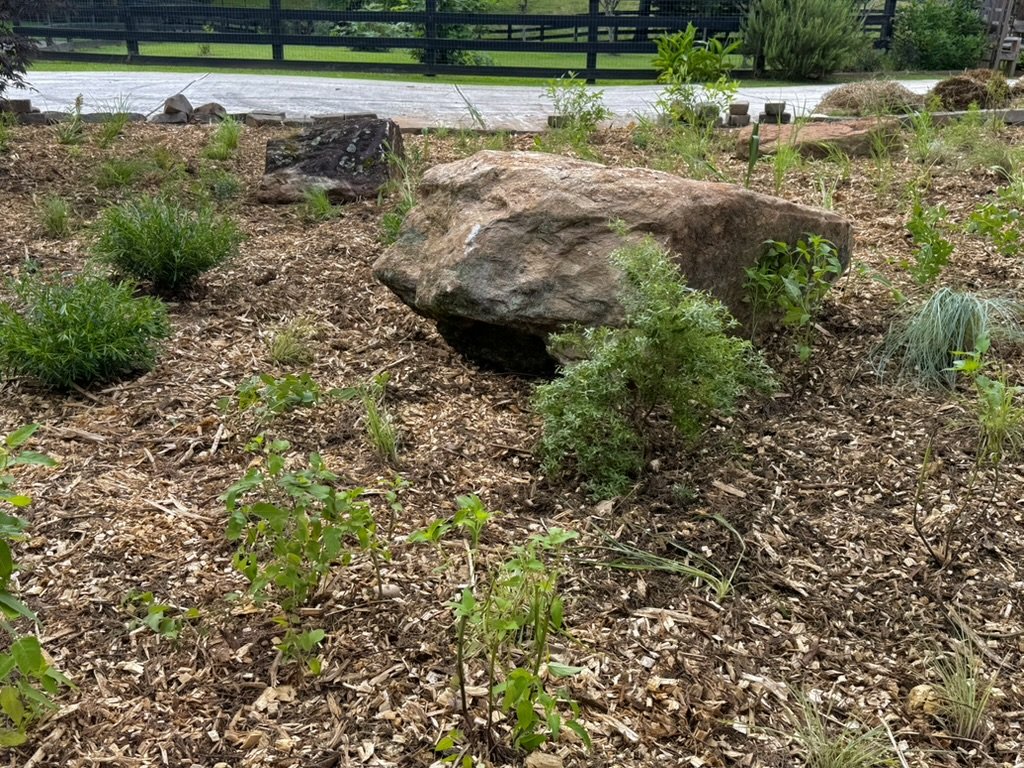
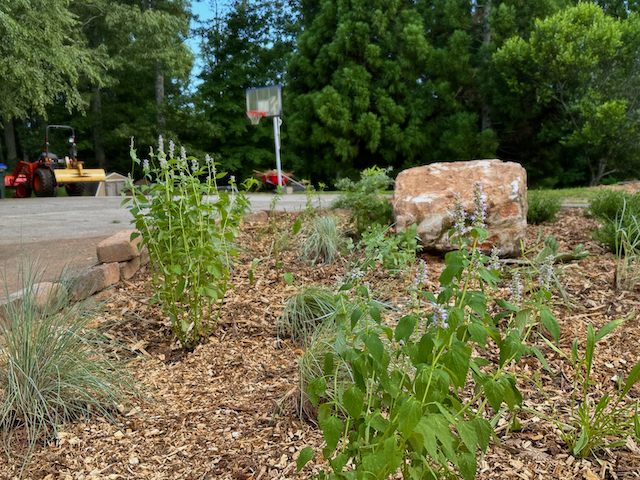
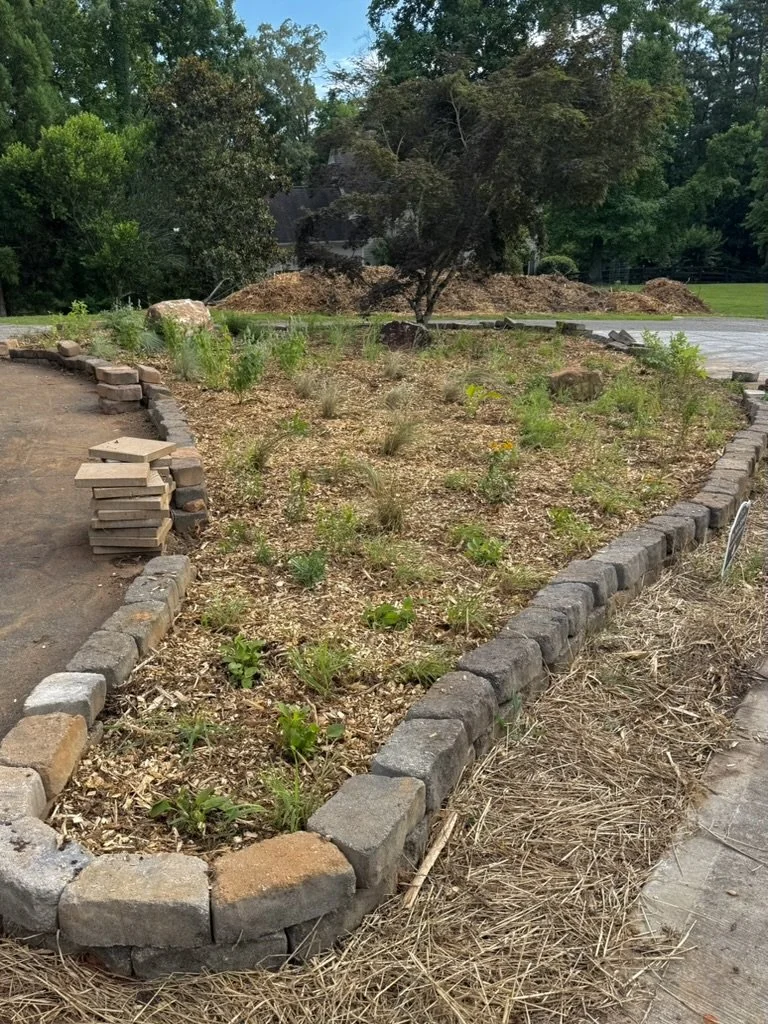
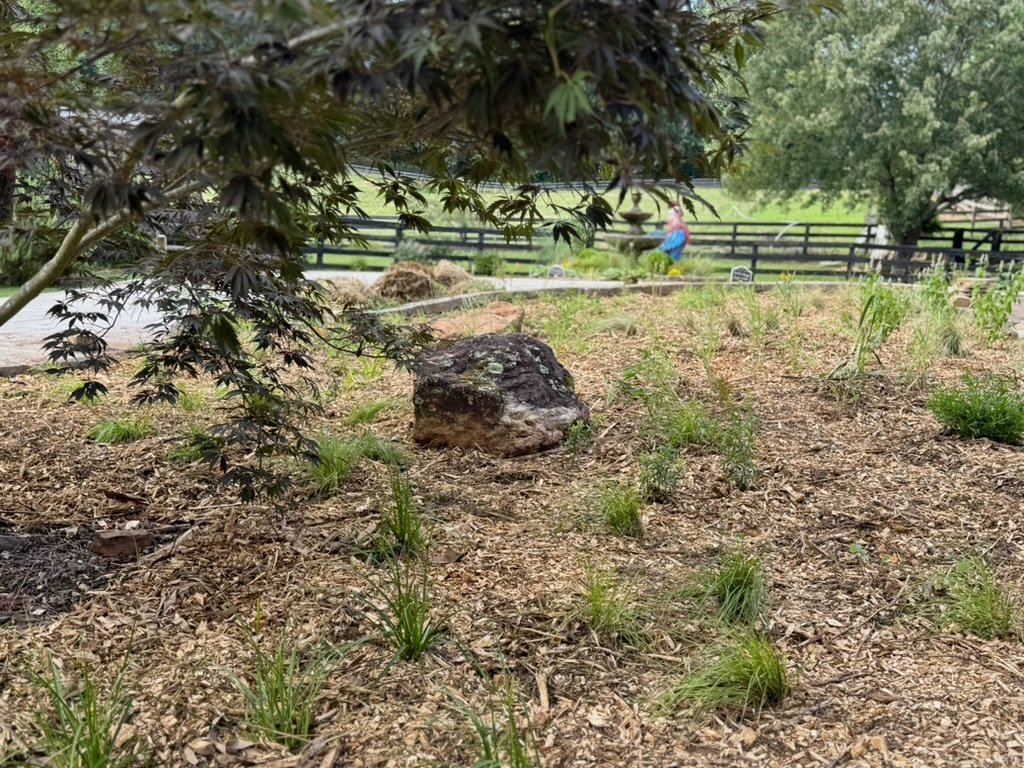
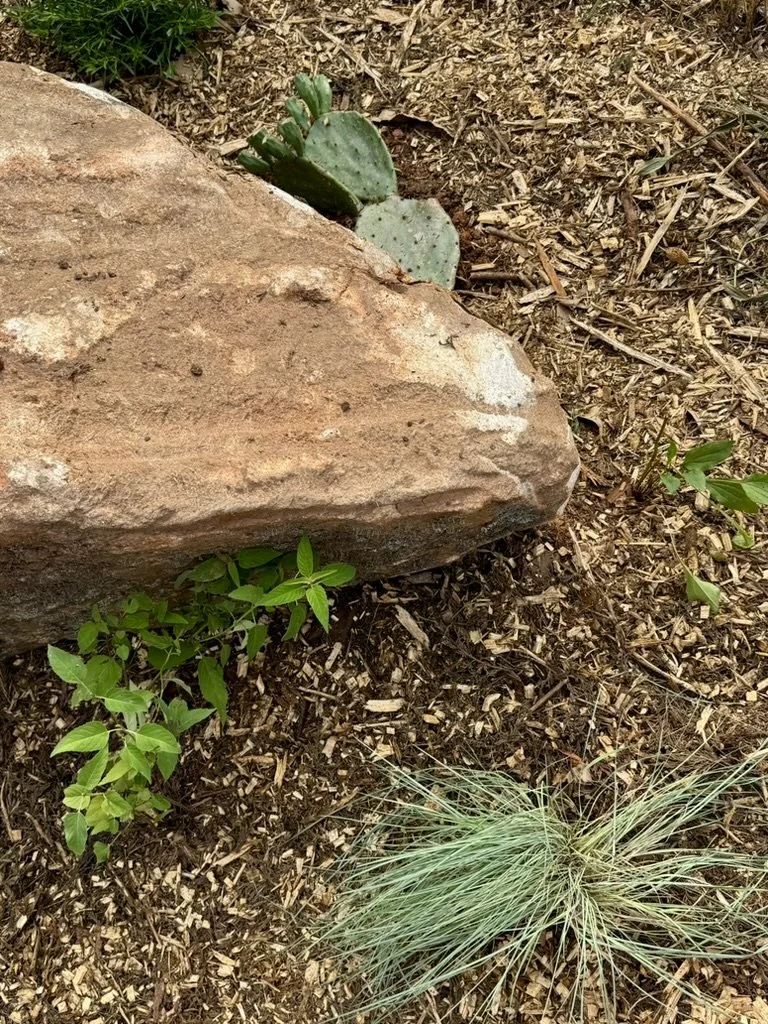
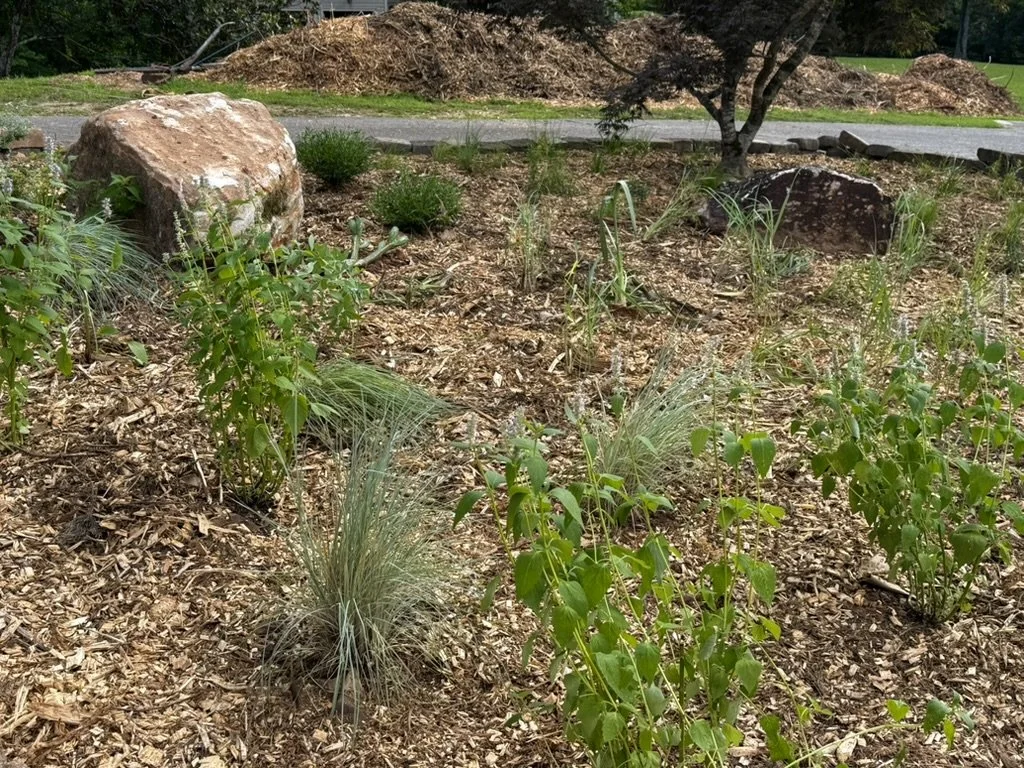
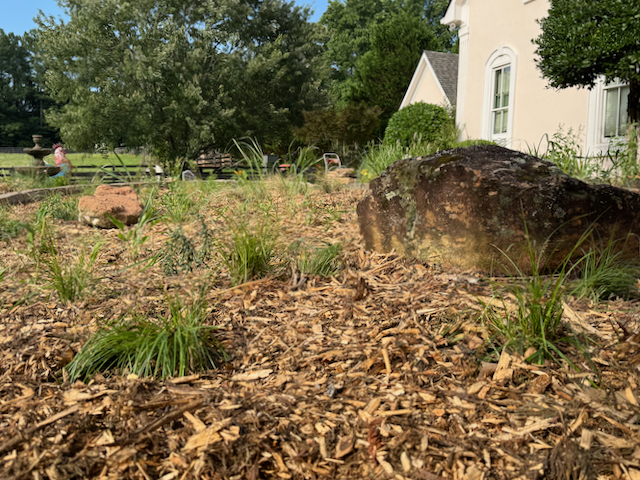
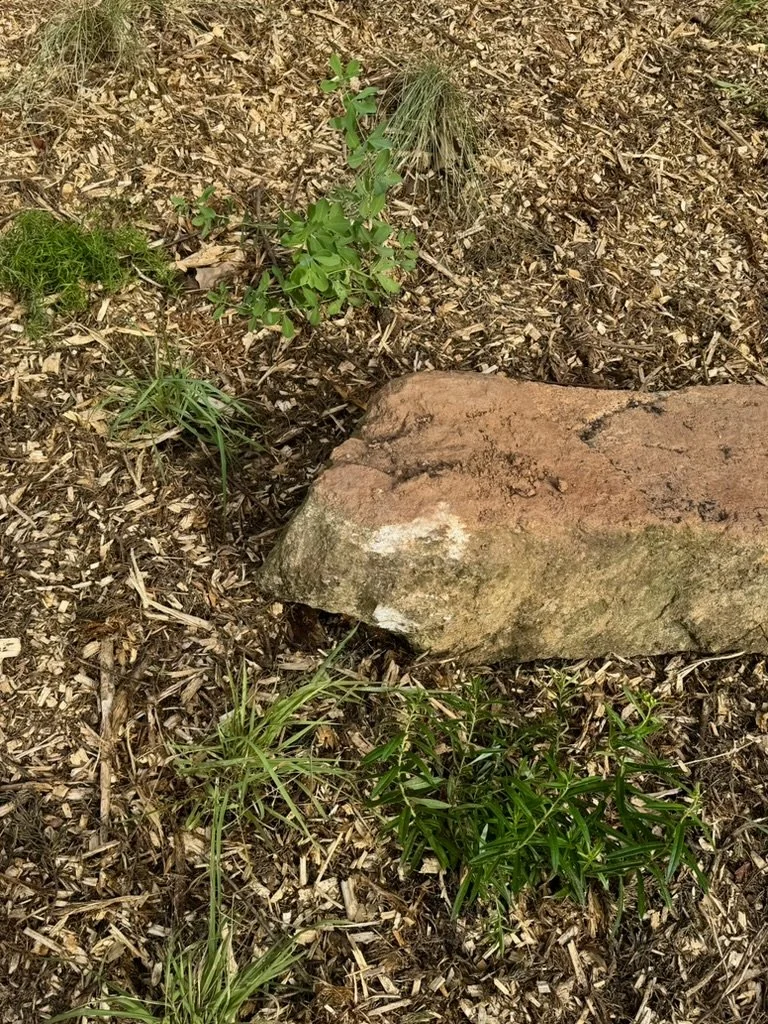
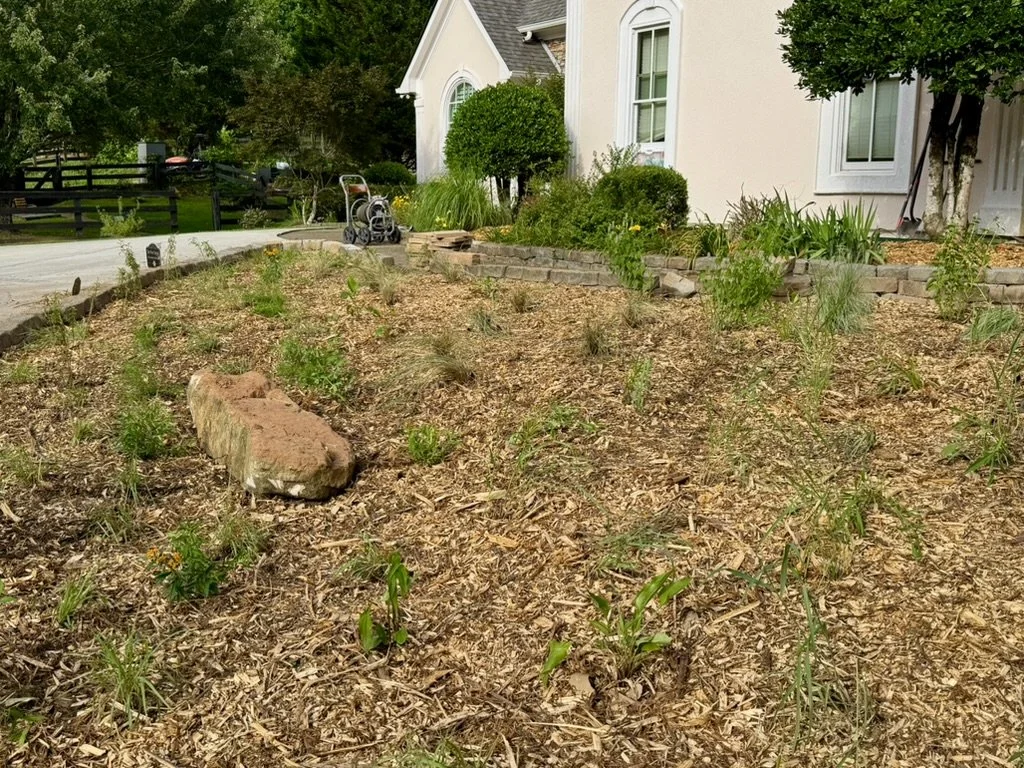
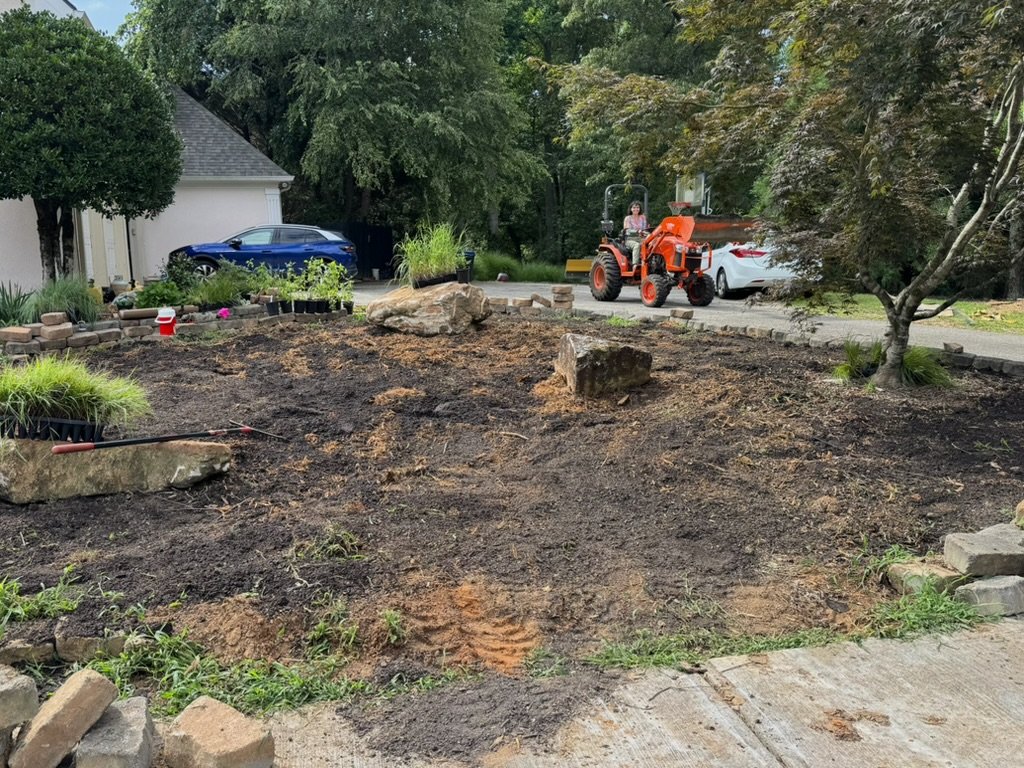
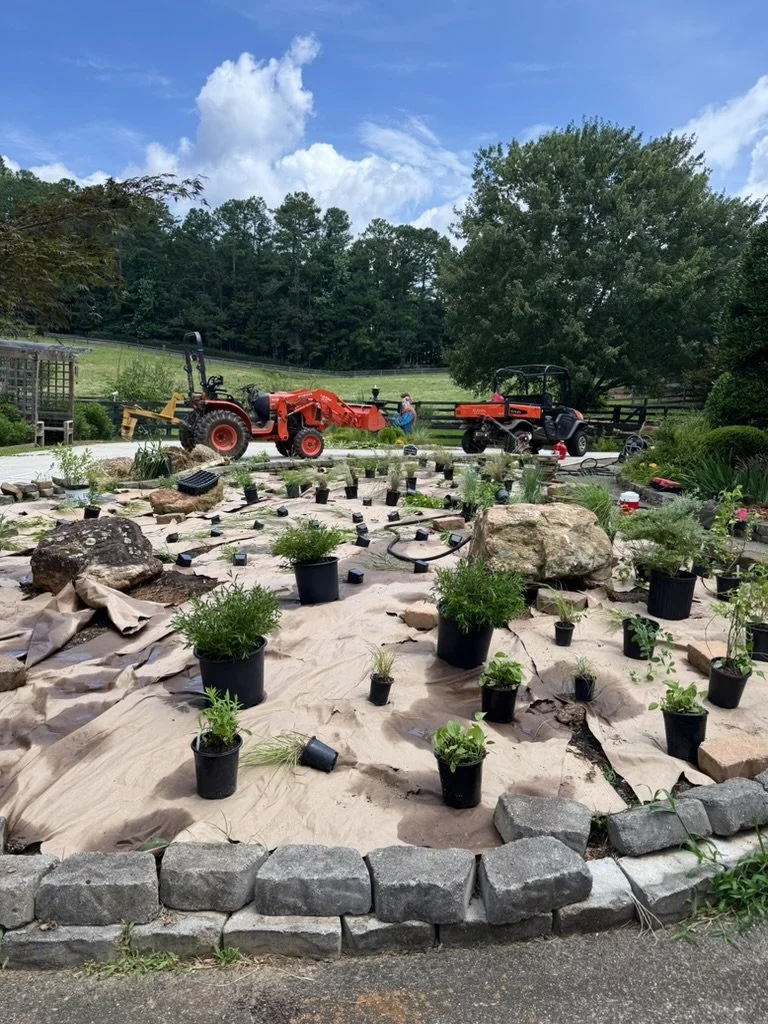
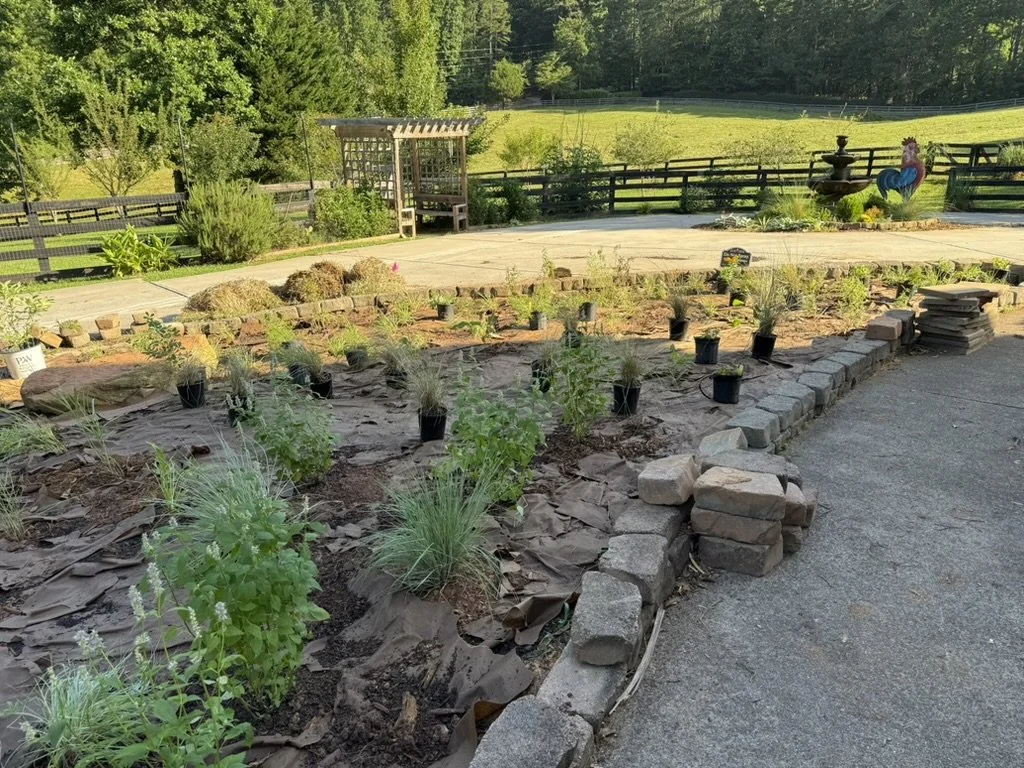
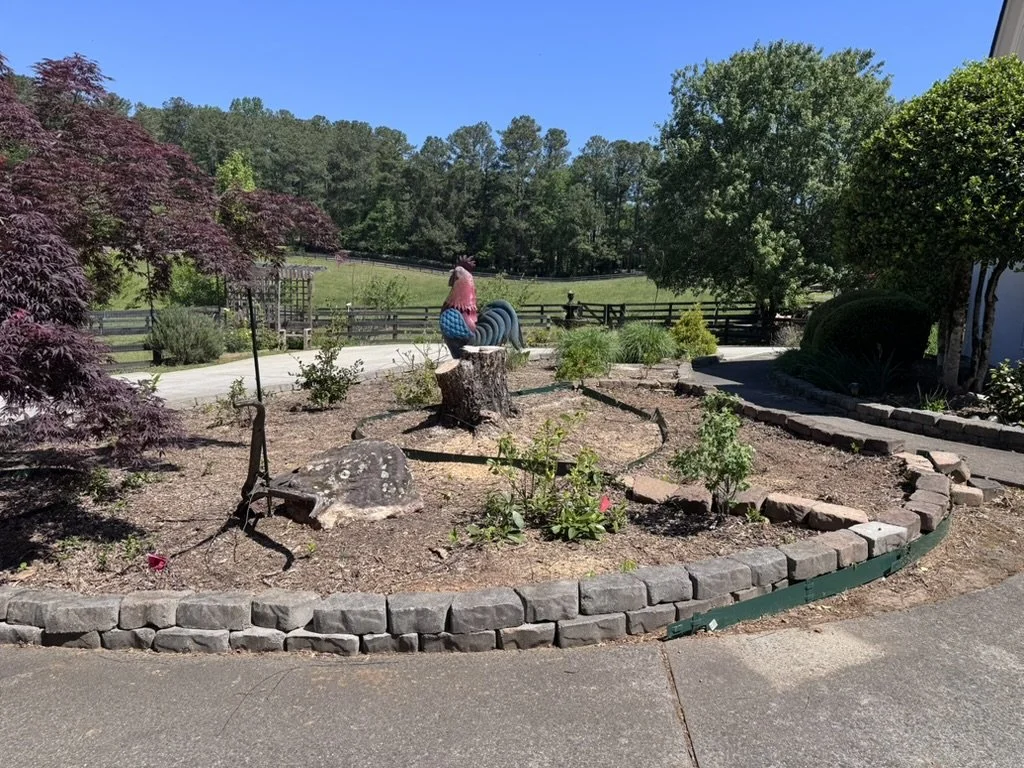
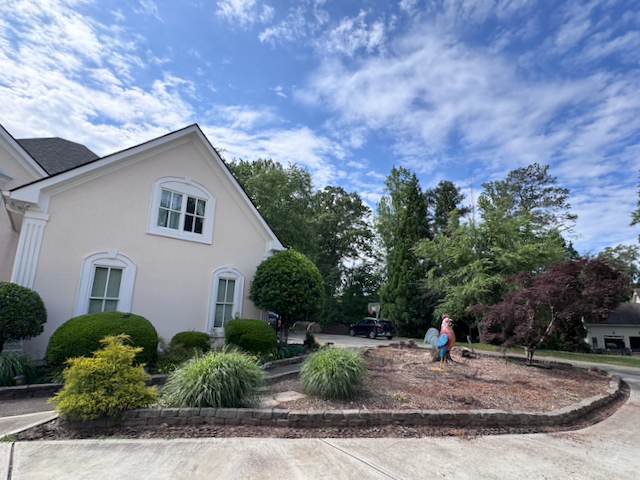
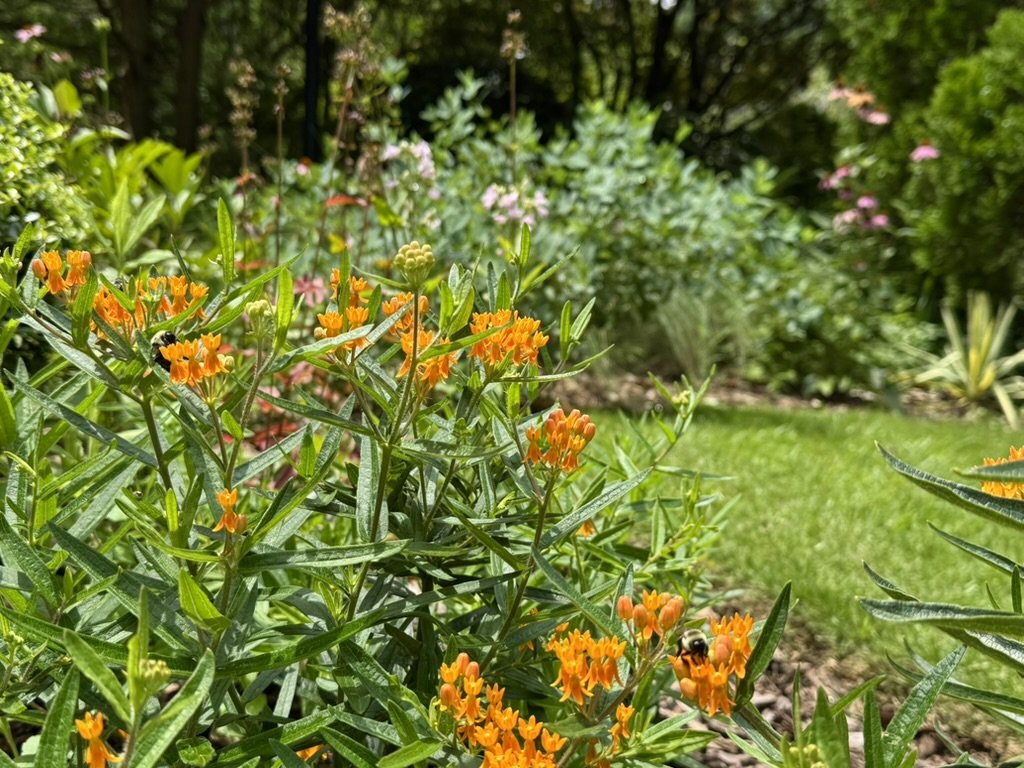
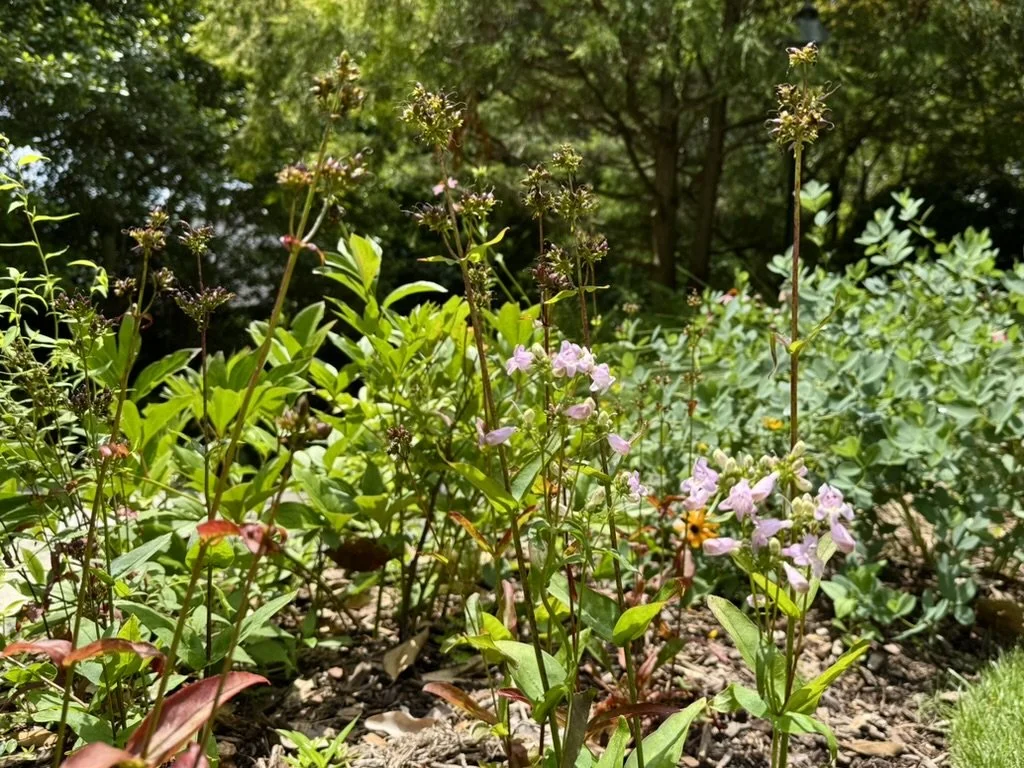
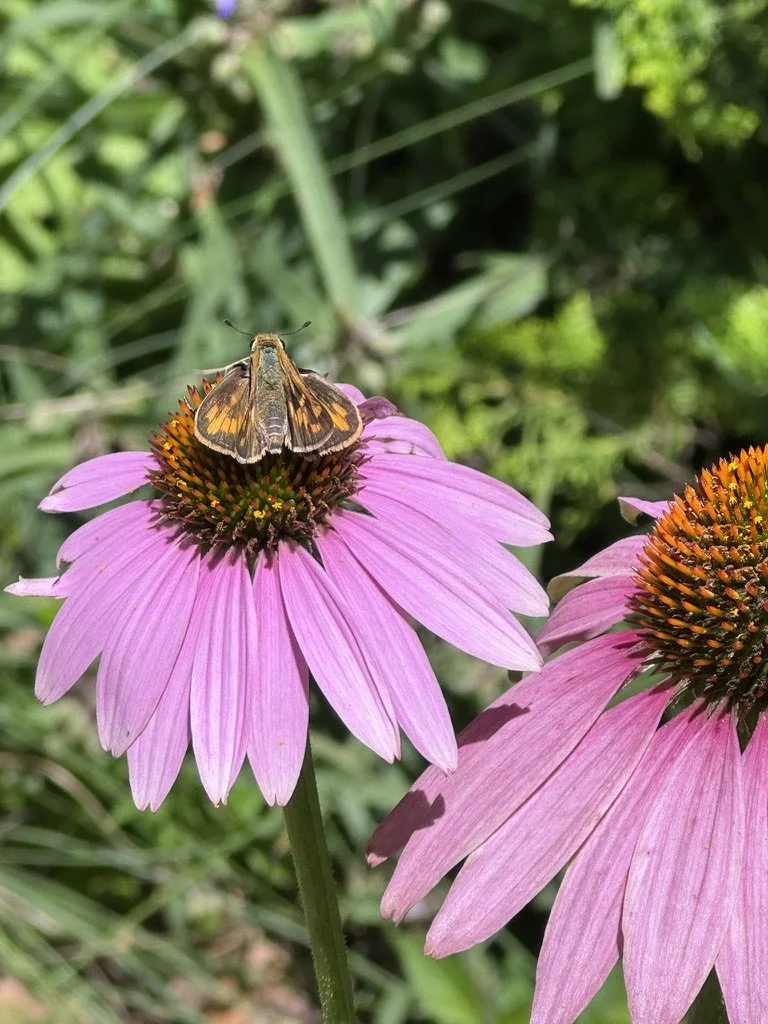
Textural, grassy drifts anchor this recently installed pollinator garden. Drifts and dots of flowers within the grasses will bloom throughout the growing season. Altogether, this garden will feed a diverse array of insects and birds through nectar, pollen, and seeds while offering yearlong visual interest.
Three prominent viewsheds helped to organize the design: sitting under a nearby arbor, pulling up the driveway, and walking to the front of the home from the garage and backyard. Each angle will have its own dynamic interest throughout the year.
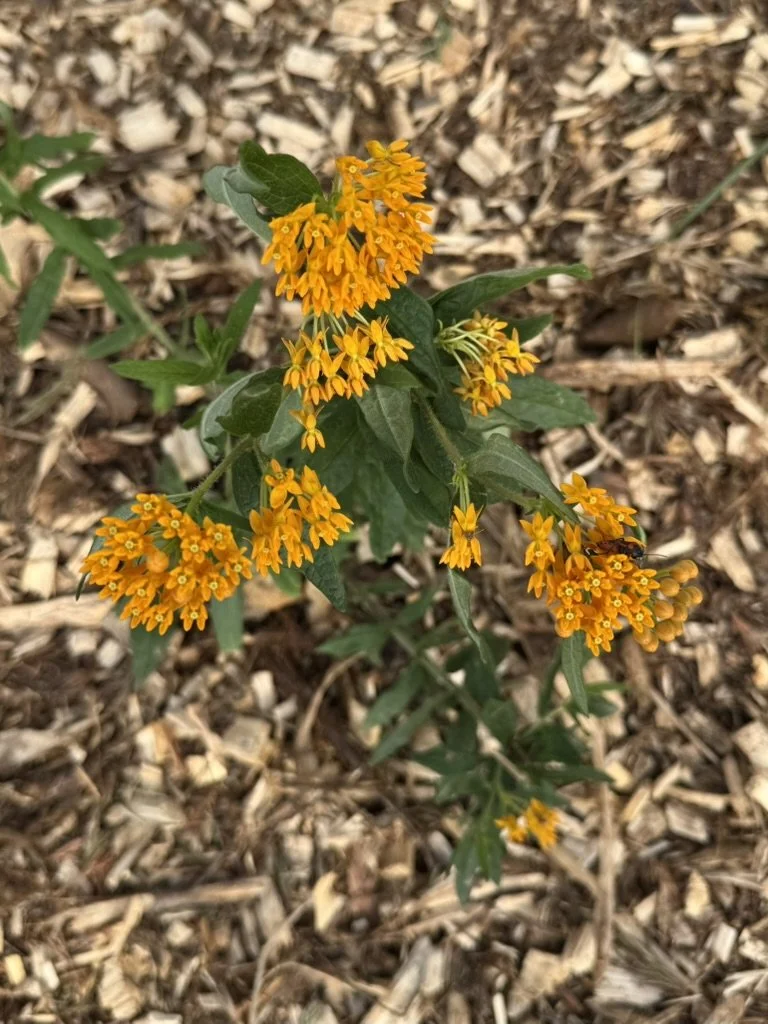
There’s a lot that could be highlighted here, but I’m still thinking of one particular view in late summer and early fall, where purple love grass will form a low purple haze beneath Black-eyed Susan and spotted horsemint seedheads while horned butterfly milkweed pods will jut out above, flanked by yellow amsonia foliage. Pink muhly grass will form the backdrop on the left side, and switchgrass dotted with rattlesnake master will frame the right.
Grasses and sedges are the unsung heroes of every landscape. They provide flow, connection, rich visual texture, and so much wildlife value. And planted en masse, surrounding flowering plants, they create their own spectacle in summer and fall with seas of purple, pink, rust, and light-green blooms.
This bed already held one boulder, and two more were moved in from elsewhere on the property where their unique, broad shapes will play with the growing plants. Additionally, all 28 species planted are drought- and heat-tolerant and relatively deer resistant. With a nice diversity of root types and reproductive strategies, the plants will self-seed and spread by surface-level roots, which will help fend off weeds in the coming years and provide more resilience for the entire garden. I cannot wait to see it all take off.
-
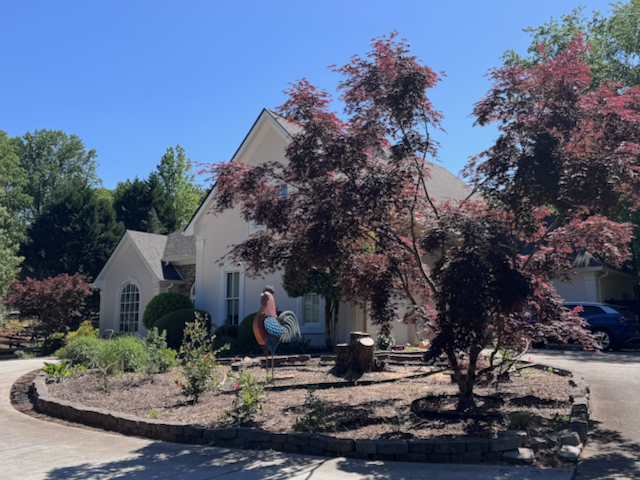
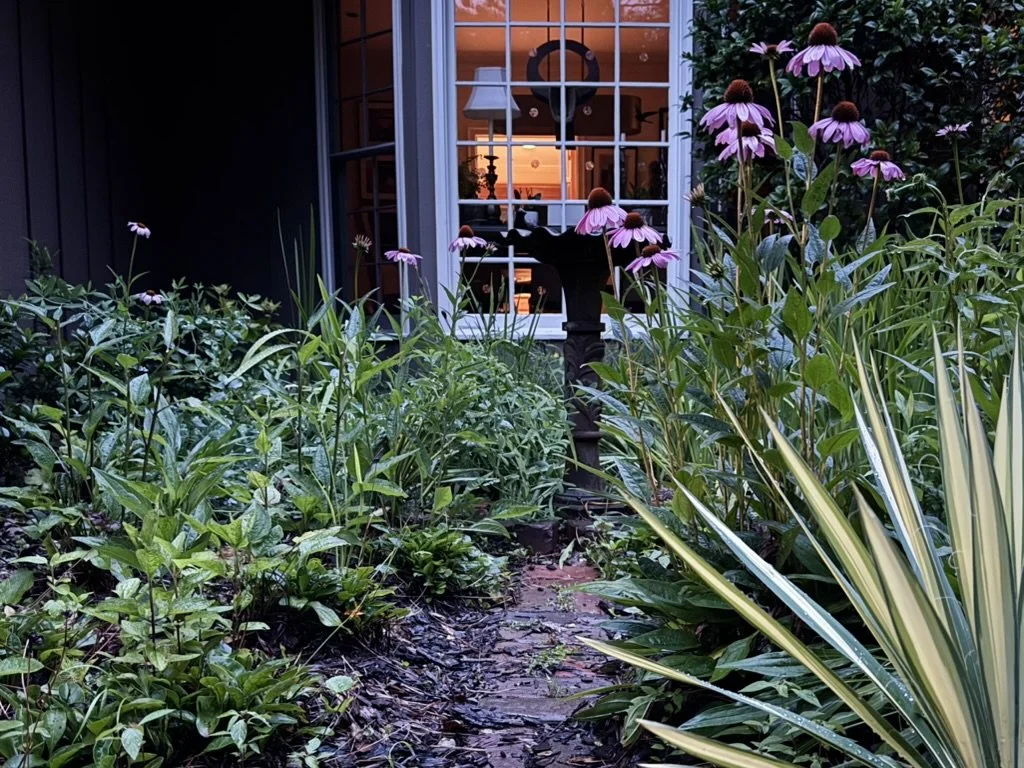
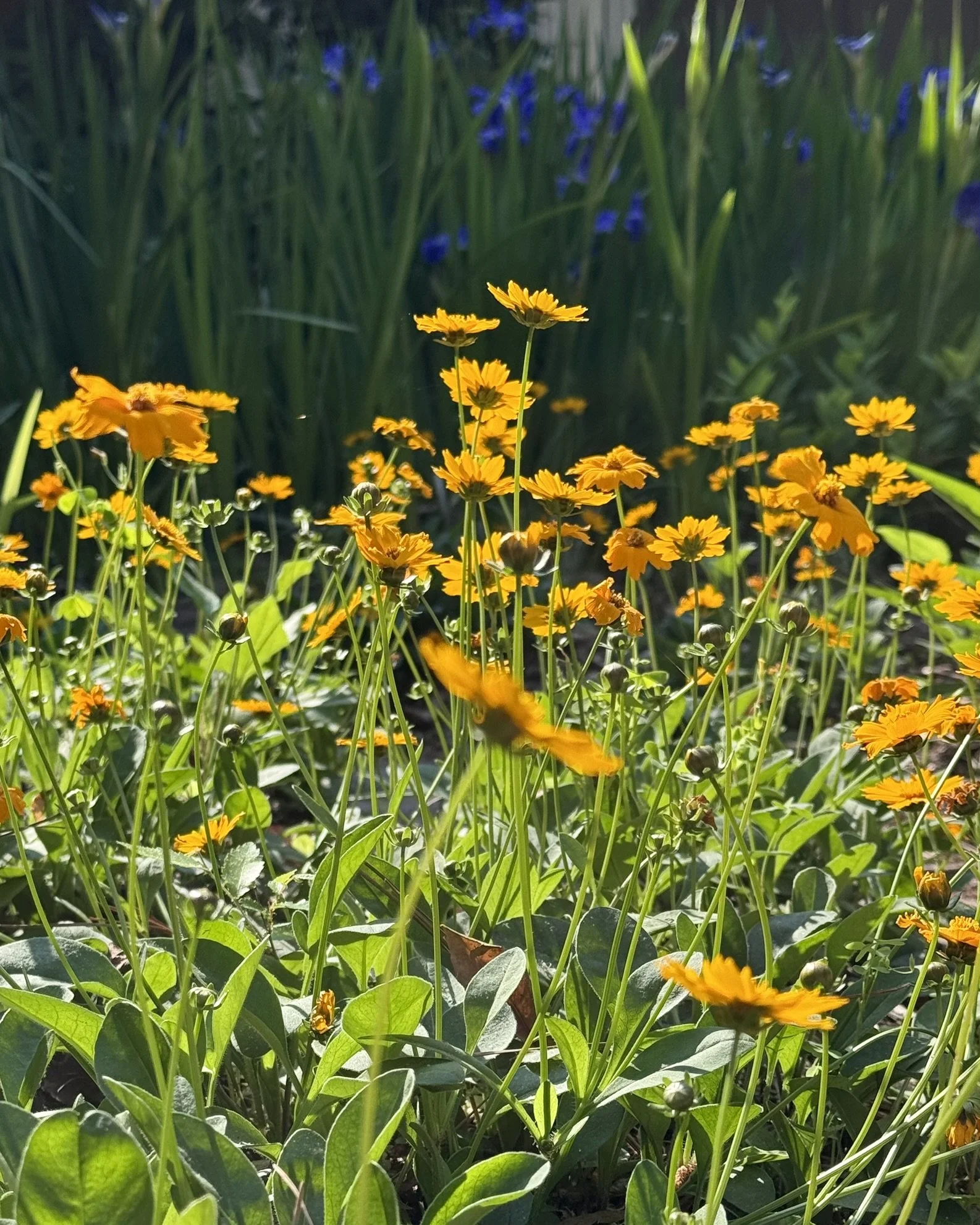
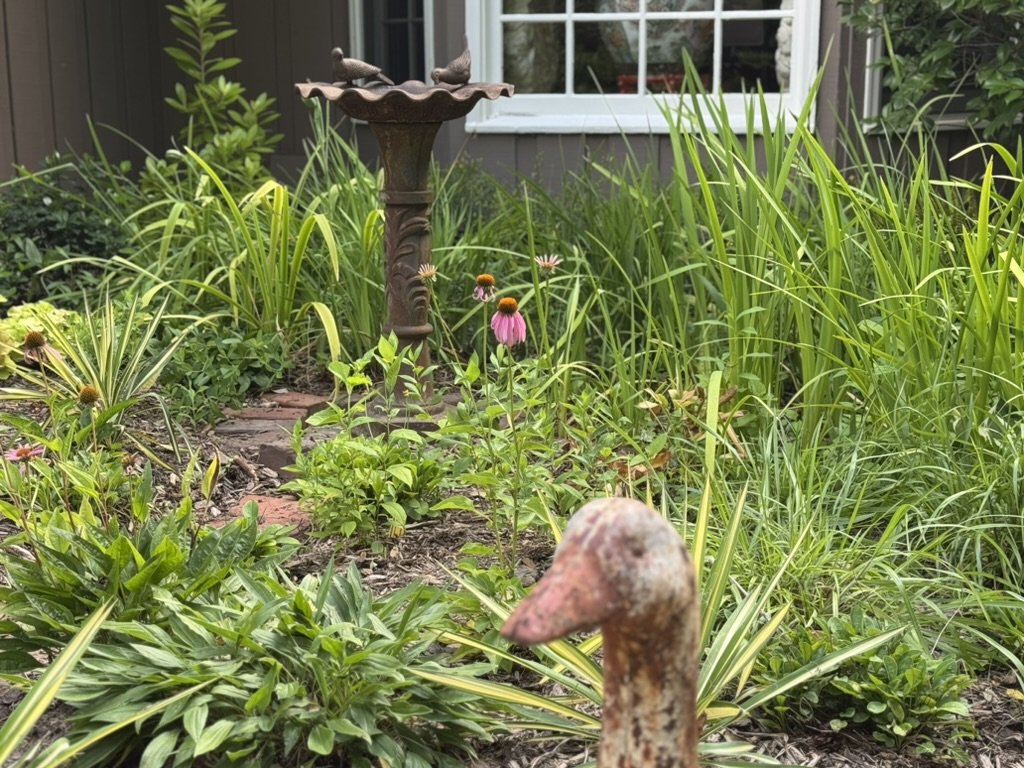
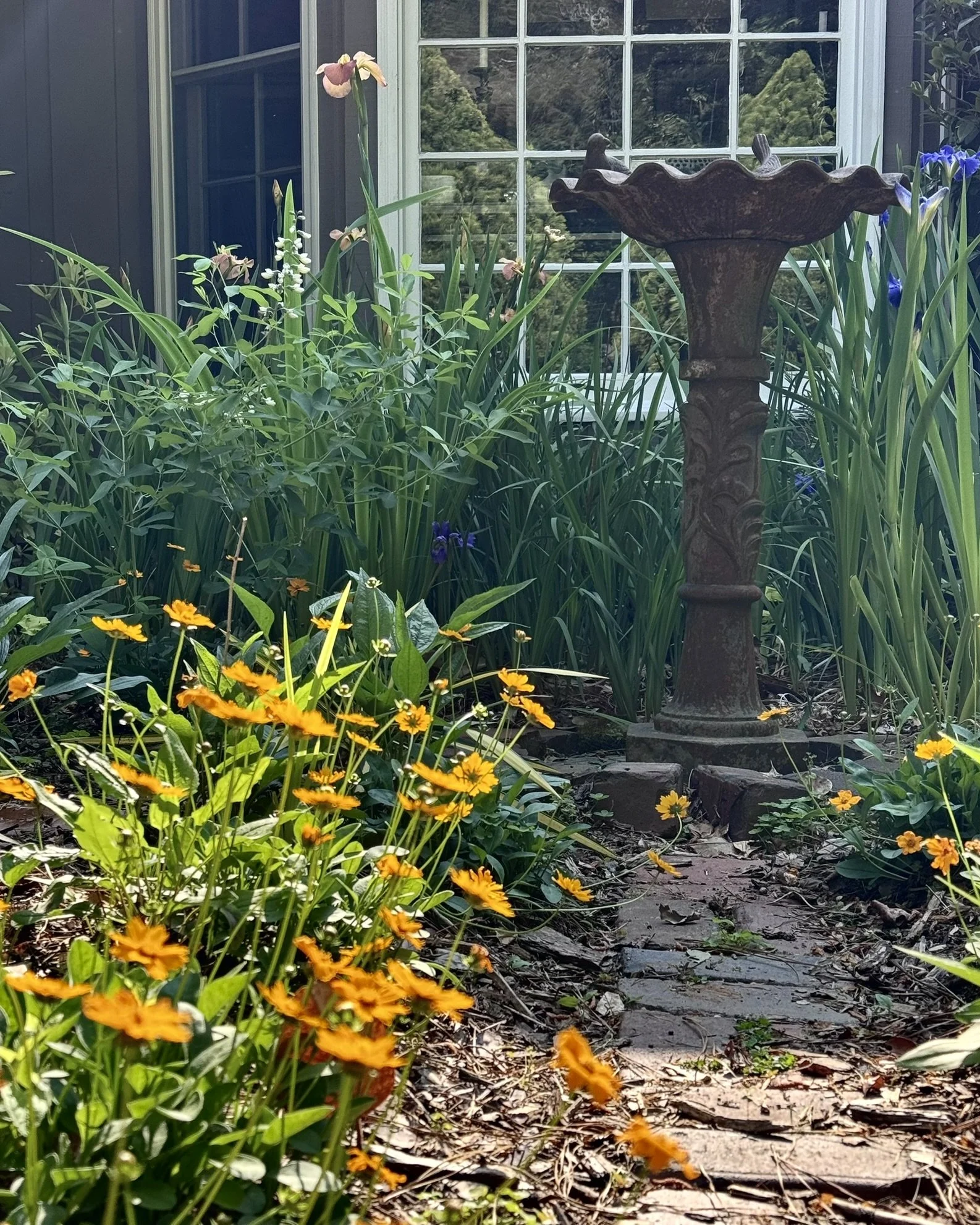
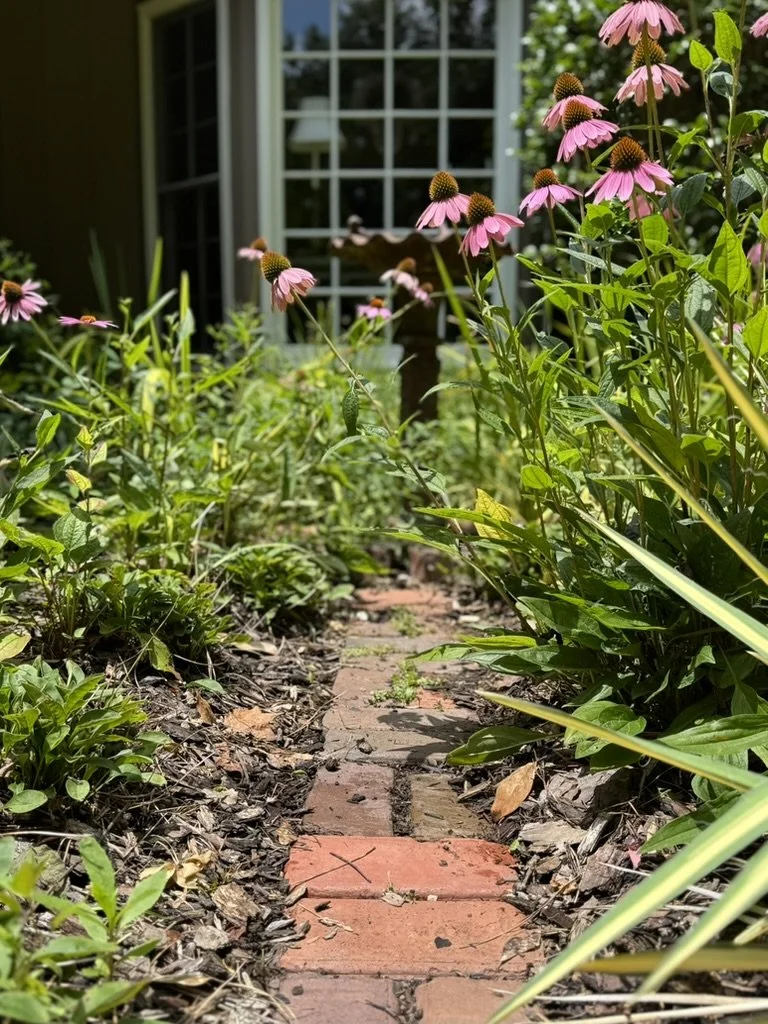
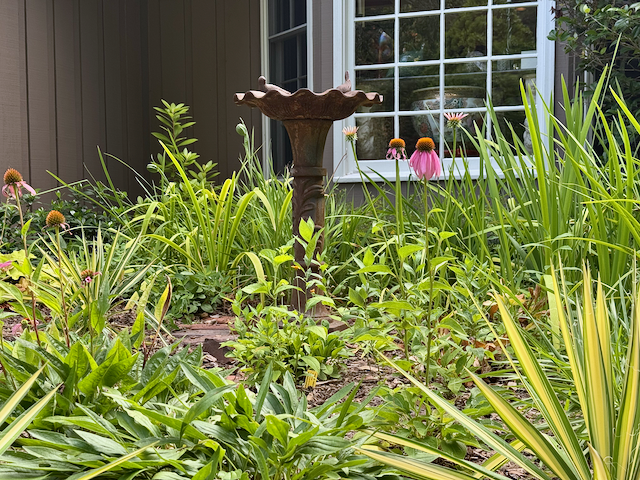
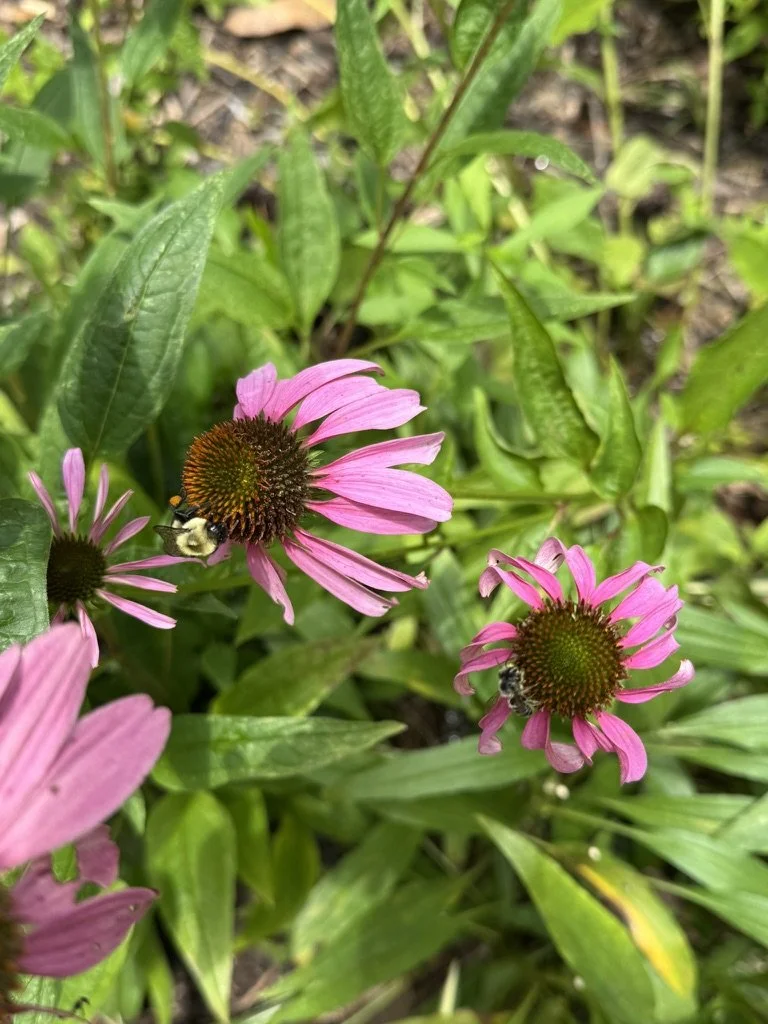
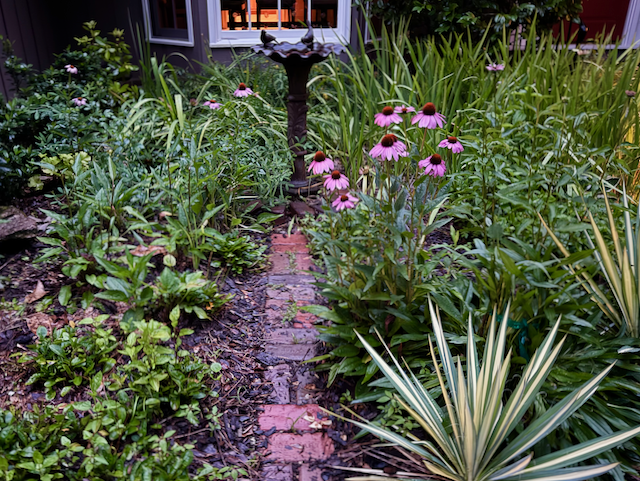
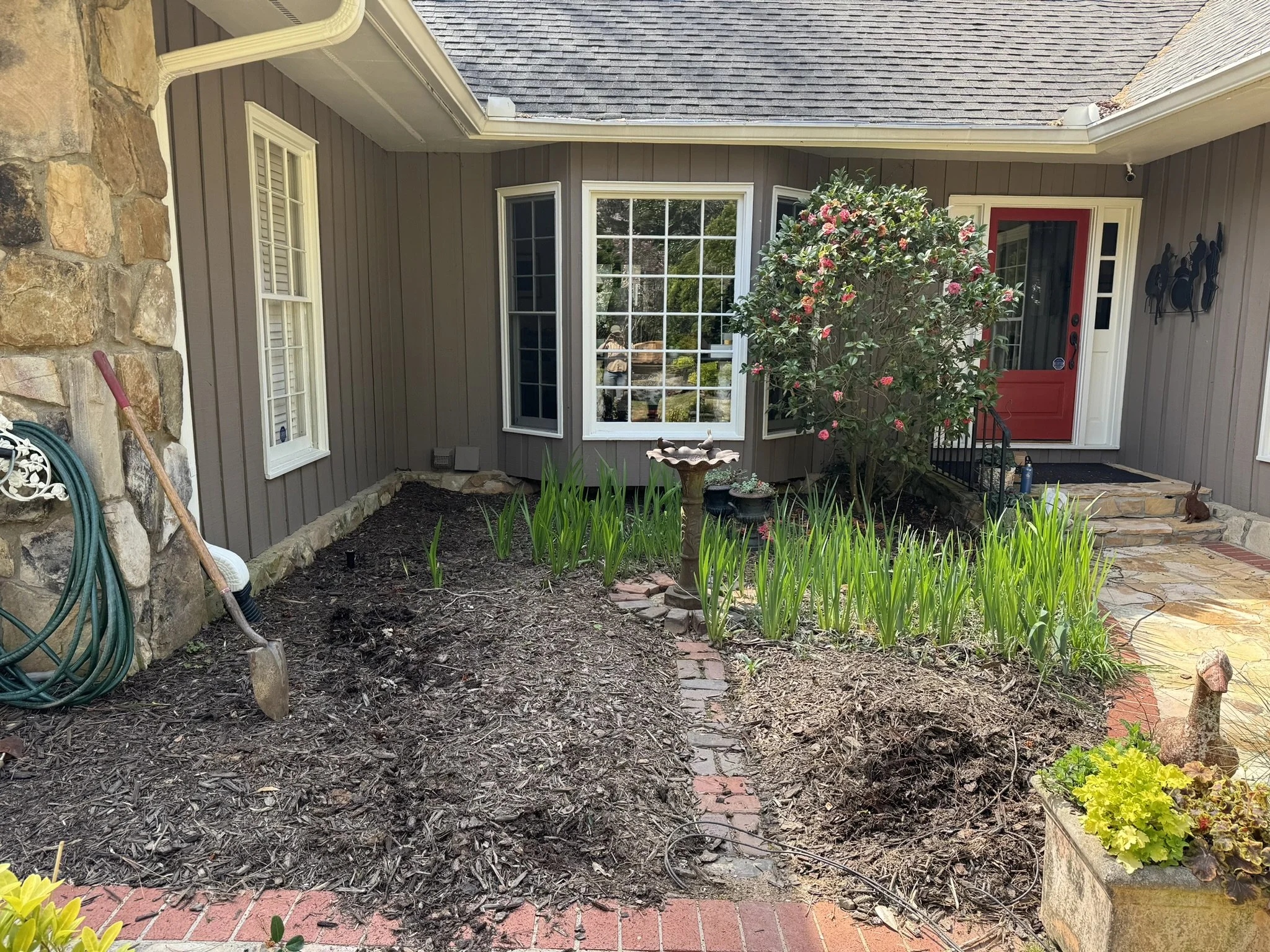
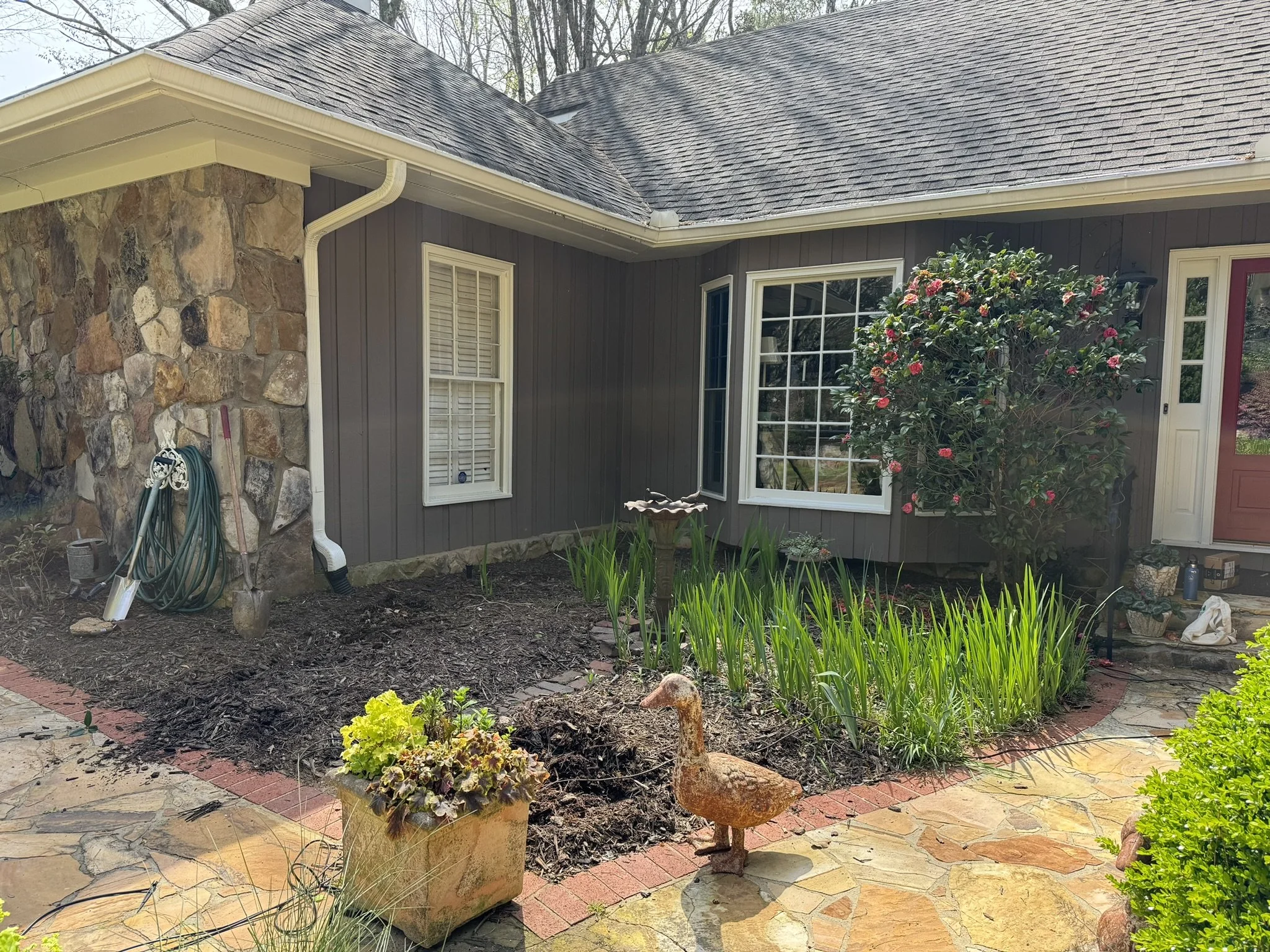
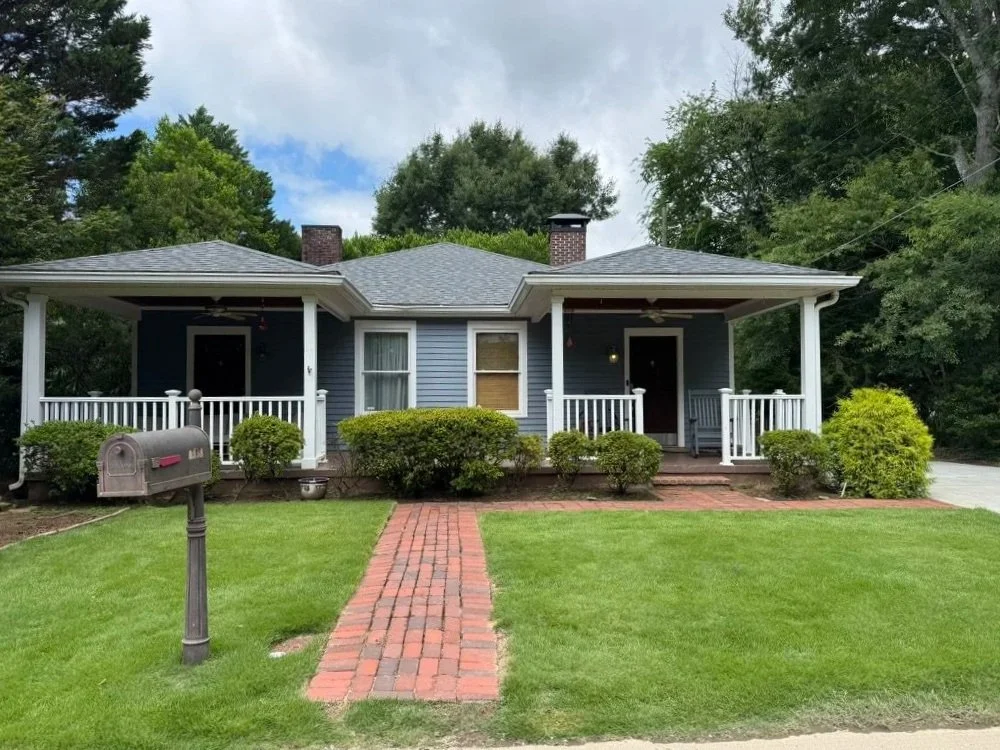
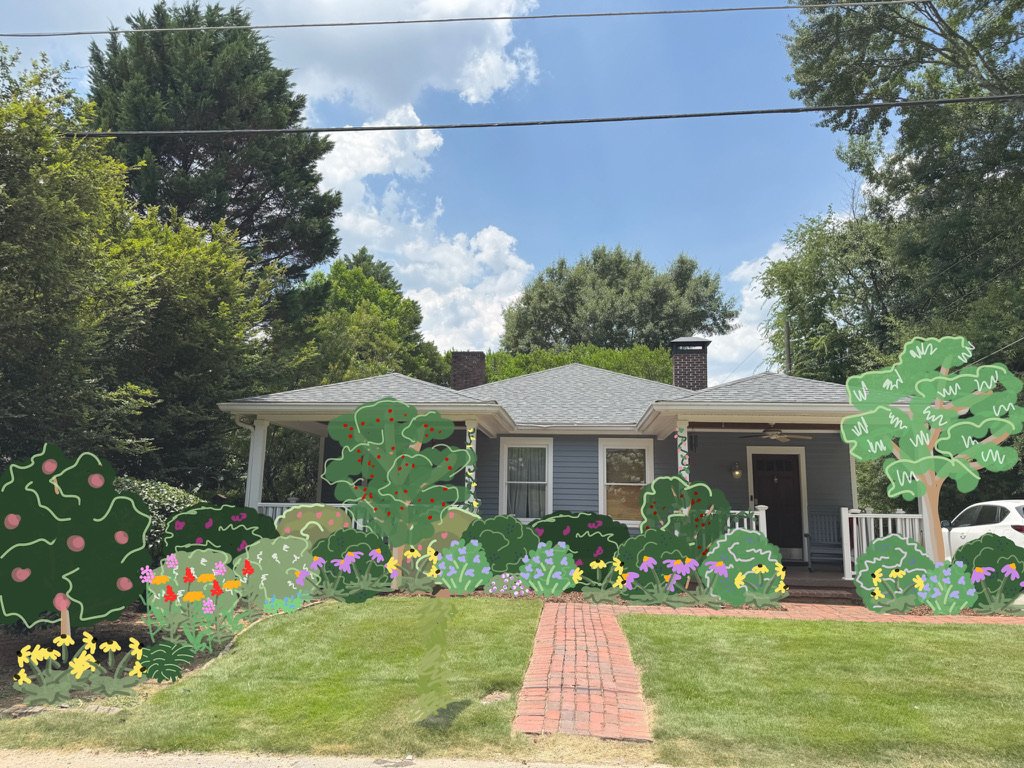
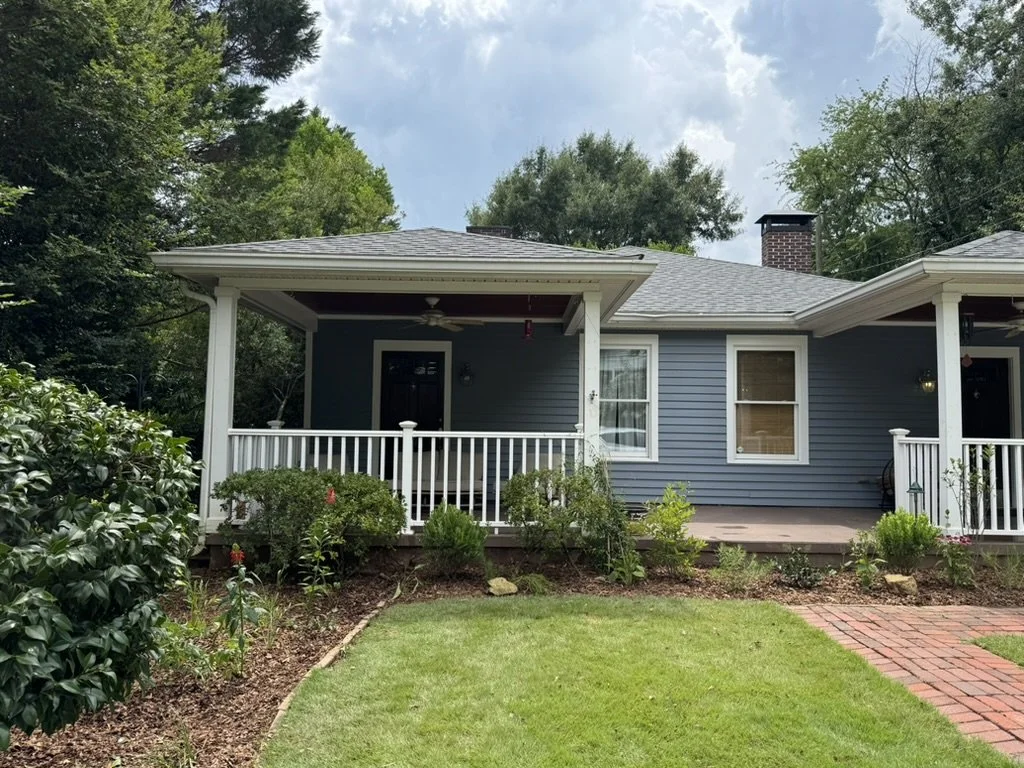
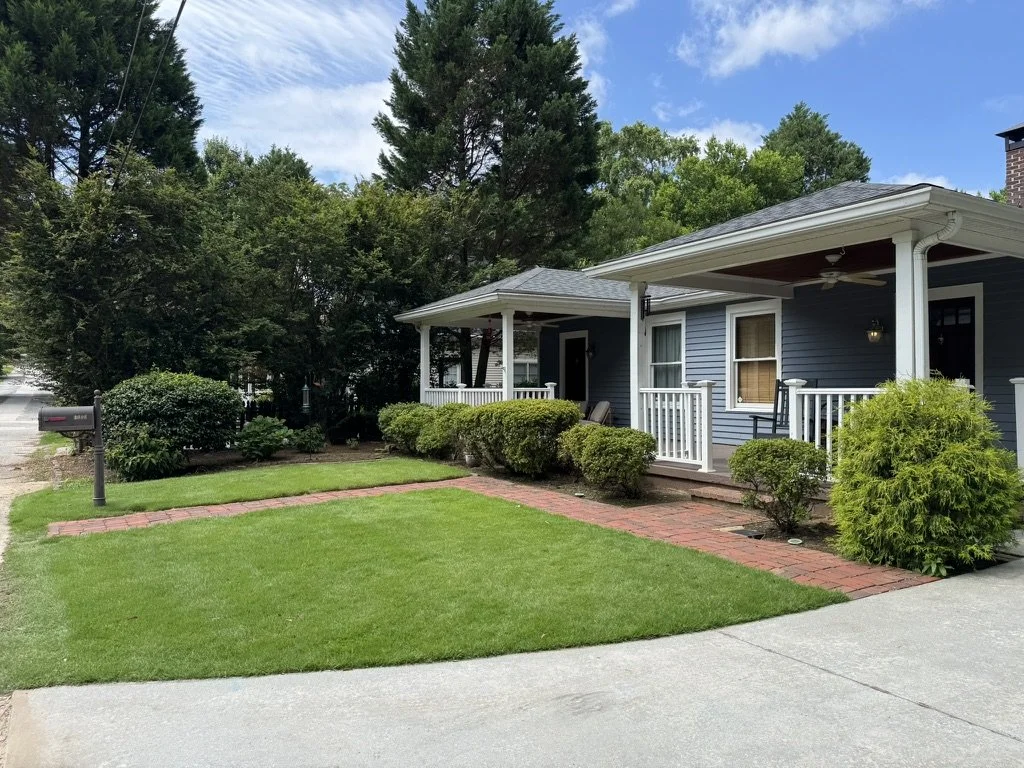
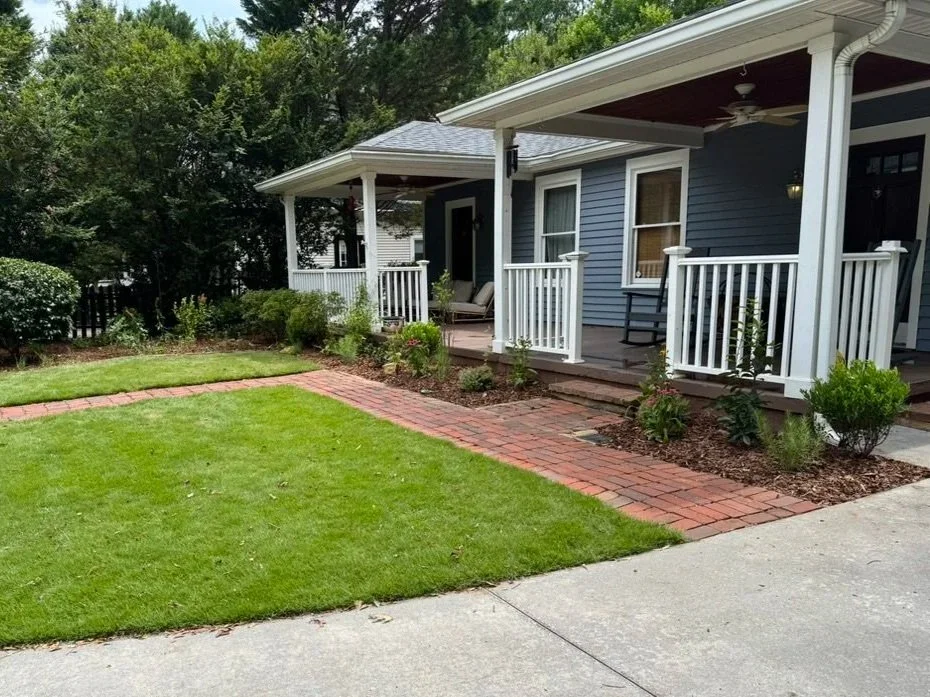
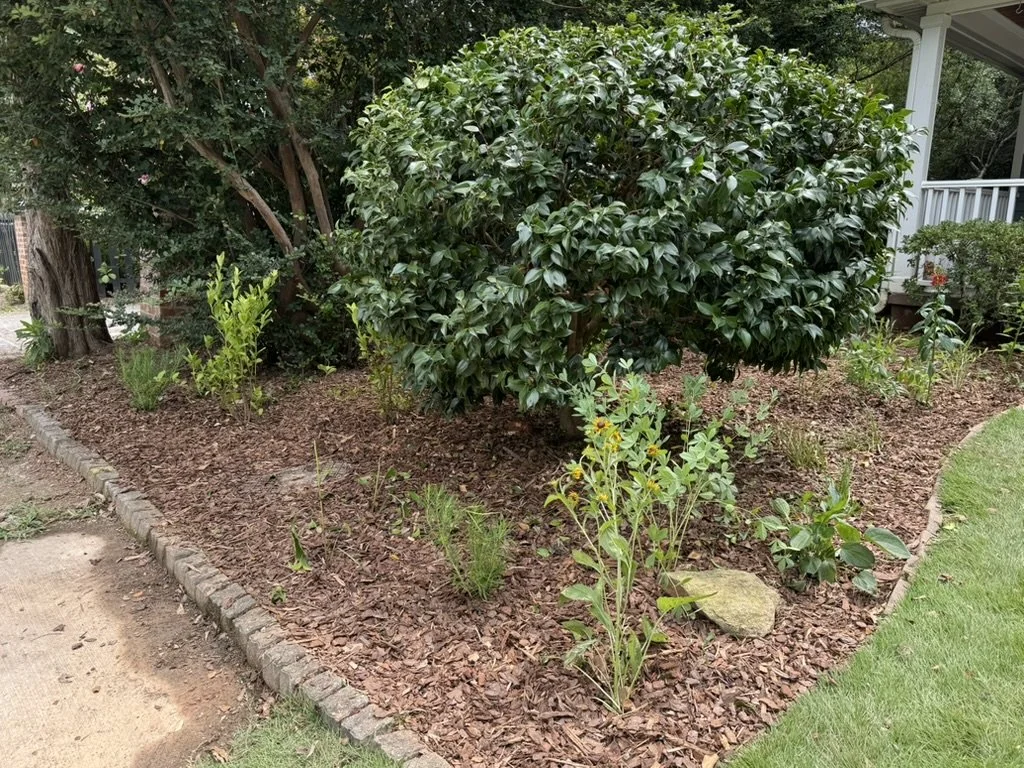
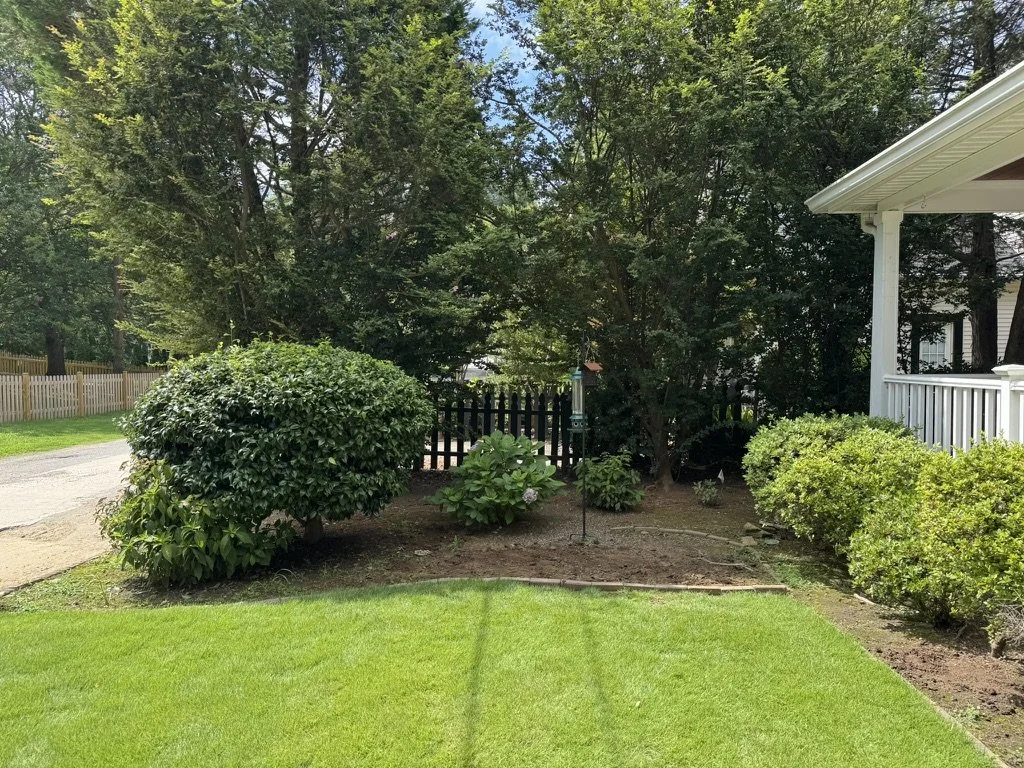
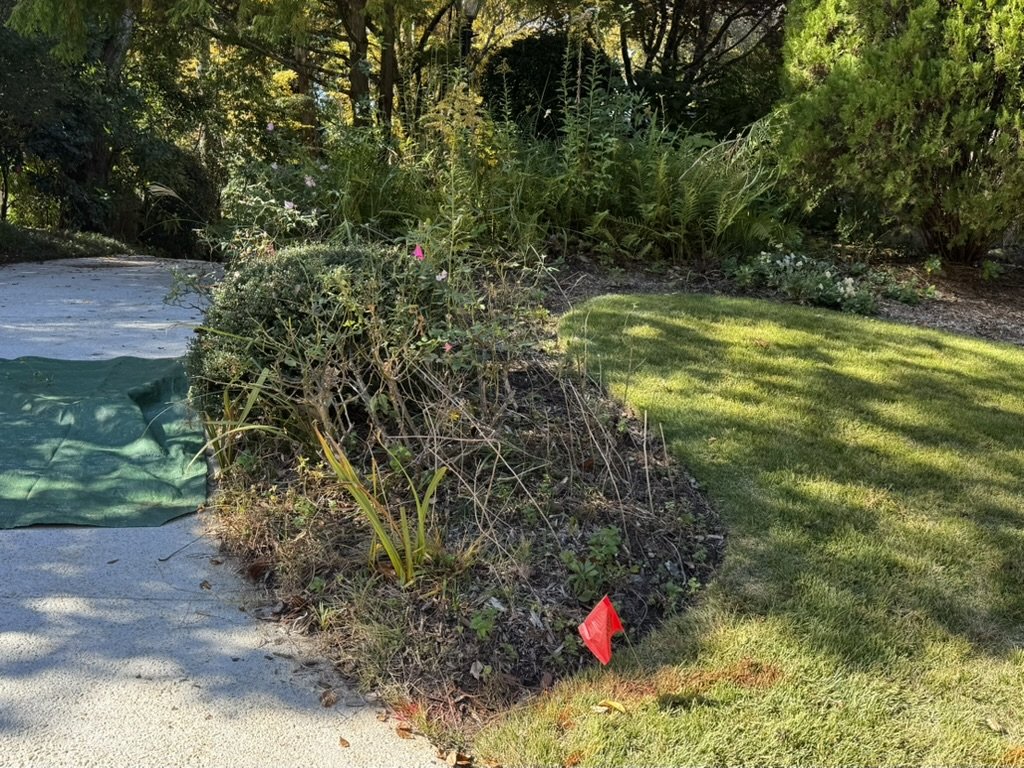
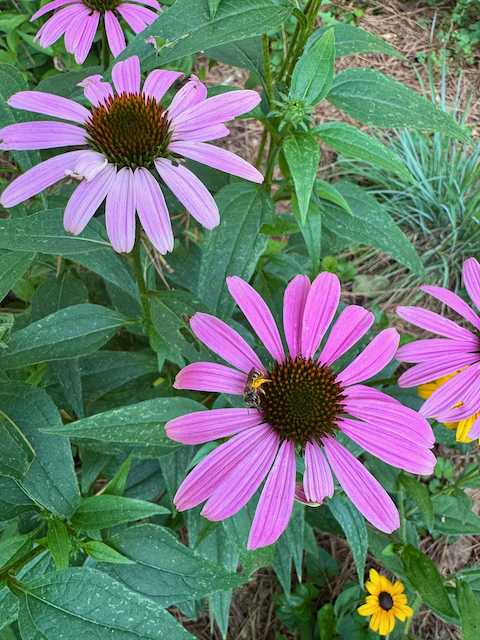
The design combines formal foundation elements using some noninvasive non-natives with cottage-style plantings of native perennials. There will be pollen and nectar for many bee species and seeds in the fall for birds. There will be cheerful, year-round color and cover, and dynamic changes throughout the seasons.
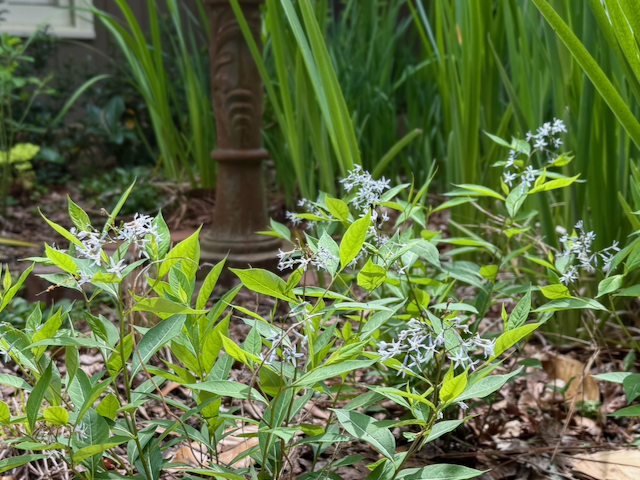
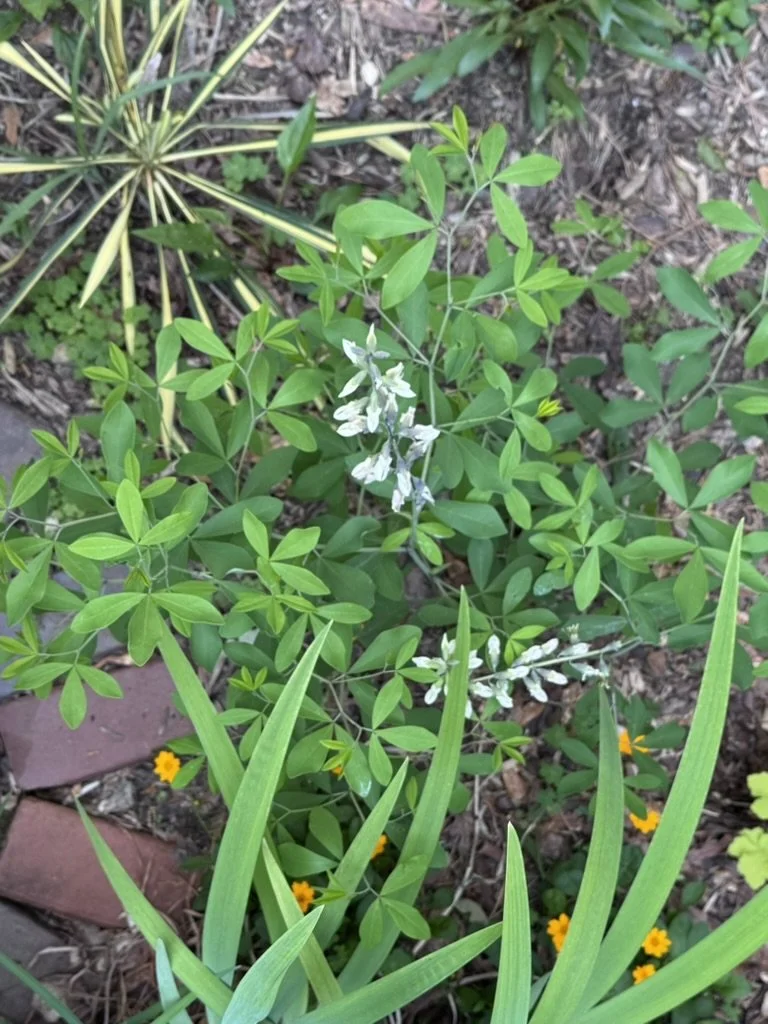
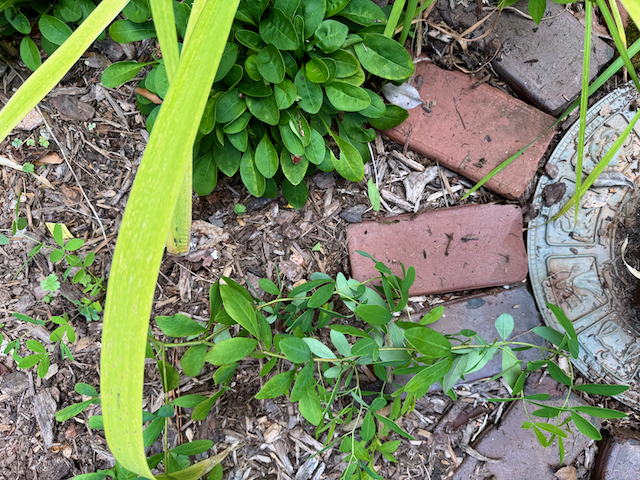
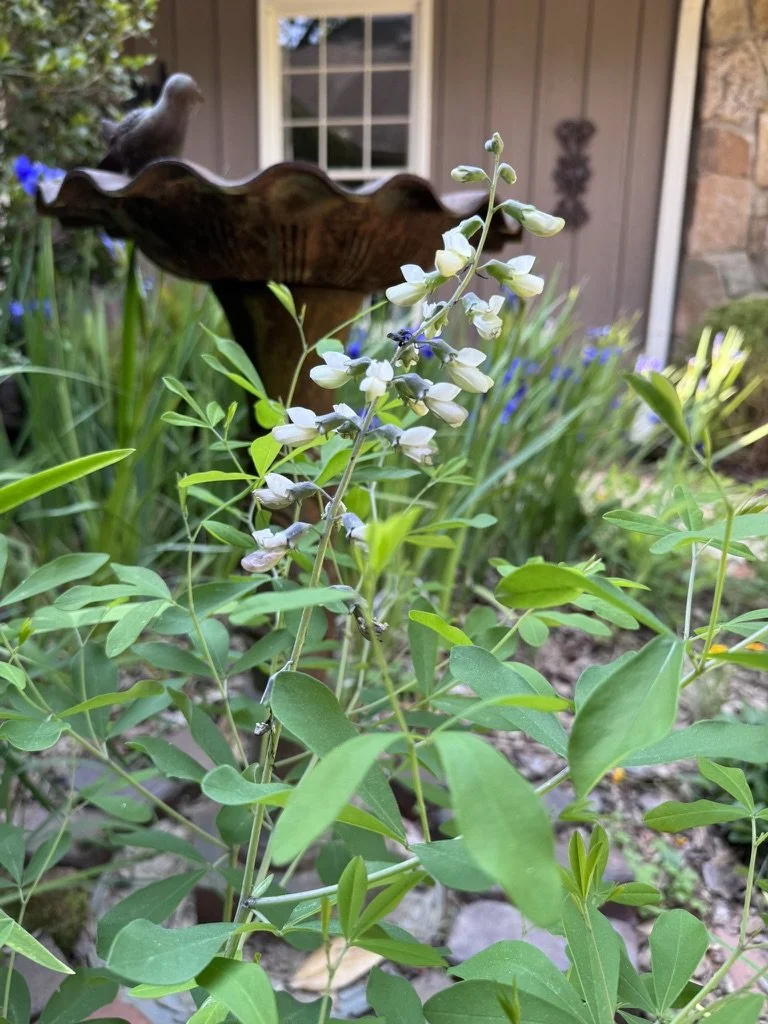
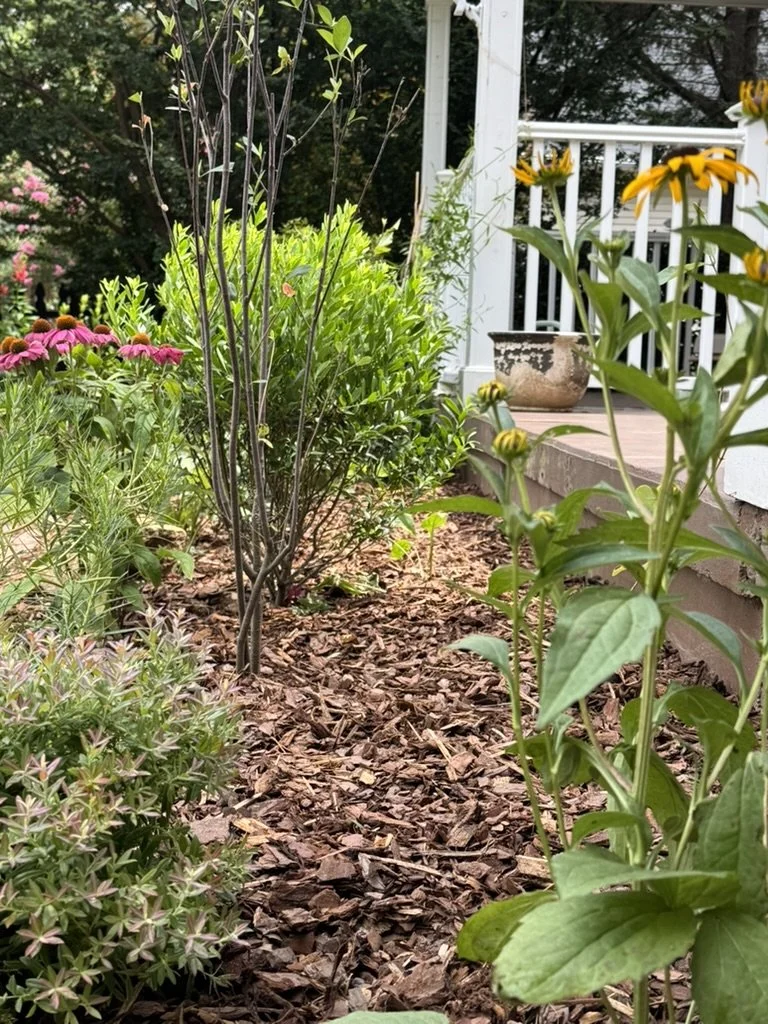
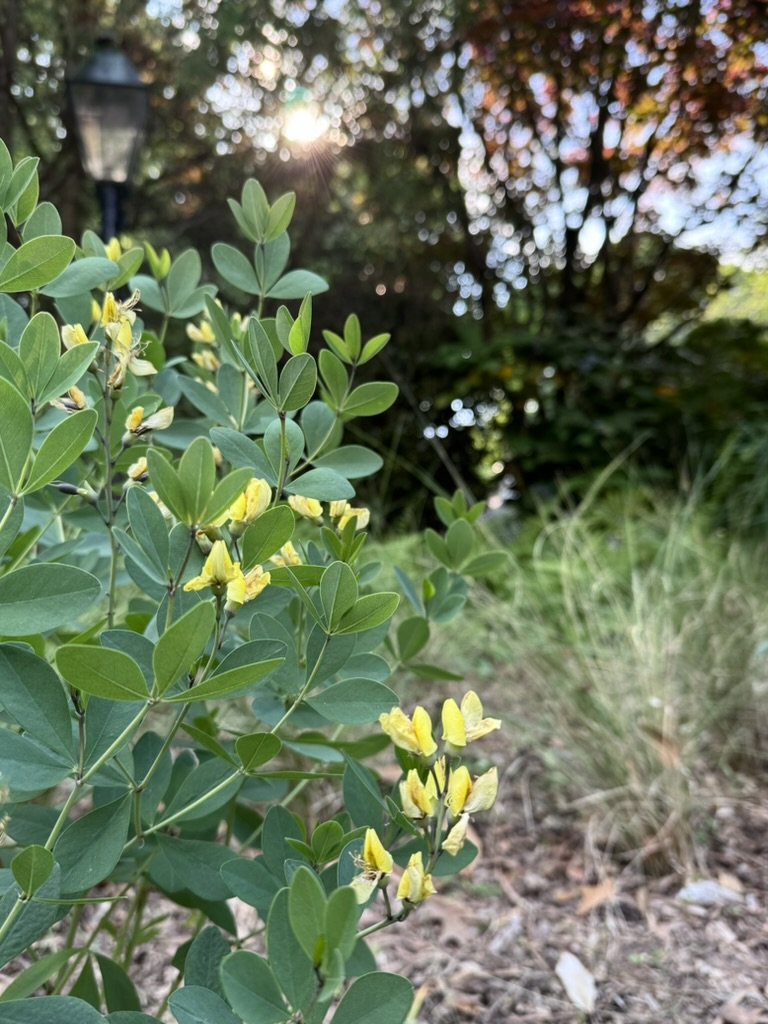
I know, I know, Lenten roses are problematic when unchecked, but a big love for them from the client meant transplanting some into this space from nearby on the property. They’ve been planted alongside natives known for holding their space: taprooted wild blue indigo, colonizing coreopsis, sturdy coneflower, bluestar, and little bluestem. These will grow faster than the Lenten roses, which I’m monitoring to make sure they don’t self-seed.
I’ve been enjoying watching the various textures interact. The plants are filling in well in year two and are providing so many beautiful colors.
one for birds
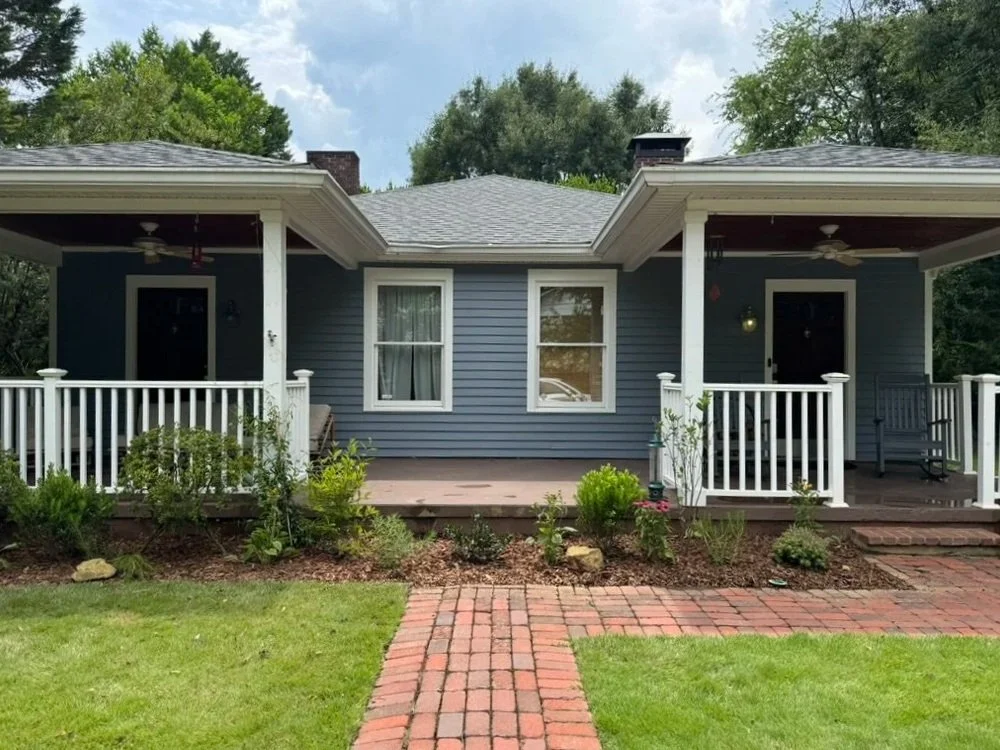
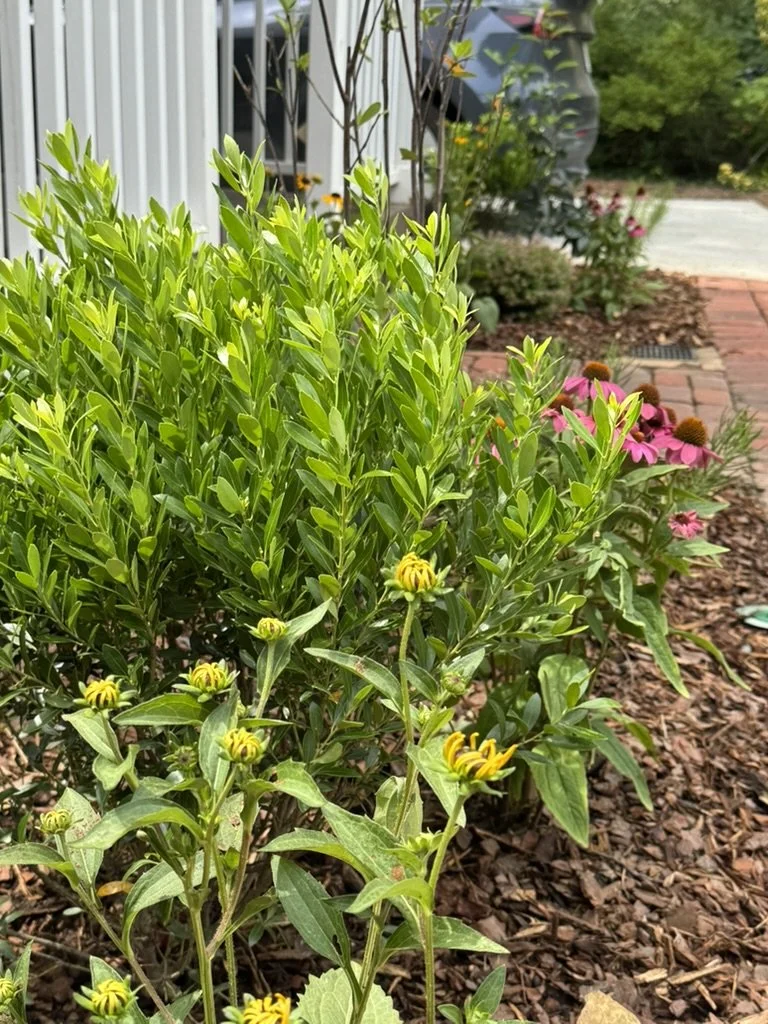
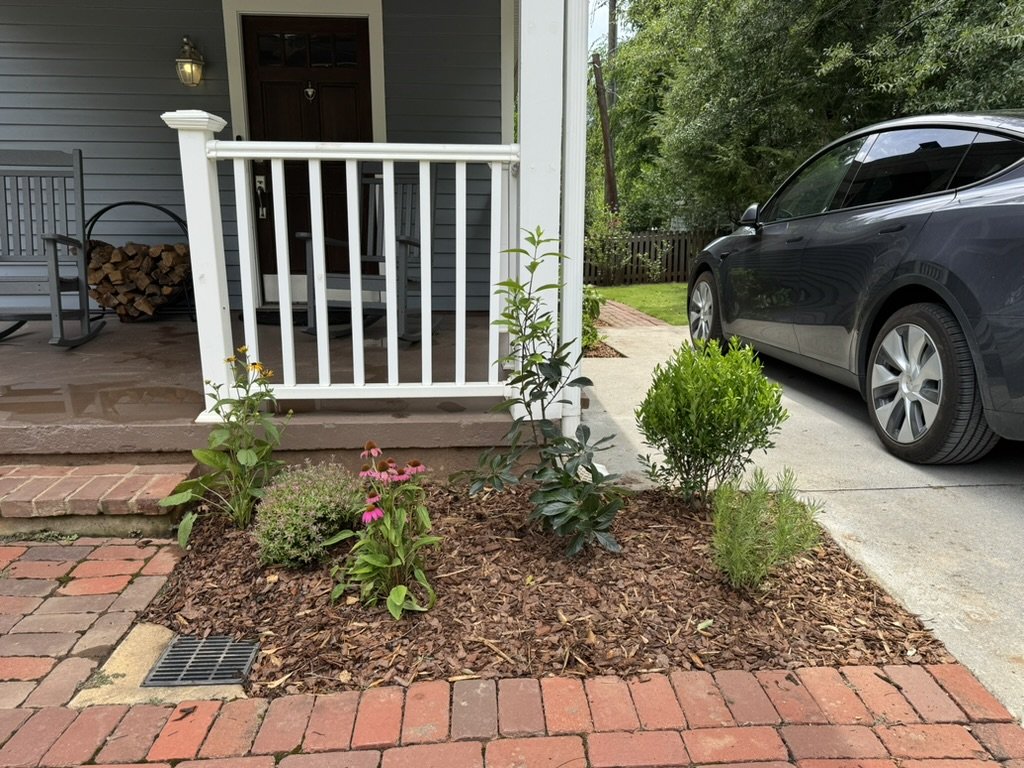
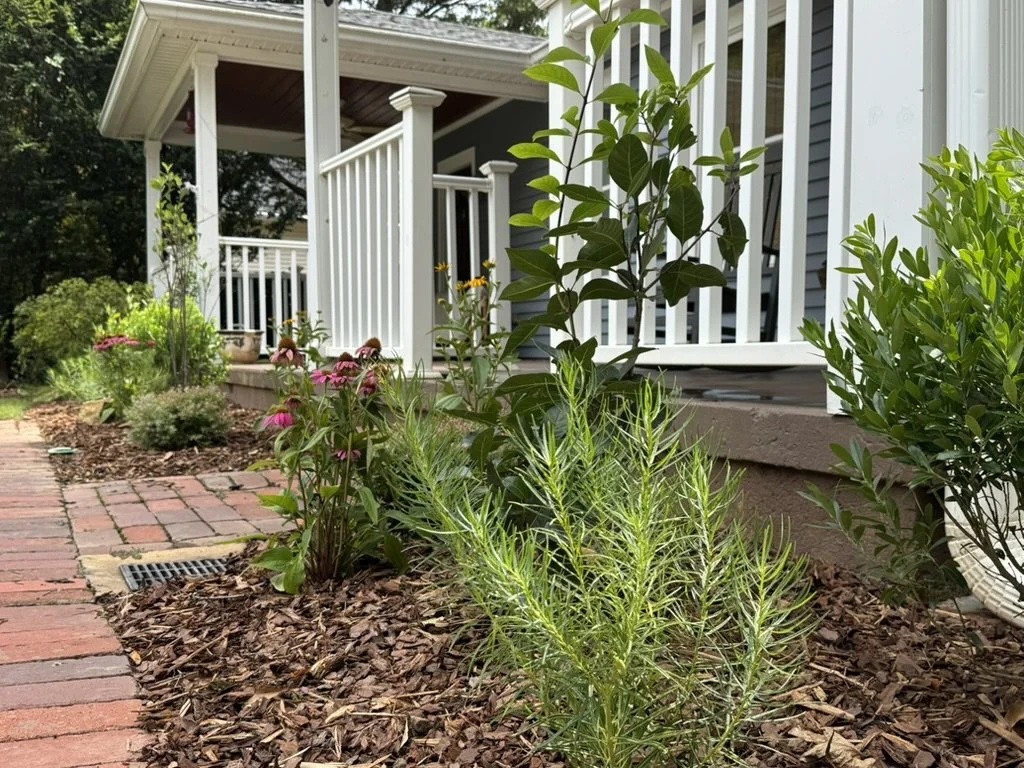
pollinator driveway bed
-
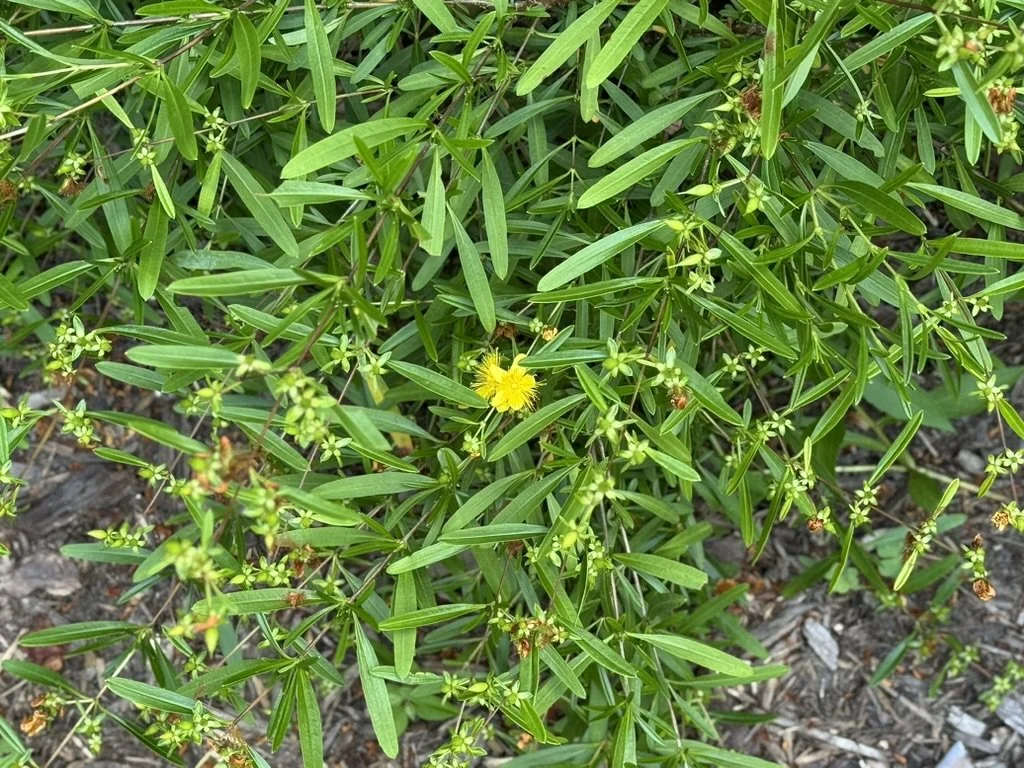
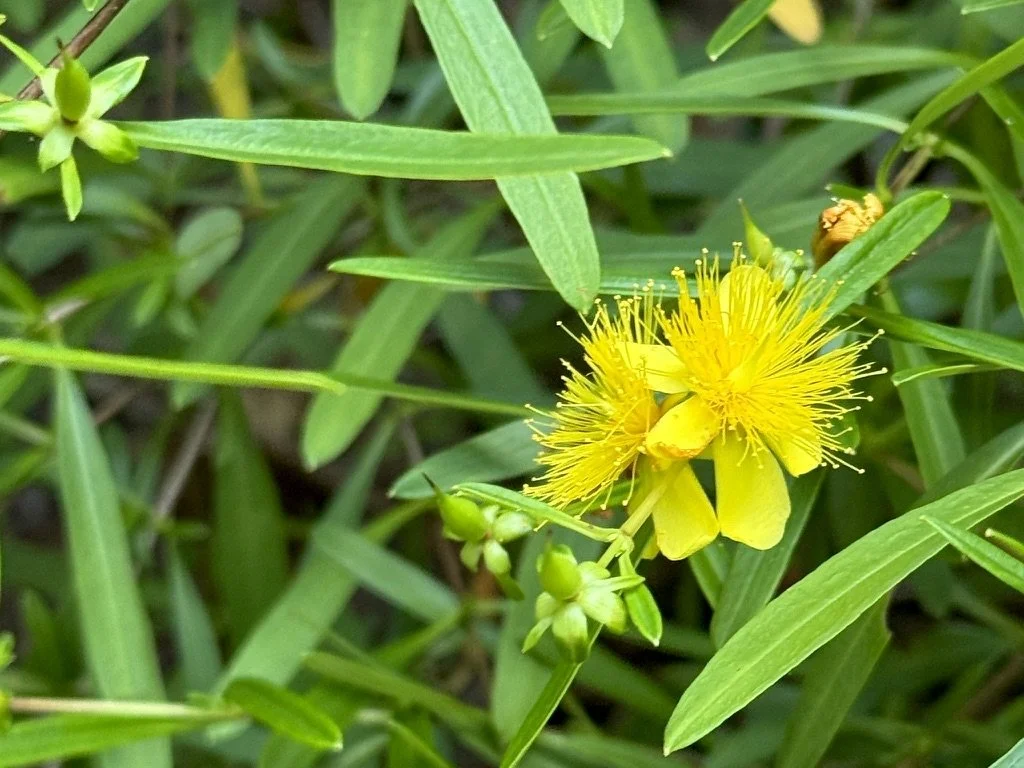
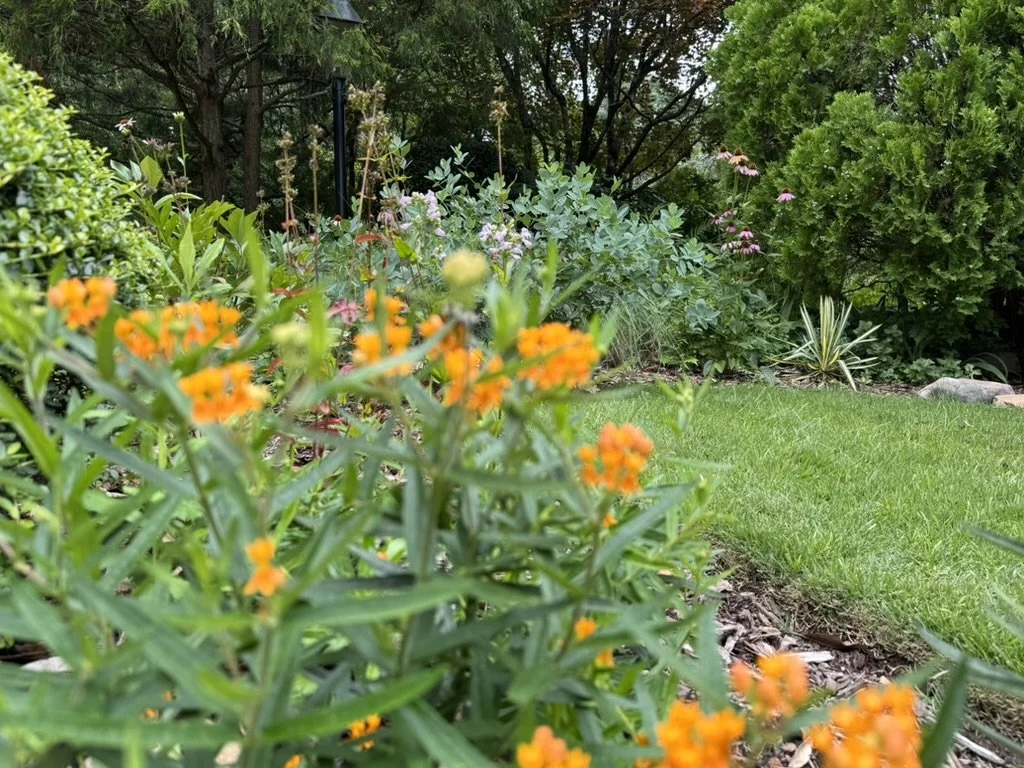
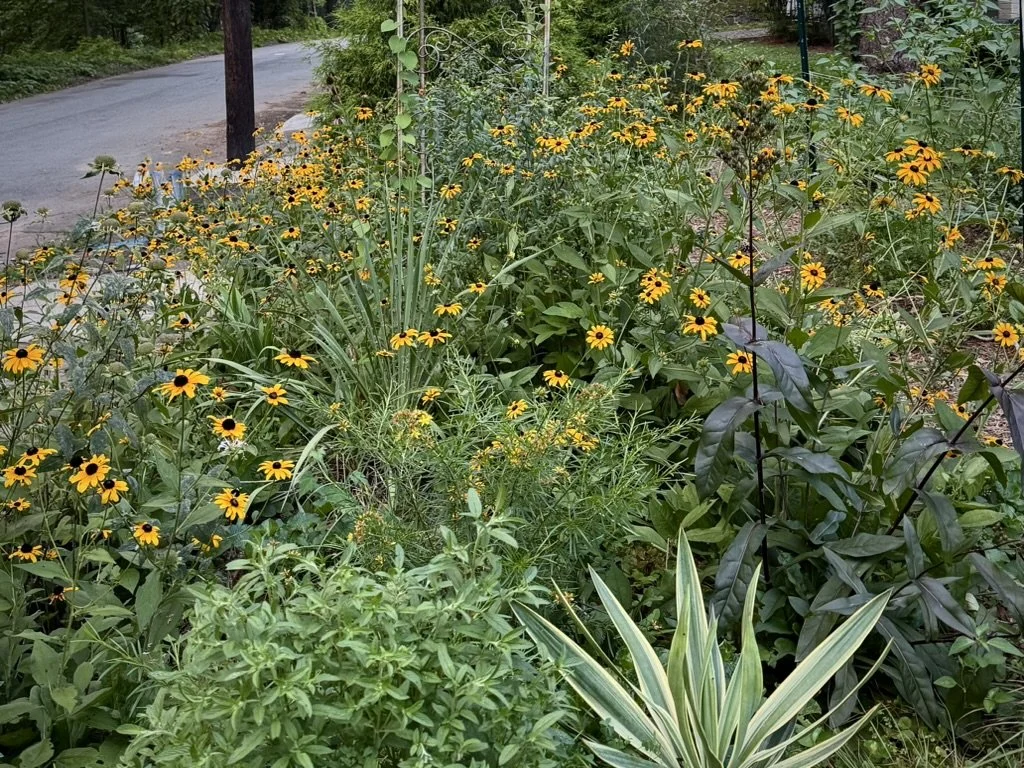
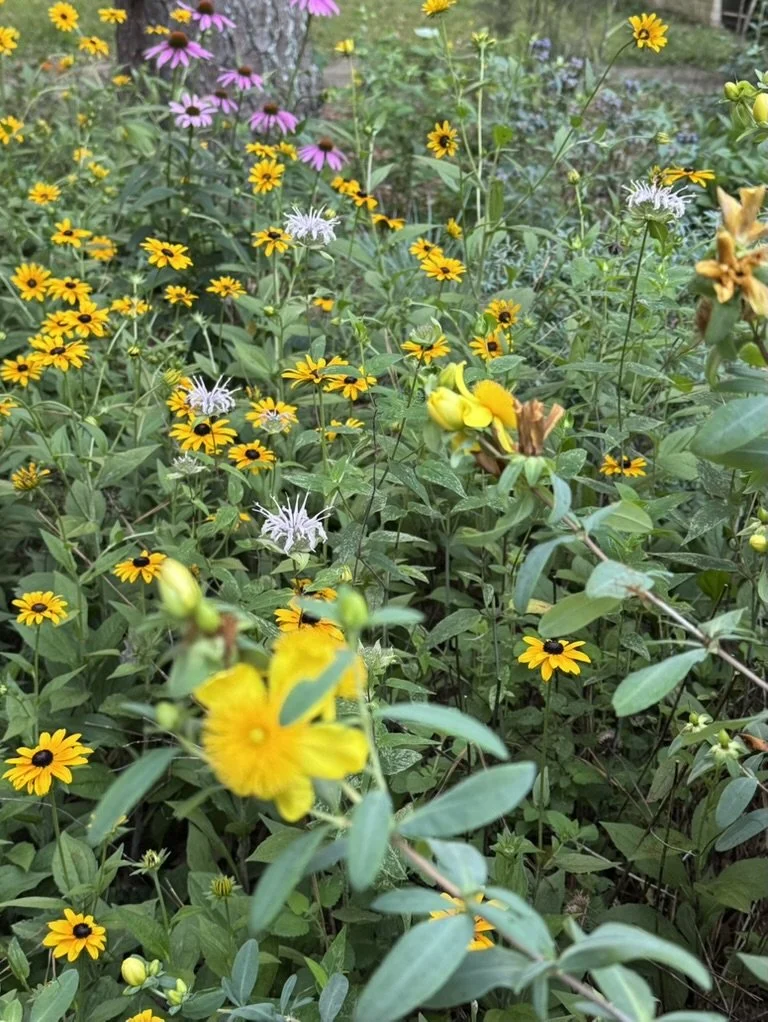
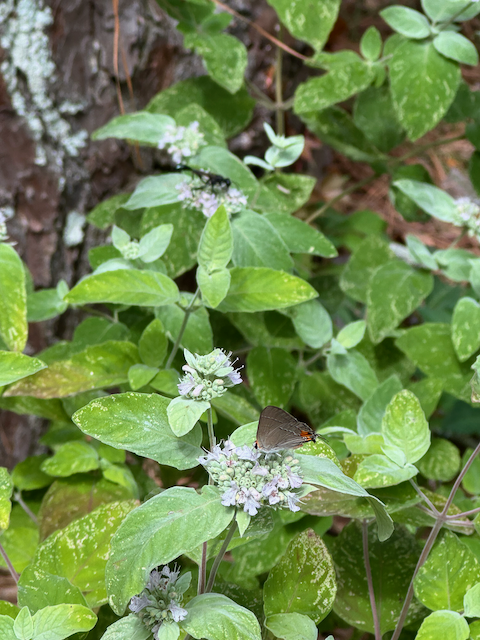
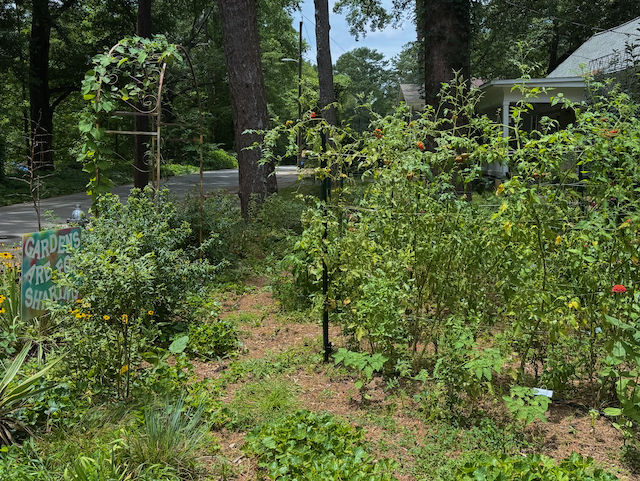
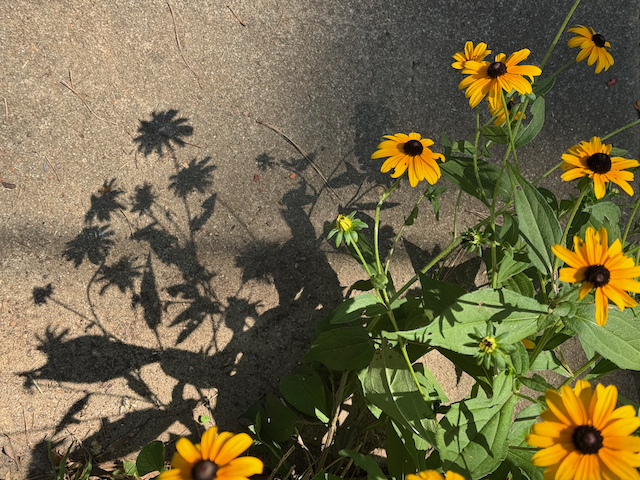
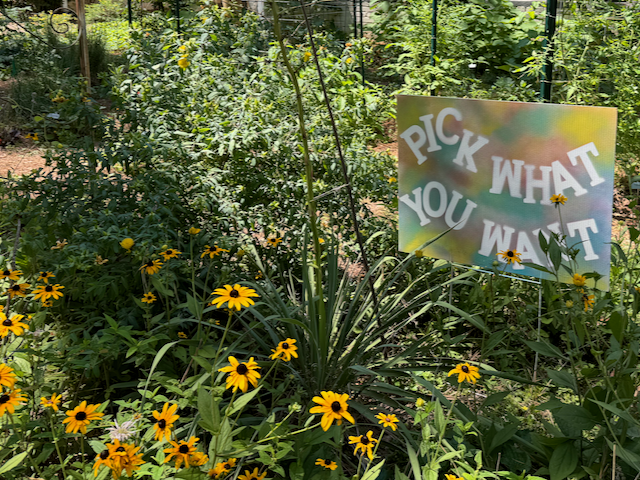
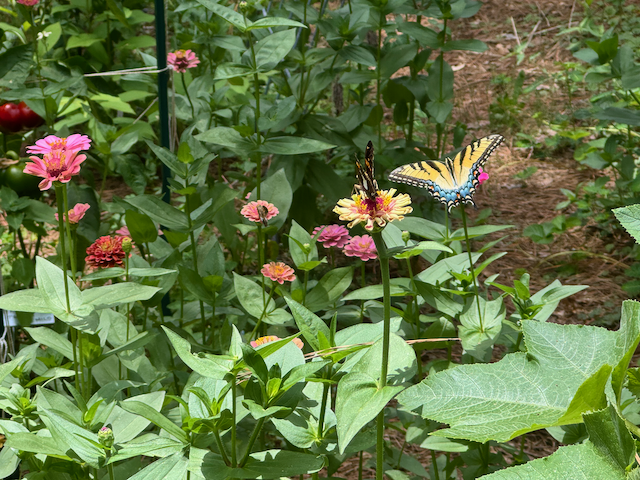
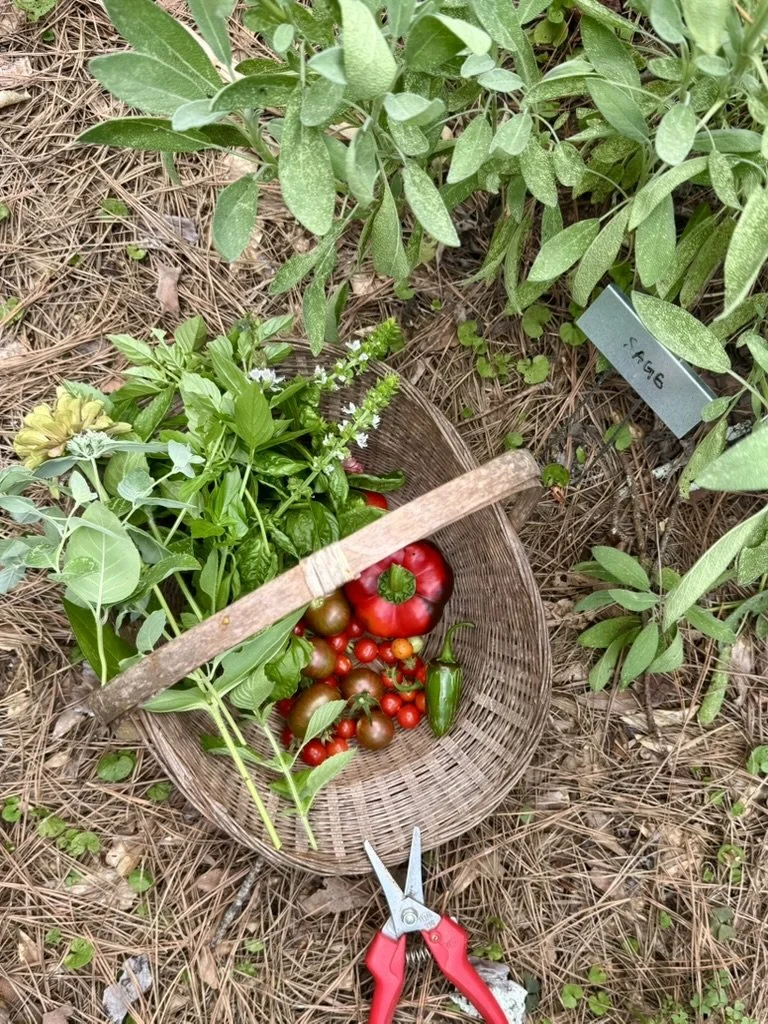
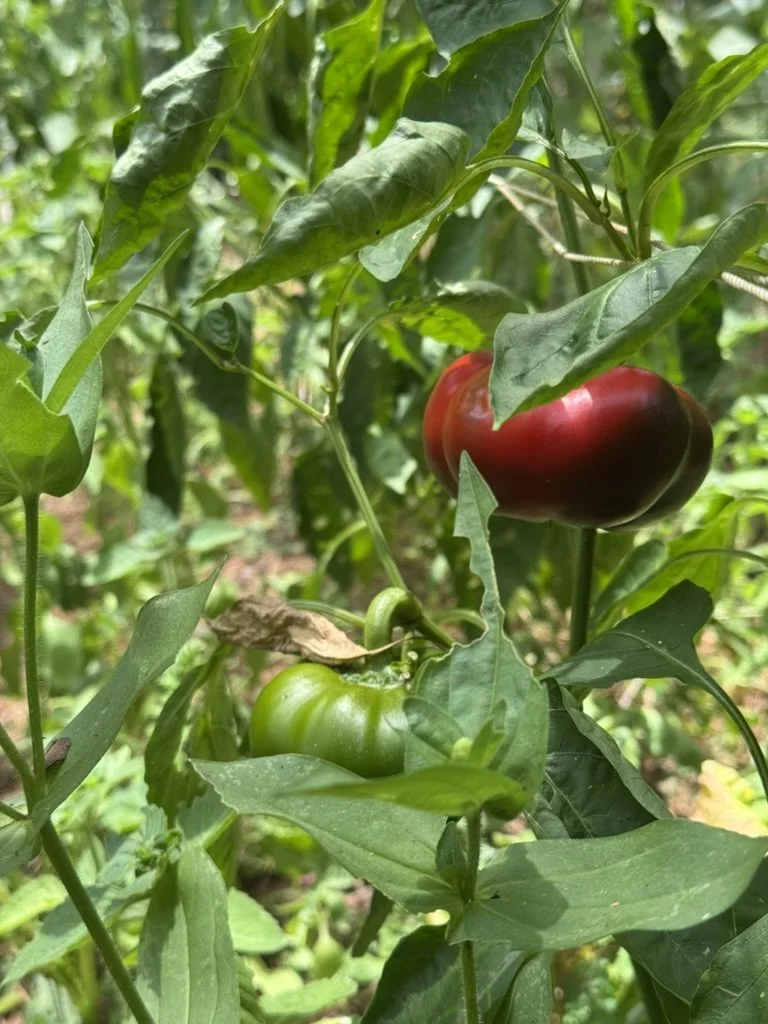
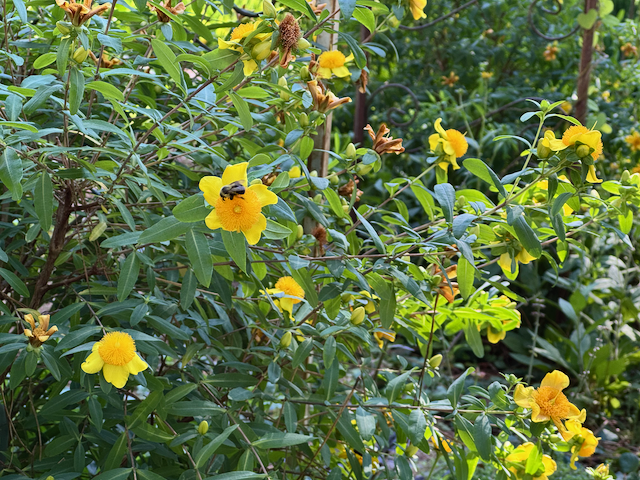
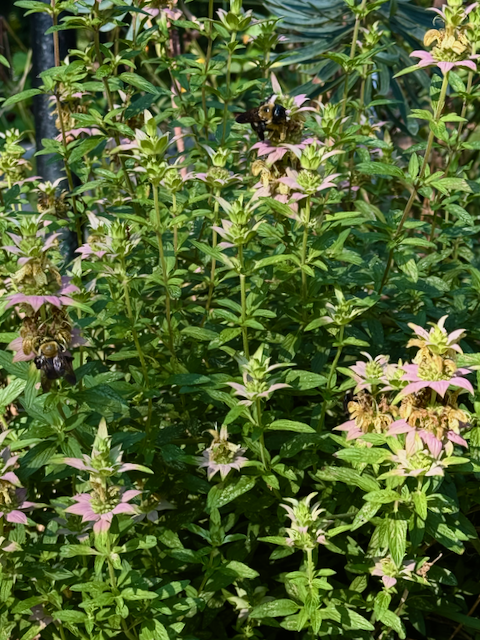
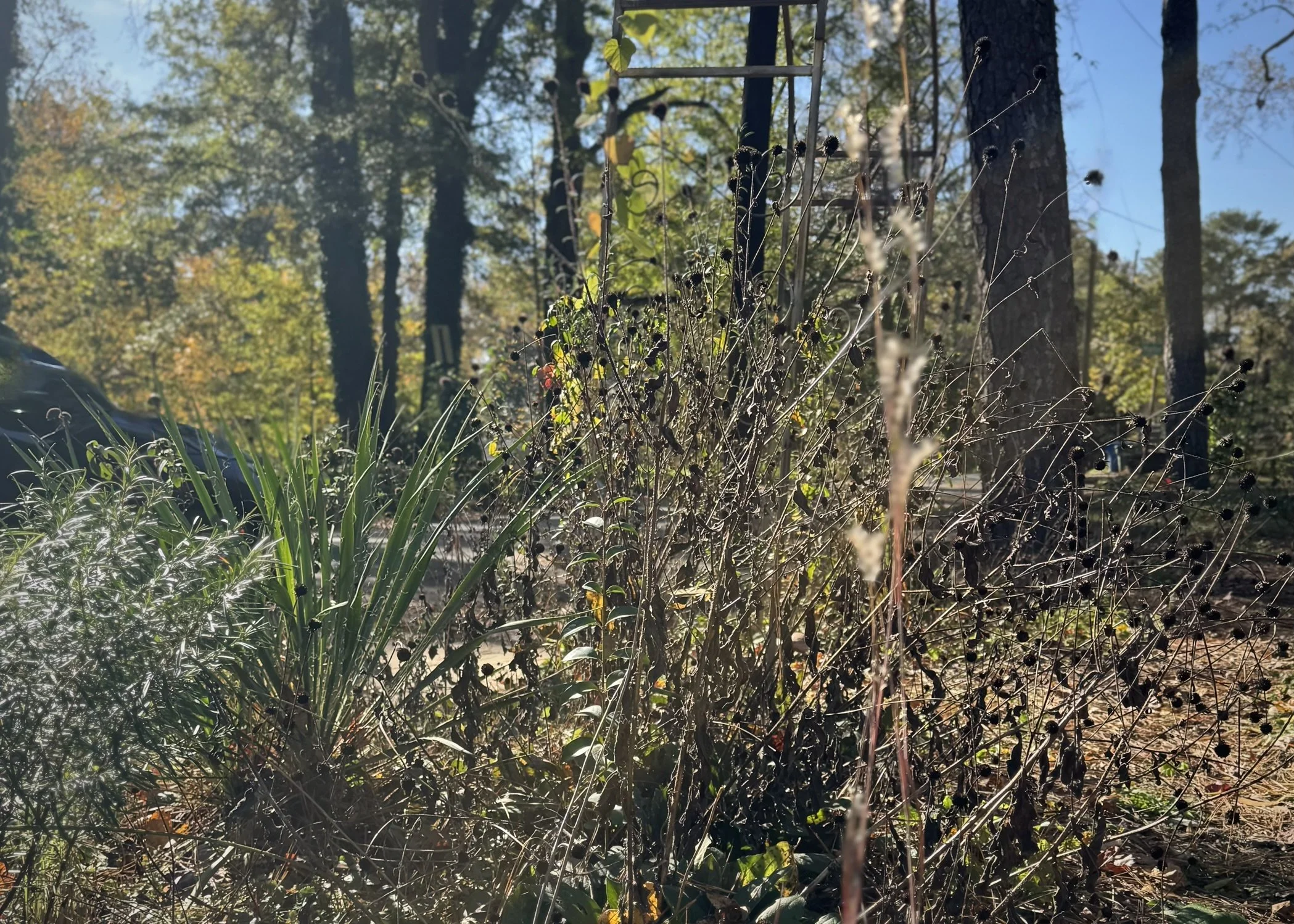
Native pollinator flowers and grasses border the sidewalk of this front yard. Behind them sit more structural yuccas, blueberries, and cedar glade St. John’s wort. These form the foreground for a community-oriented vegetable garden planted with a variety of annual veggies, perennial herbs, and zinnias to bring in more pollinators.
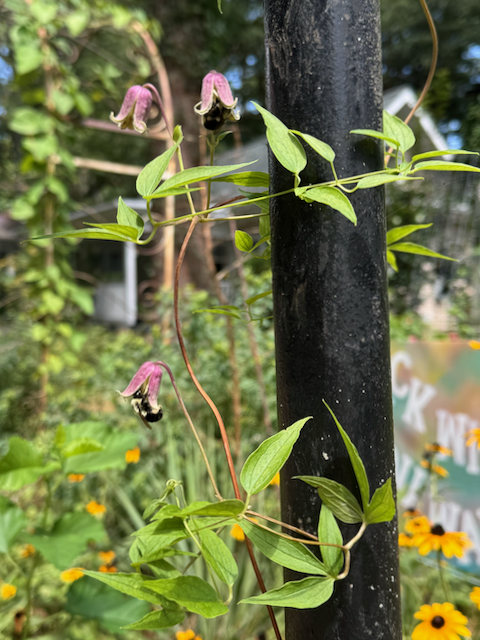
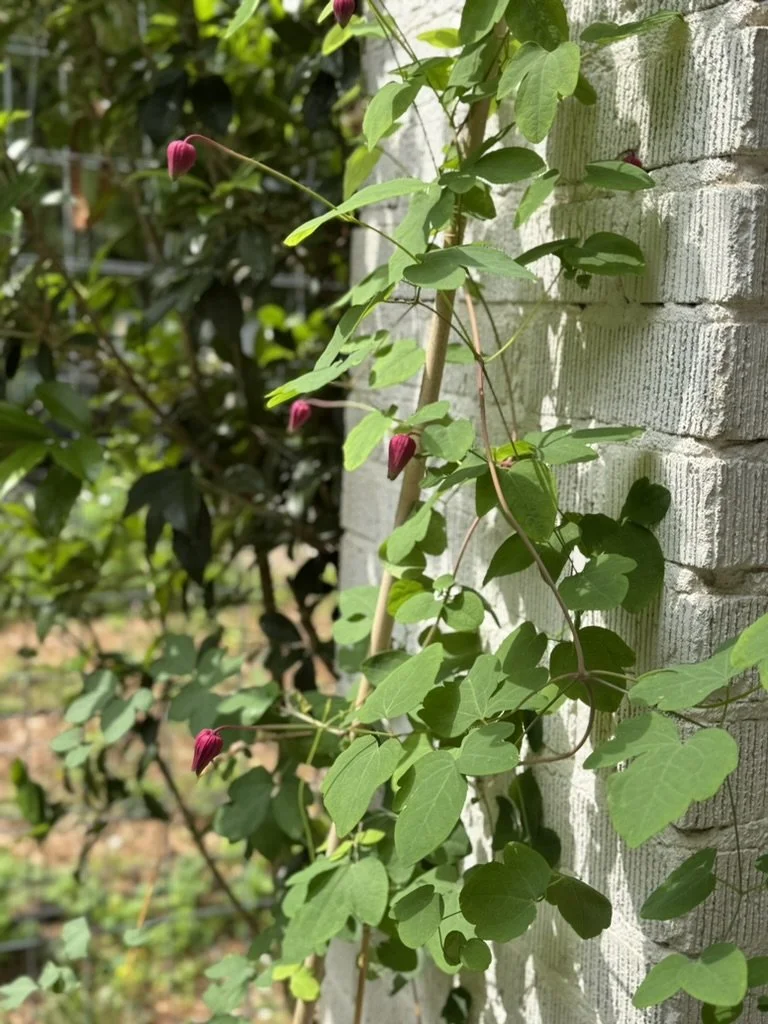
An arbor strung with coral honeysuckle welcomes visitors, and the side of the garden is flanked with bushy St. John’s wort, cup plant, additional blueberries, and pollinator flowers.
-
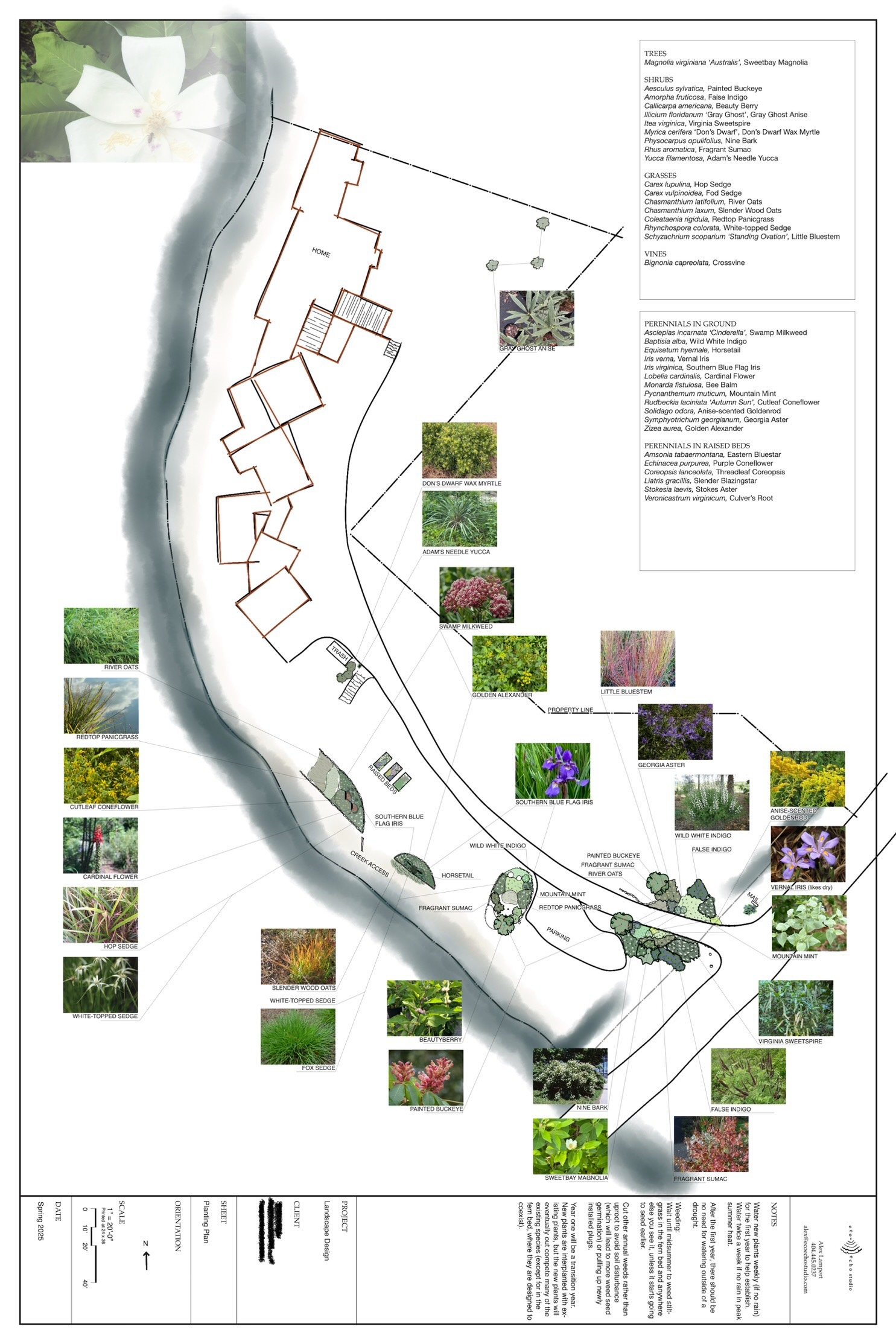
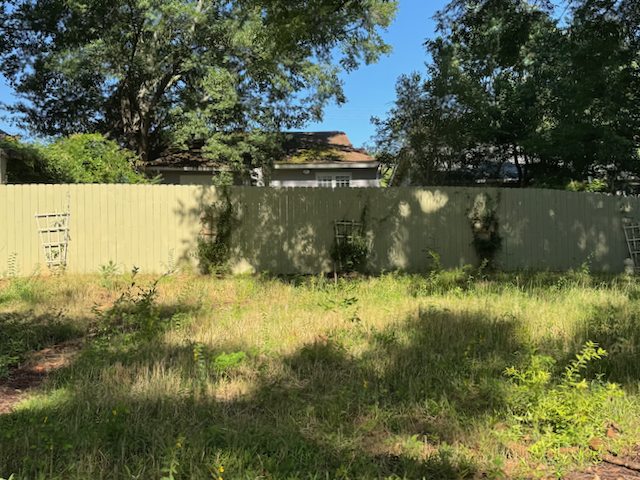
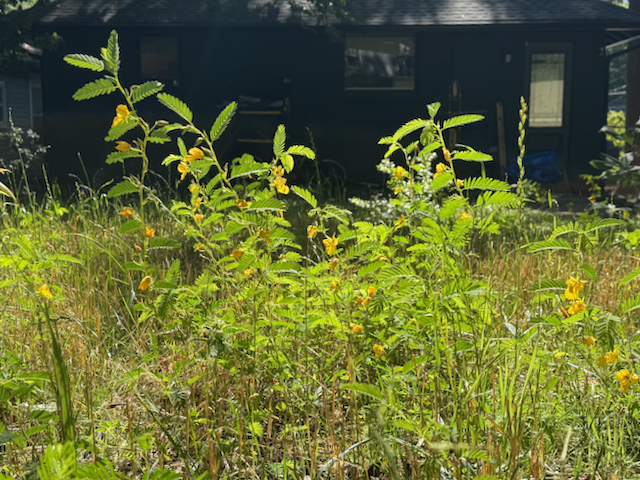
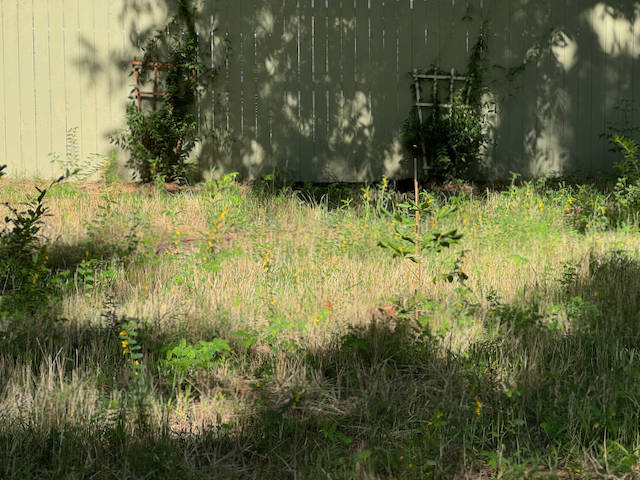
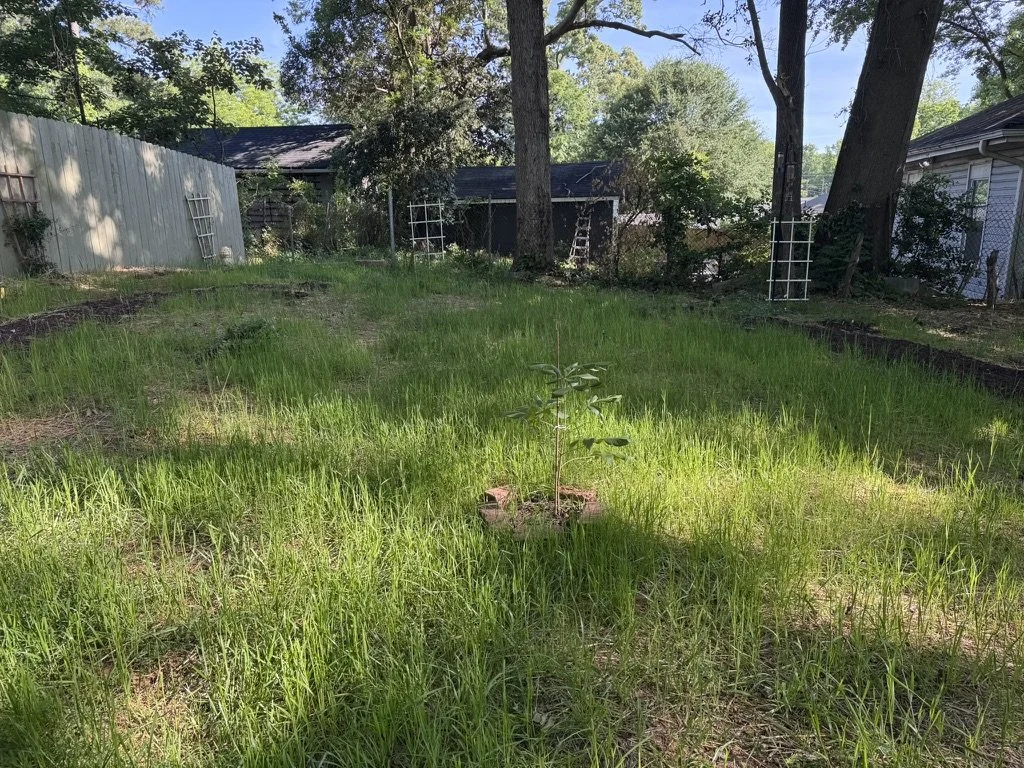
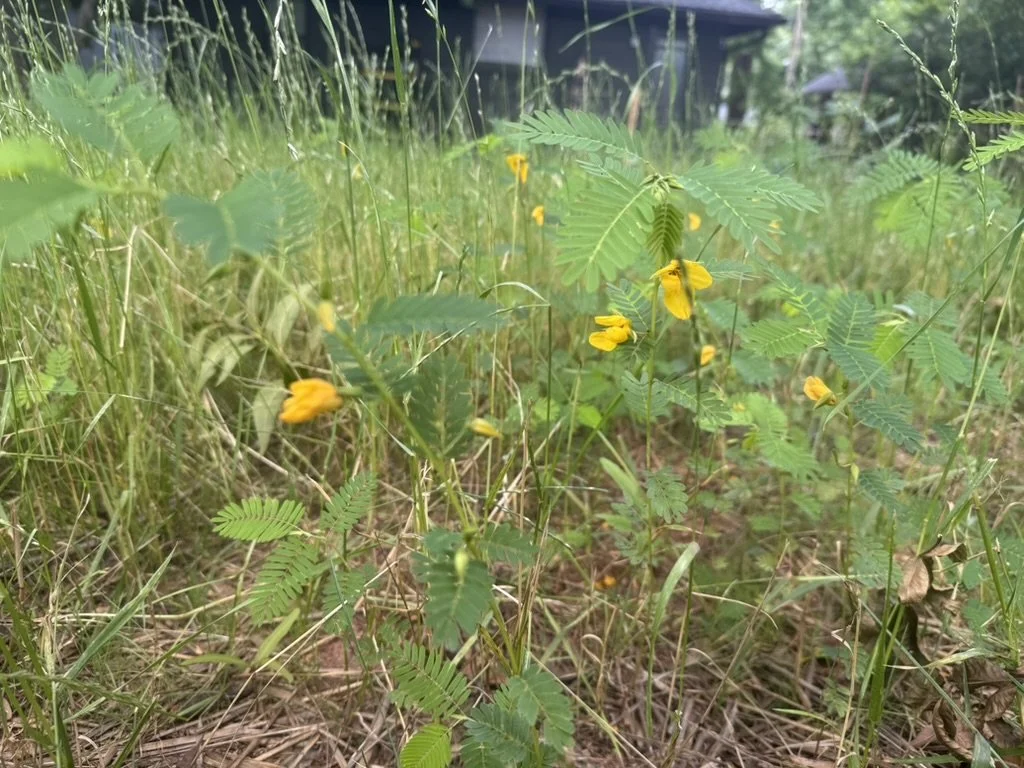
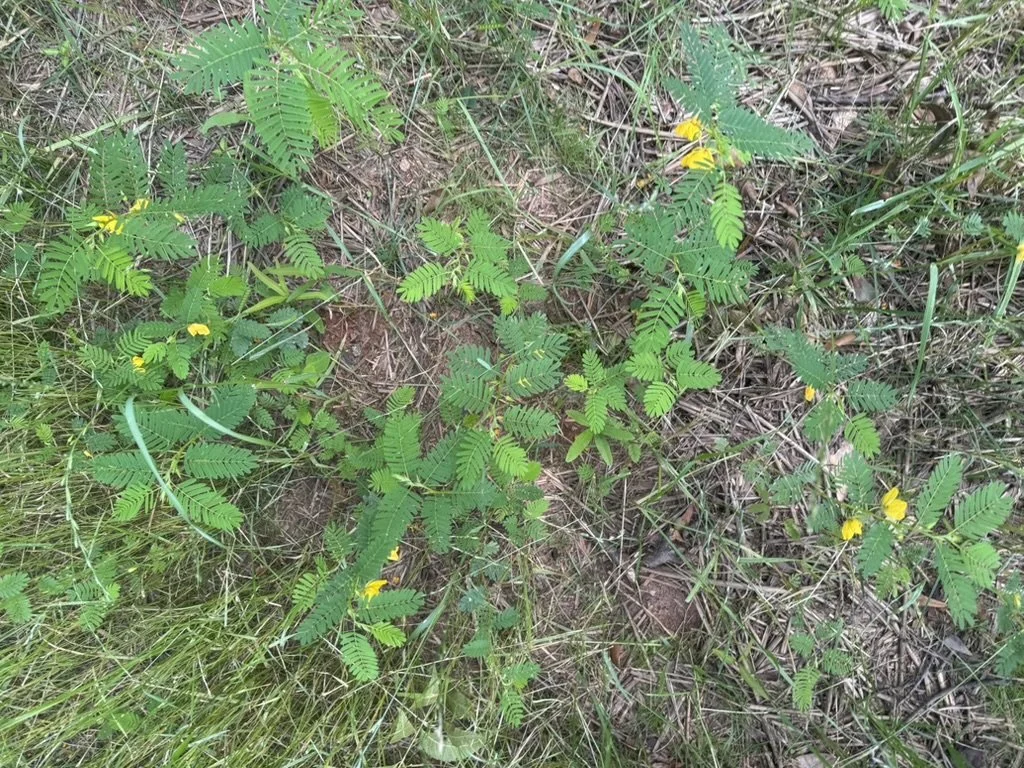
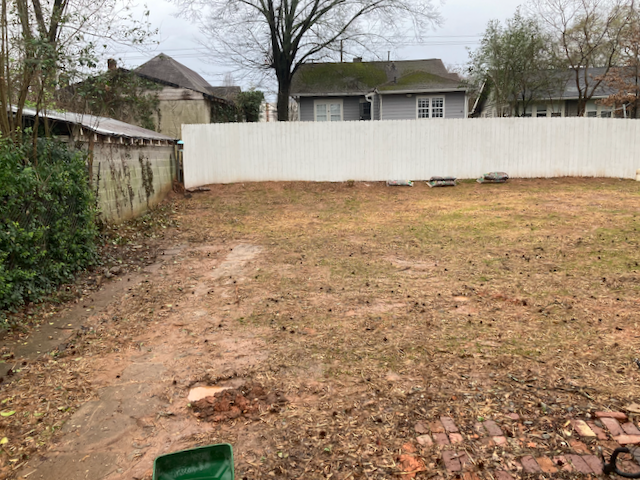
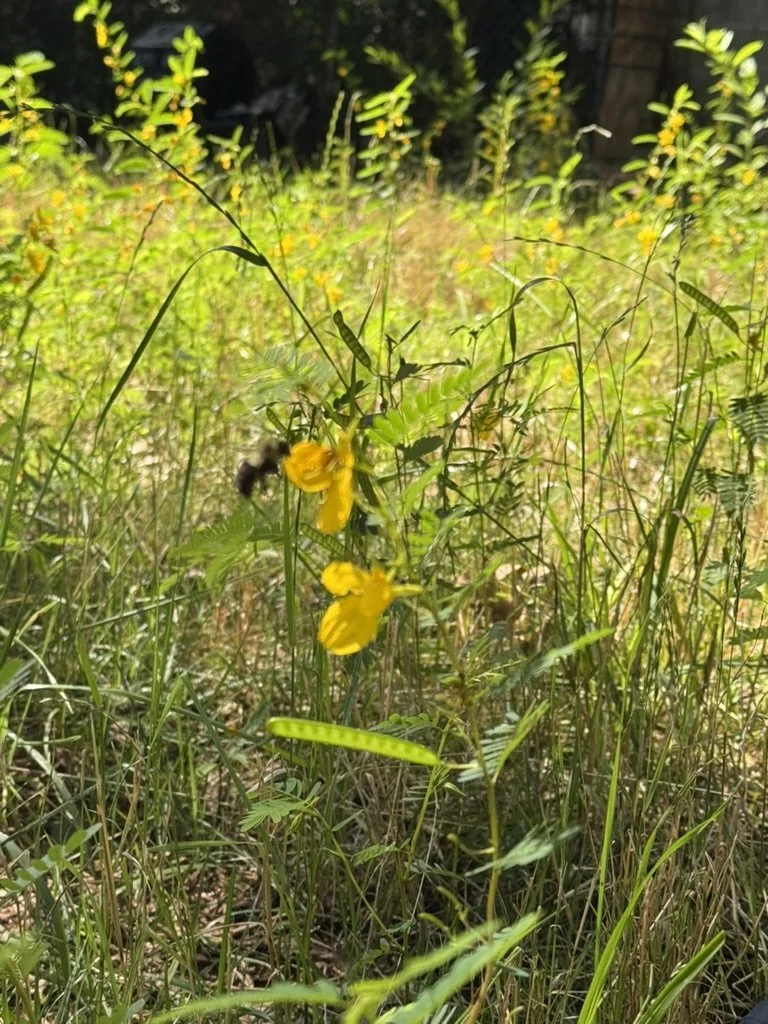
It’s rare to be able to work on land that’s been recently cleared. It’s also difficult to establish a seeded meadow here in the Piedmont. There’s usually too much competition from existing vegetation, especially here in the Southeast, where our growing season is long. But thanks to a sewer pipe that needed replacing, we got a blank slate with this project. The site has a range of sun with some shade from thirsty water oaks.
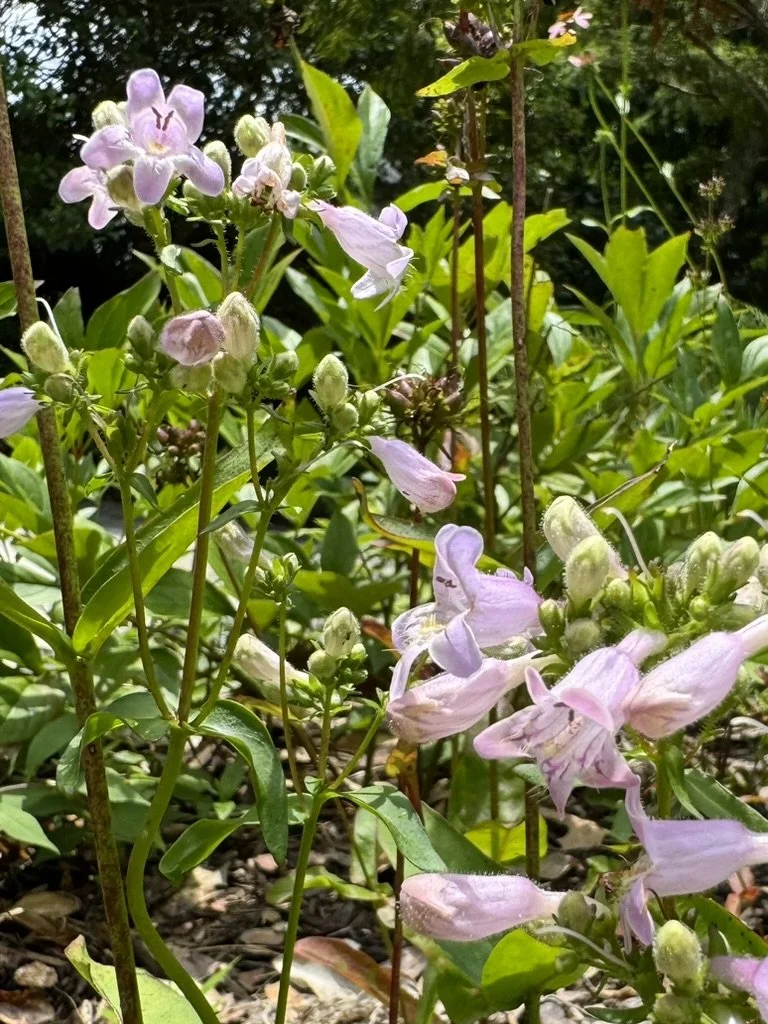
The seed mix uses a few early-succession species like partridge pea, sensitive pea, and Virginia wild rye, to help establish a foothold alongside sheep fescue as a cover crop. The coming years should bring more of the slower-growing perennials, like butterfly milkweed, penstemon, little bluestem, narrowleaf mountain mint, and so many more.
-
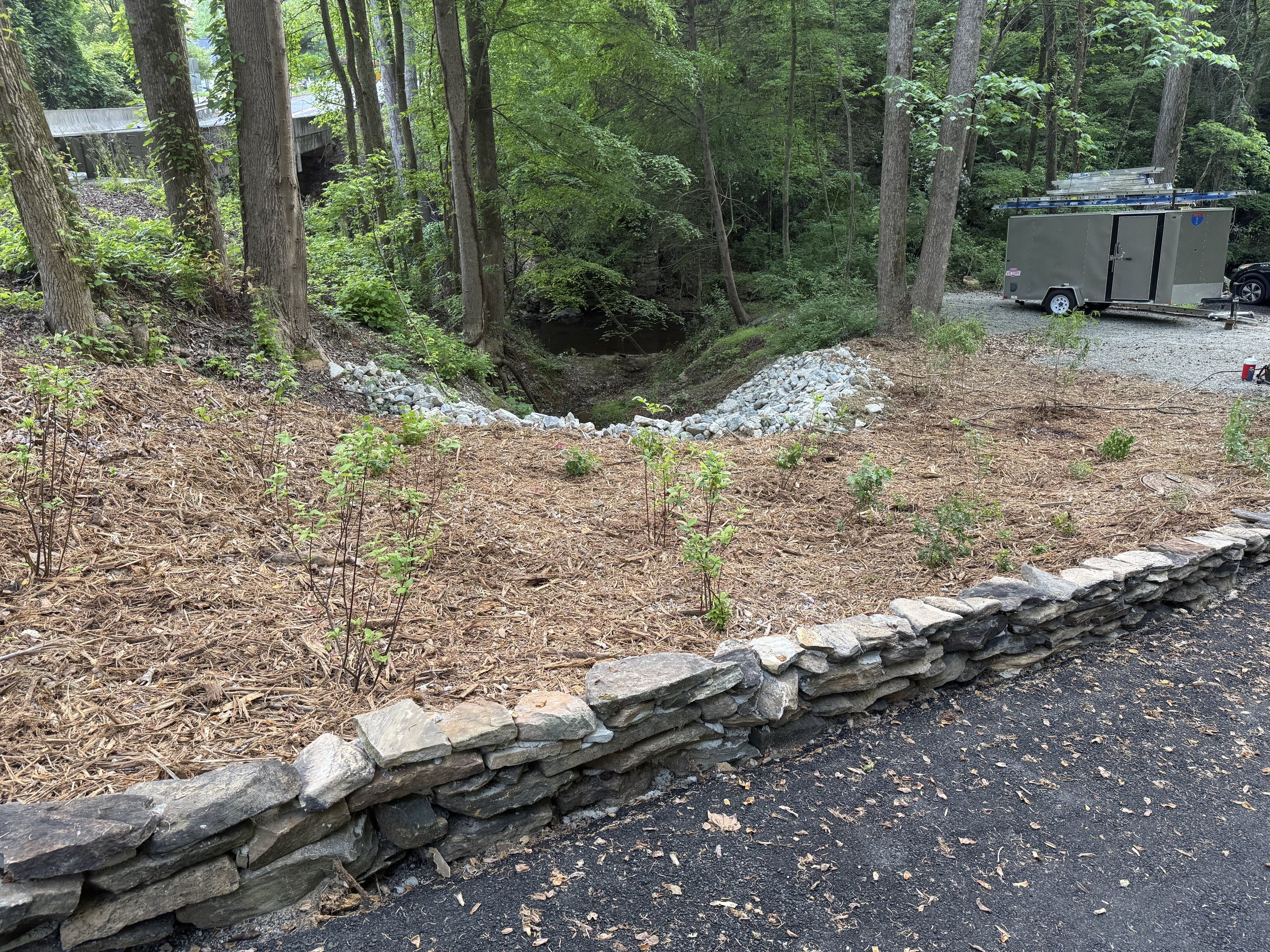
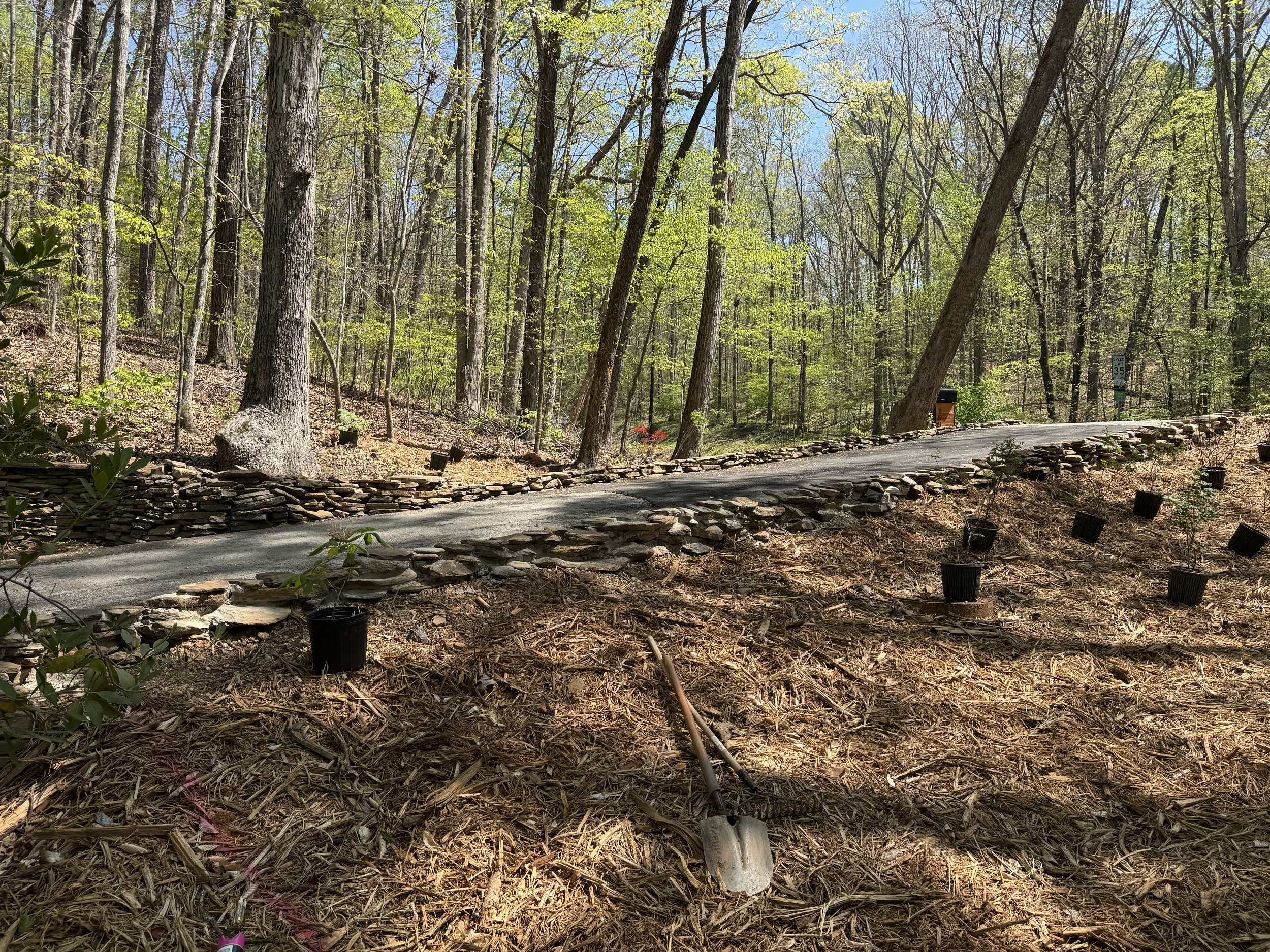
Immense gratitude is due for the opportunity to work on this beautiful land, way up in the burbs. My commute to get to the site is long. After driving on a couple highways and through what feels like endless strip malls and parking lots, a road narrows as it winds around subdivisions and shaded curves and up and down hills. Eventually, there is a small bridge that crosses a creek. A long driveway flanks the base of a woodland slope populated by bigleaf magnolias, beeches, and painted buckeyes as it overlooks the wide, shallow creek. It is a gorgeous place already, but there is still wildlife, water, and land to support and natural beauty that can be augmented with careful placement of natives.
I’ve put over 600 plants into this ground, 40 species of shrubs and perennials. Grasses and sedges comprise 60% of plant quantity. There is now habitat cover where there wasn’t. There are host plants for so many butterflies and moths, including monarchs, skippers, duskywings, hairstreaks, the list goes on. There are sources of food via nectar, pollen, and berries for the growing season, with the potential to feed a diverse array of long- and short-tongued bees, beetles, butterflies, moths, hummingbirds, songbirds, and small mammals. It doesn’t look like much yet, as new plantings go, but the coming years will bring something really special.
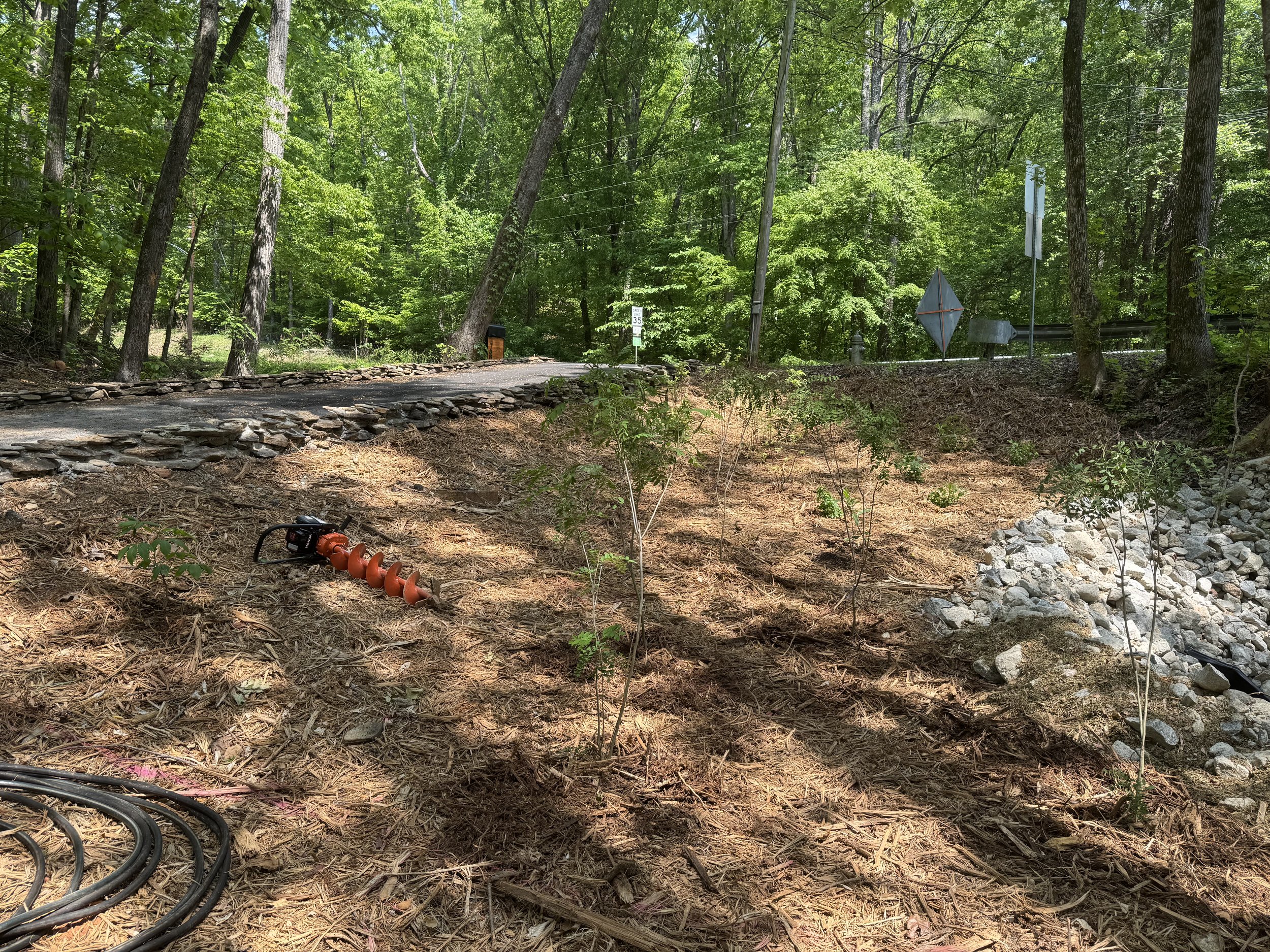
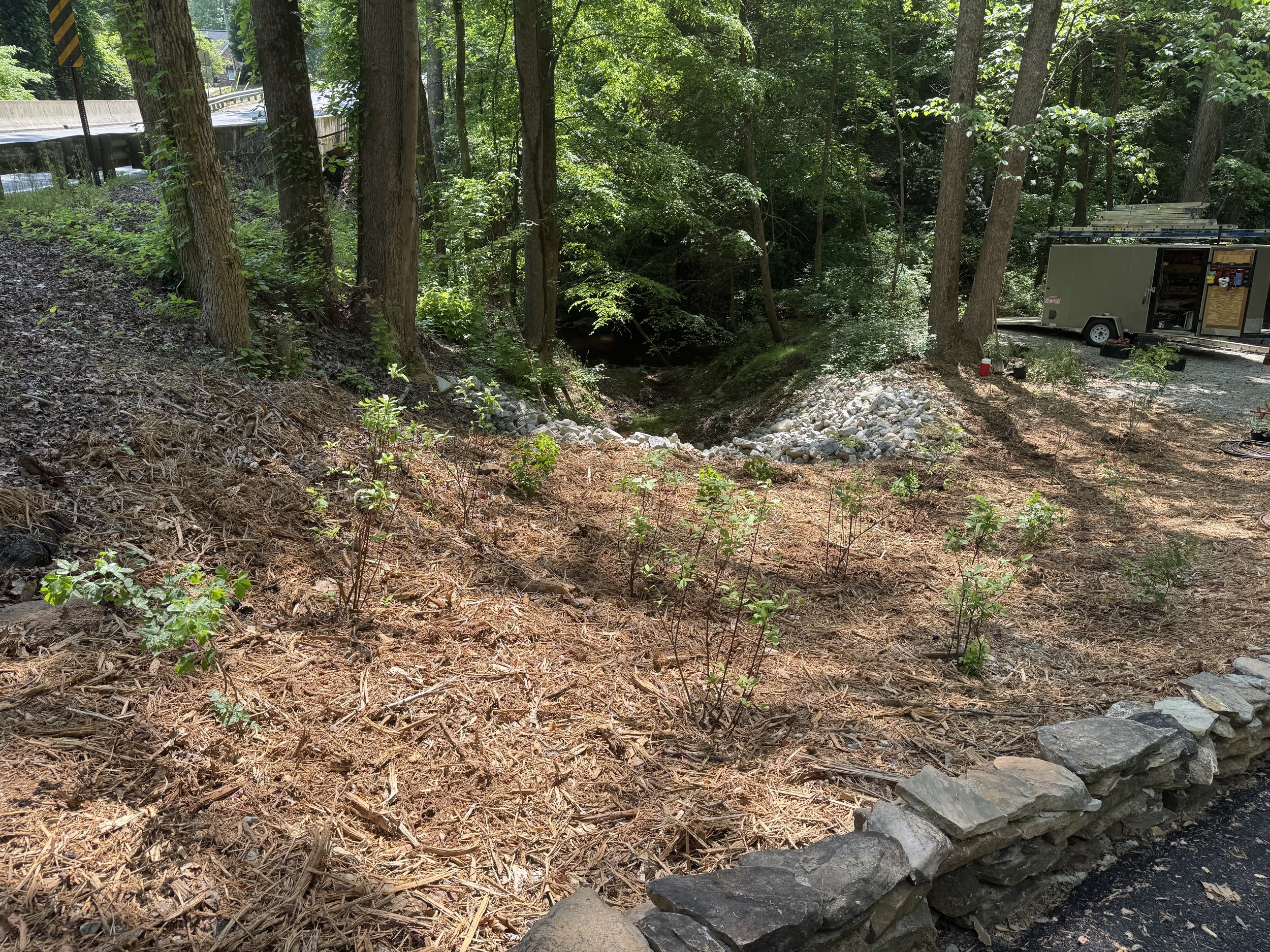
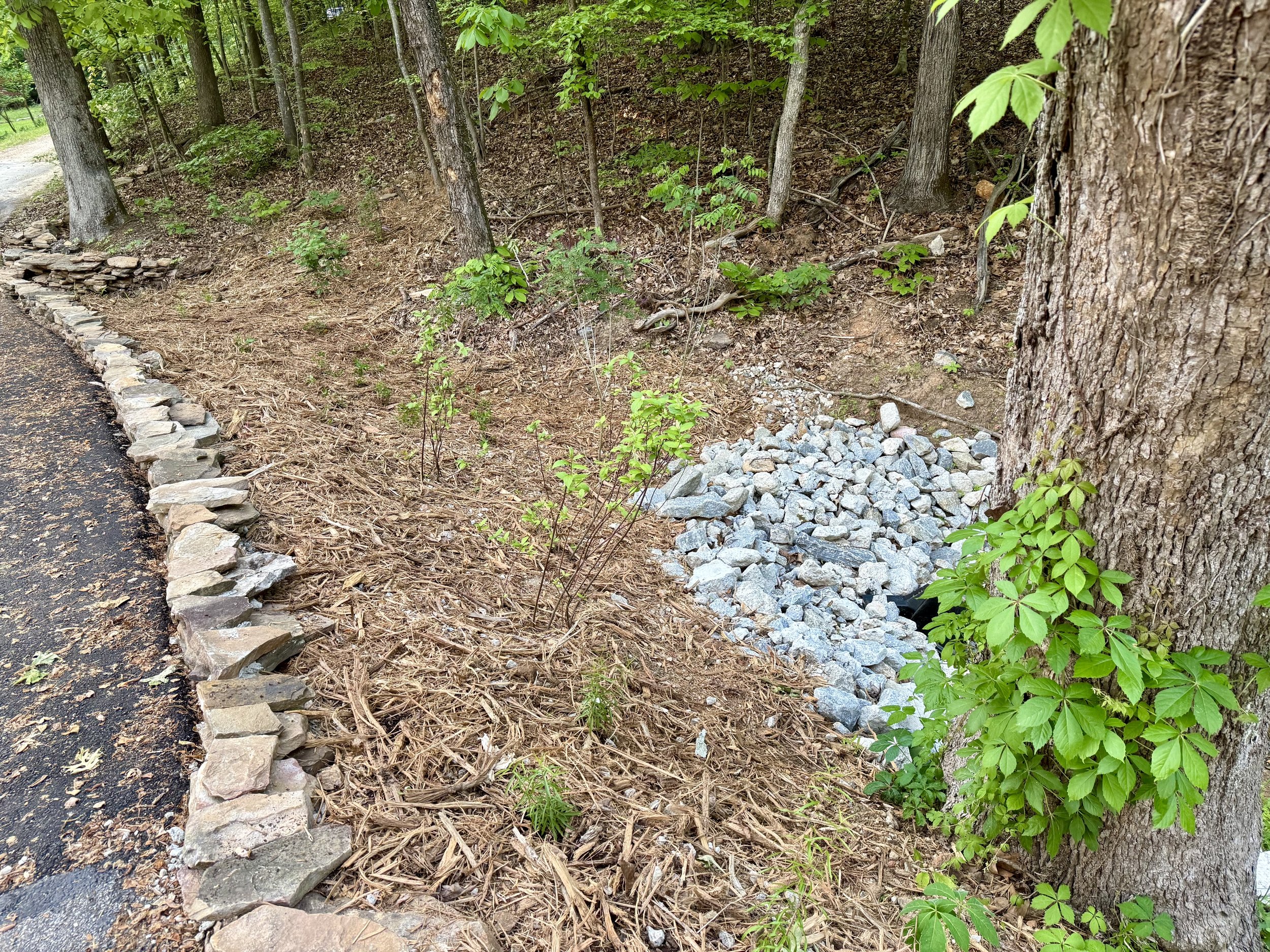
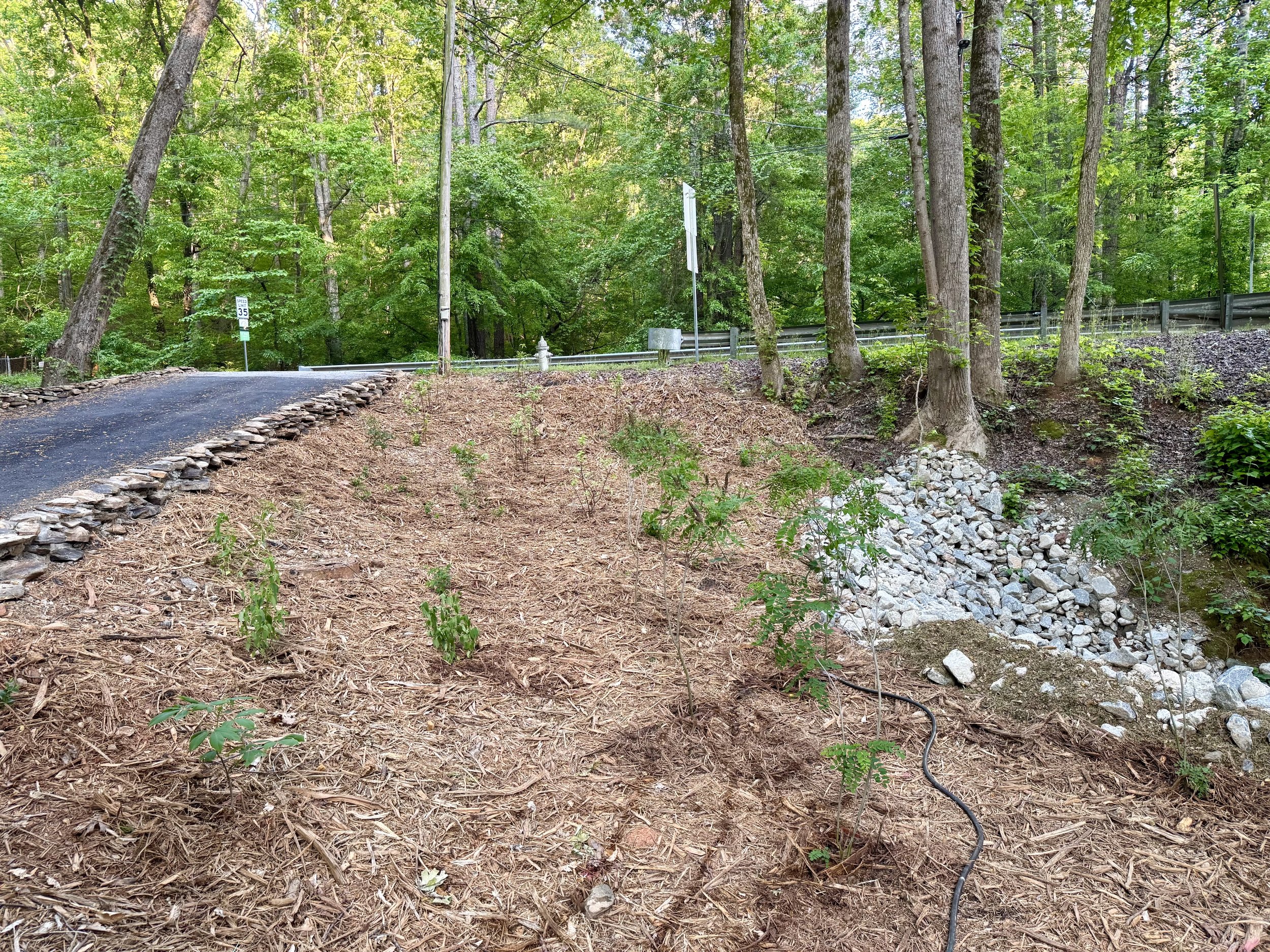
There are separate planting beds connected by some continuity of species, each with distinct conditions and, therefore, character. At the entrance, recent construction yielded yards of rocky fill dirt needed to be planted. These are planted primarily with shrubs that are at home on rocky slopes, ravines, and creeksides with attention to the flow of water off the road and towards the creek. Closer to the driveway, there are perennials that thrive in poor, rocky soils. I took liberties with a couple of adaptive species that love to spread out, too. All in drifts of color and texture.
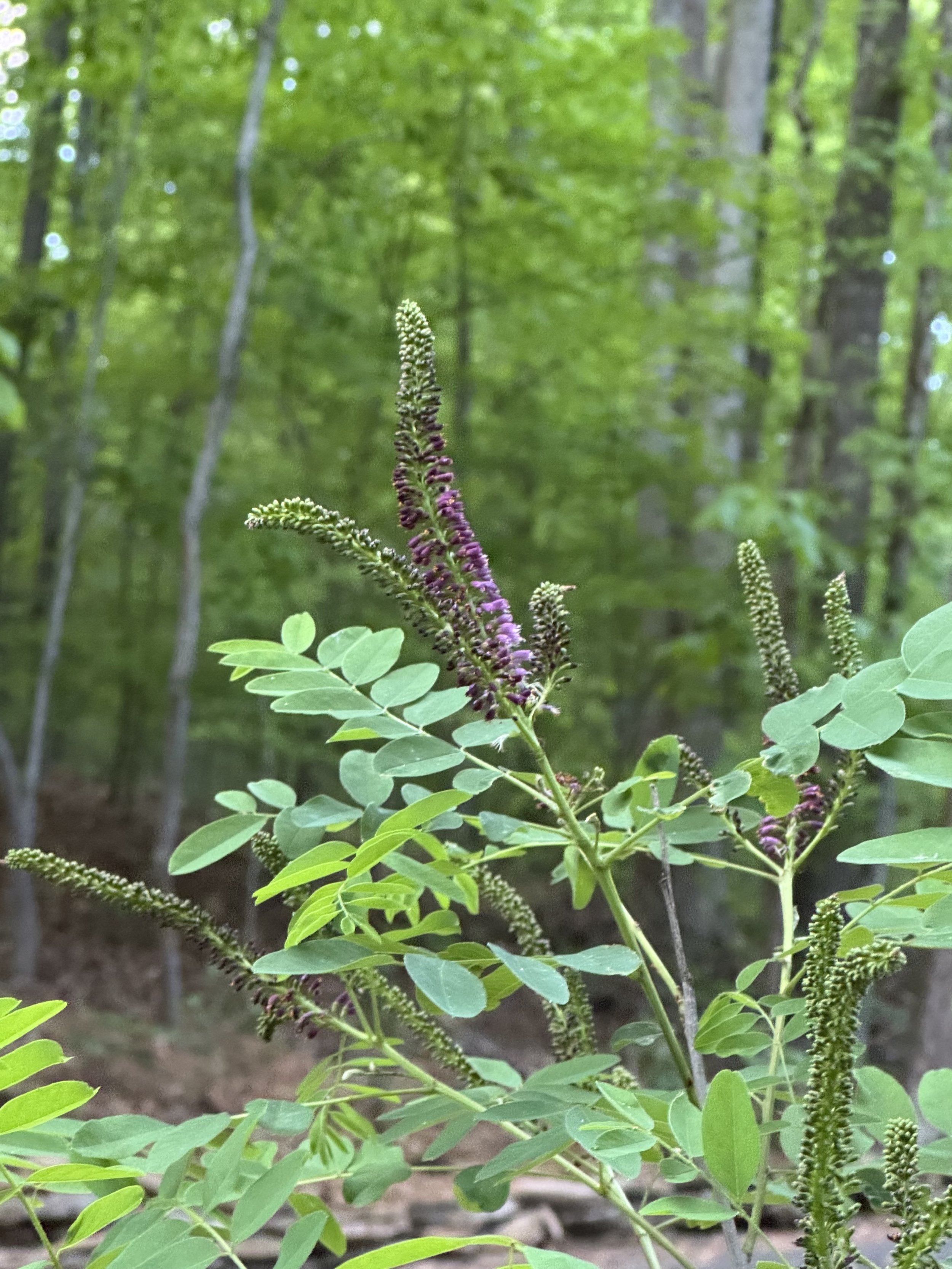
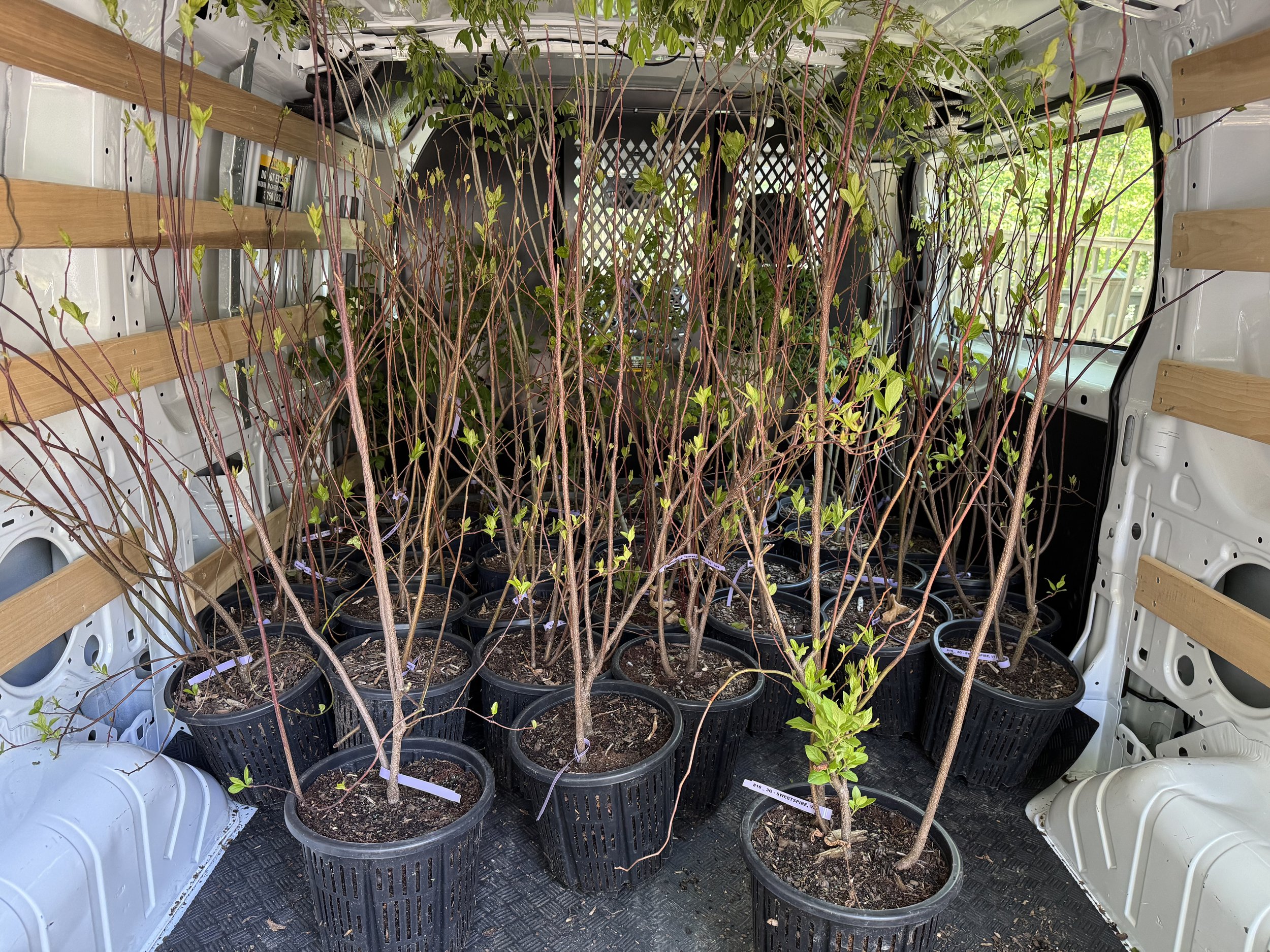
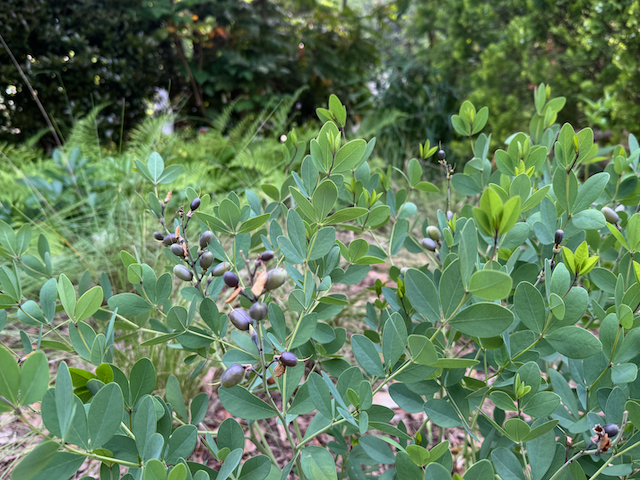
Amorpha fruticosa, endearingly called bastard indigo bush, is an underutilized shrub. Its pinnate, round, blue-tinted leaves are so charming. Its flowers are deeply purple with golden pollen accents. They were blooming when I planted them, and as I was watering them in, I saw them visited by a couple species. They form thickets and can handle rocky soil and some annual pruning if density is desired, and it is. Ninebark sits on the opposite side of the shrub planting here, one the steep slope from the street and above the culvert. Virginia sweetspire is also planted in the large bed to help prevent erosion from water running off the street and driveway. It’s one of my favorites to plant in a mass.
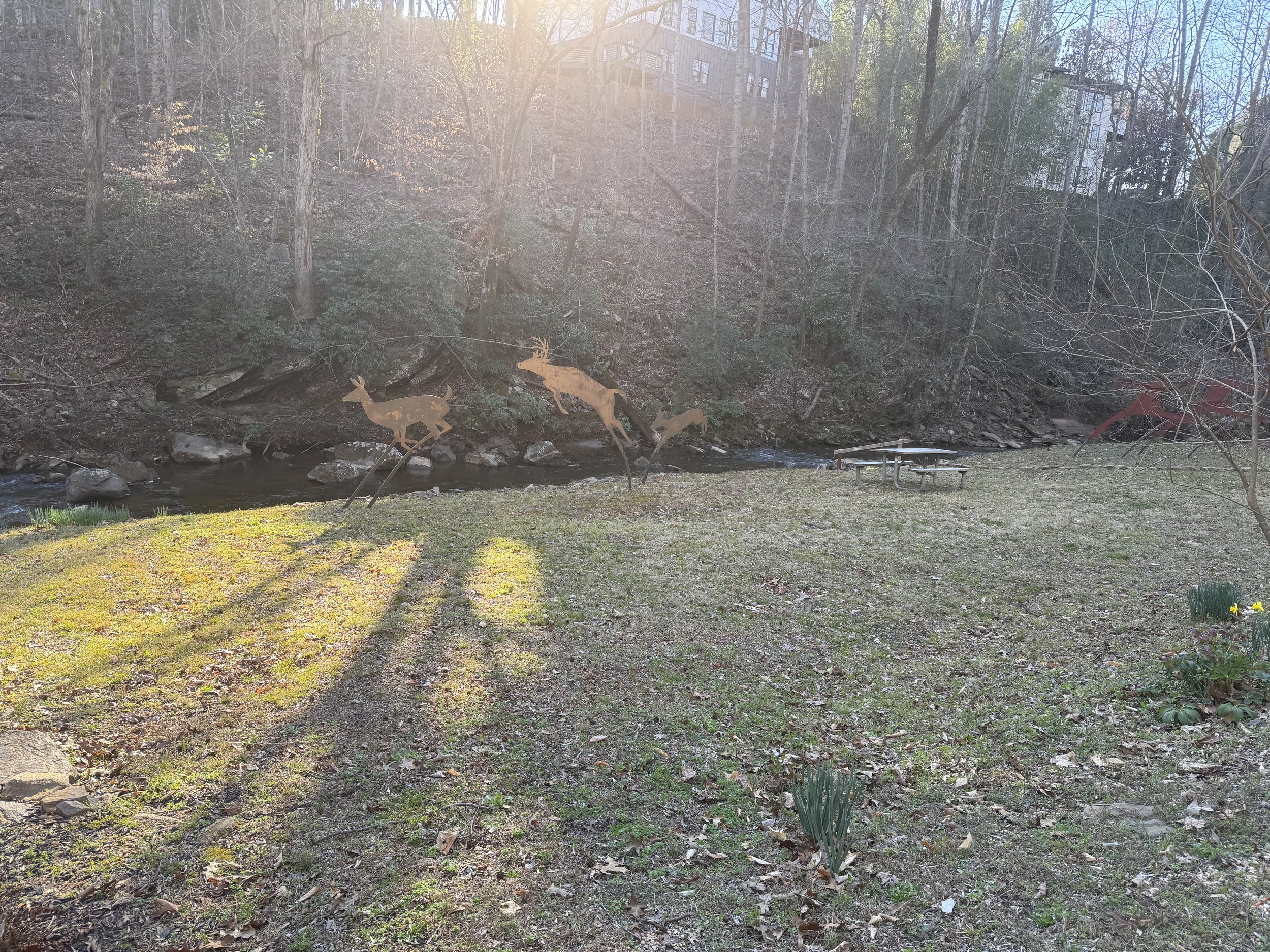
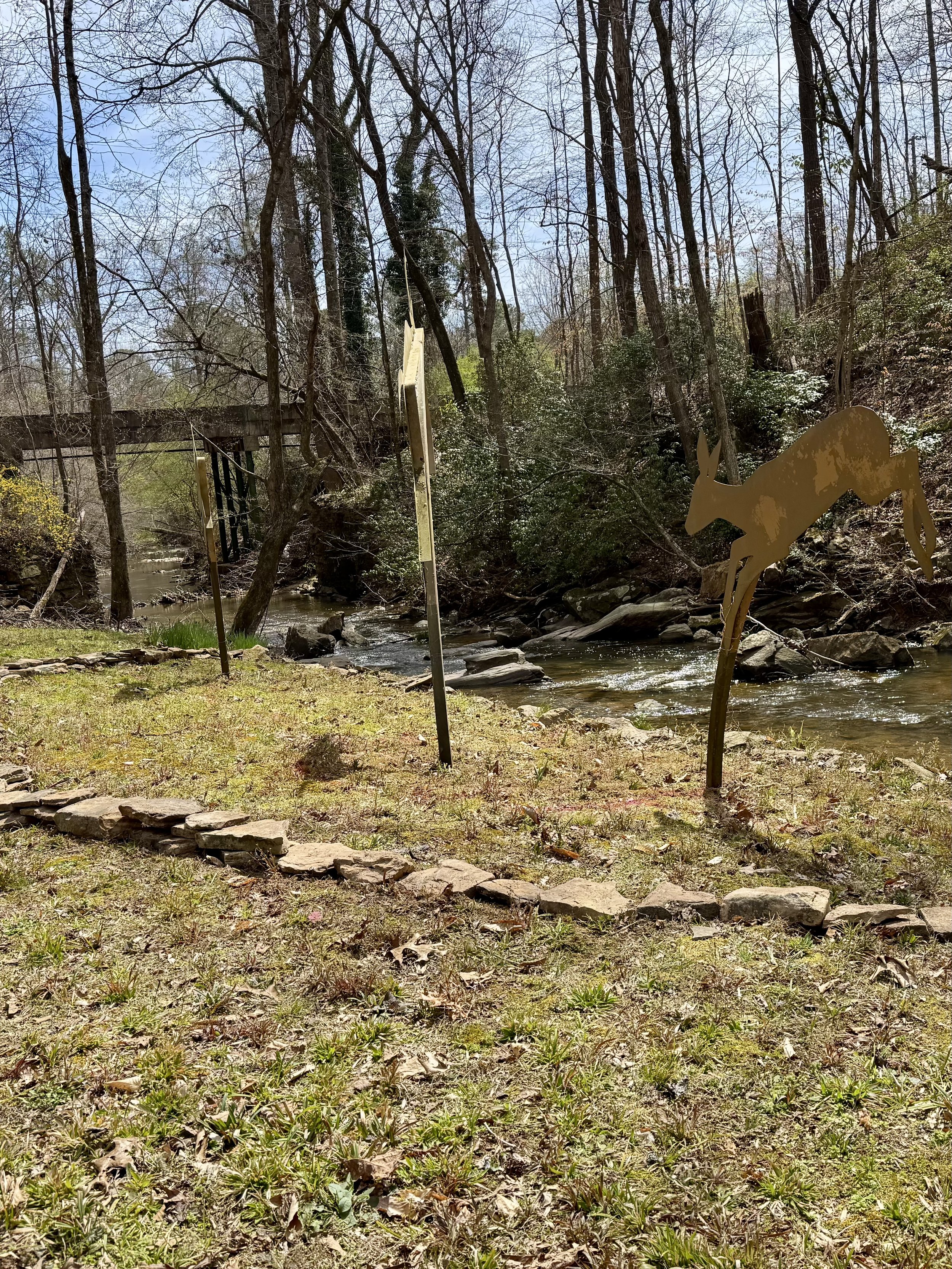
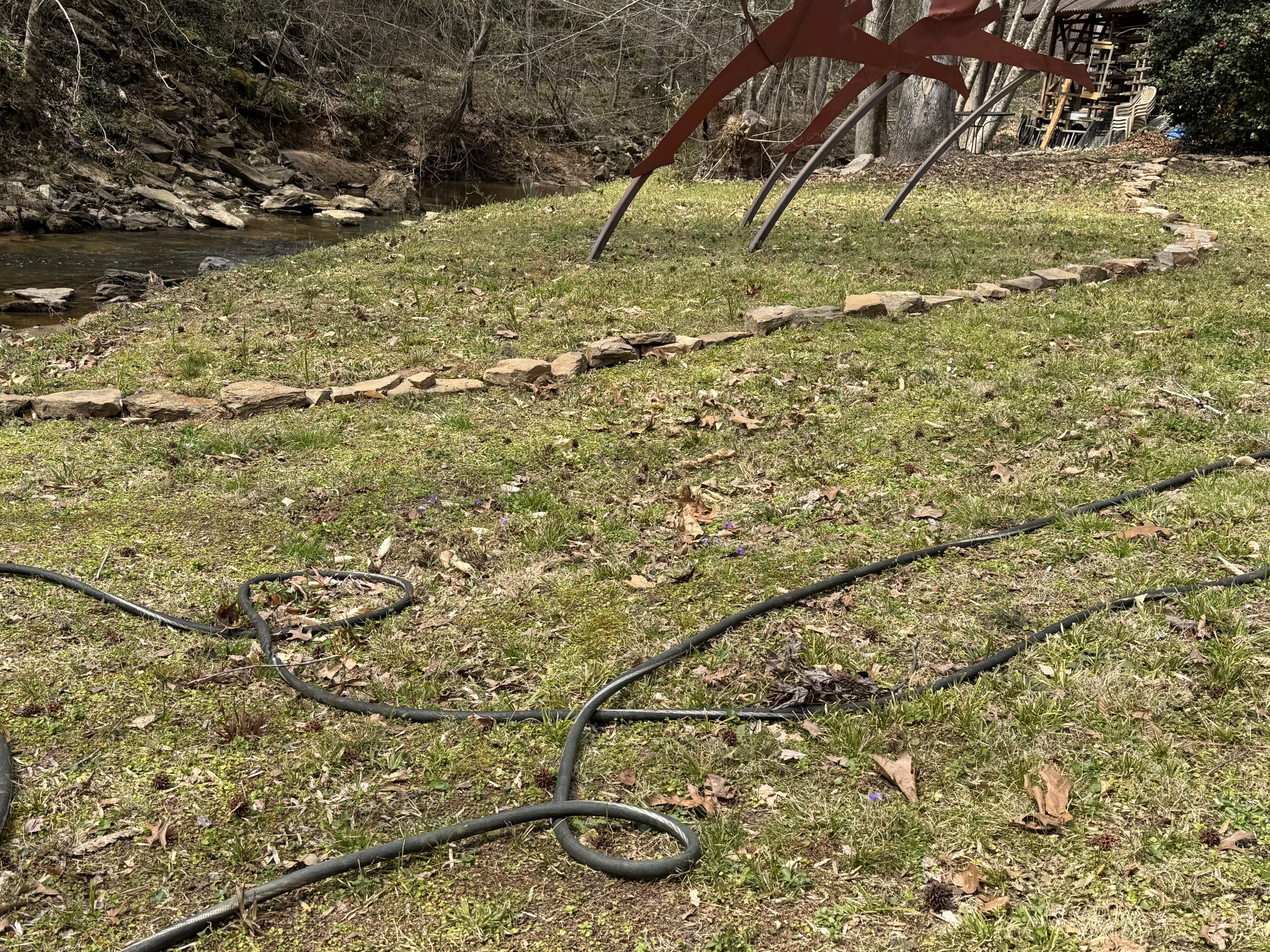
The creekbed that runs along the property has been expanding over the years due to erosion, so species selection in the adjacent planting beds stabilize. They also provide billowing texture, lush greenery, and some floral interest. Both creek beds sit beneath rusted metal sculptures, and the plants are designed to play with those structures. The first visible bed from the driveway, under the leaping deer sculpture, contains species that colonize towards the creek, like flag irises and horsetail, and slender woodoats are on the bank to help hold it in place. There are masses of native sedges close to the creek access, and masses of golden Alexander and swamp milkweed on the lawn side. The rear creek-side bed utilizes more height. Cardinal flower sits beneath the sculptures and in front of masses of cutleaf coneflower. Behind that is a mass of redtop panicgrass, and at the very back is a mass of river oats.
The lawn outside of the beds is staying. It’s what I’d call a “natural lawn,” not turfgrass, but a mix of sedges, lyreleaf sage, violets, and moss that gets mowed, and that’s fine. Aside from mowing, it requires no fertilizer, no seeding. And it feels good to walk on. We’ve decreased the size of the lawn through the creek-side beds, and will hopefully continue to add plants to its edges, shrinking it further.
It would take hours to list the number of species that will feed on these plants or have potential homes with them. I’m just looking forward to seeing them arrive over time. It is such a privilege to be able to do work that helps to generate biodiversity.