-
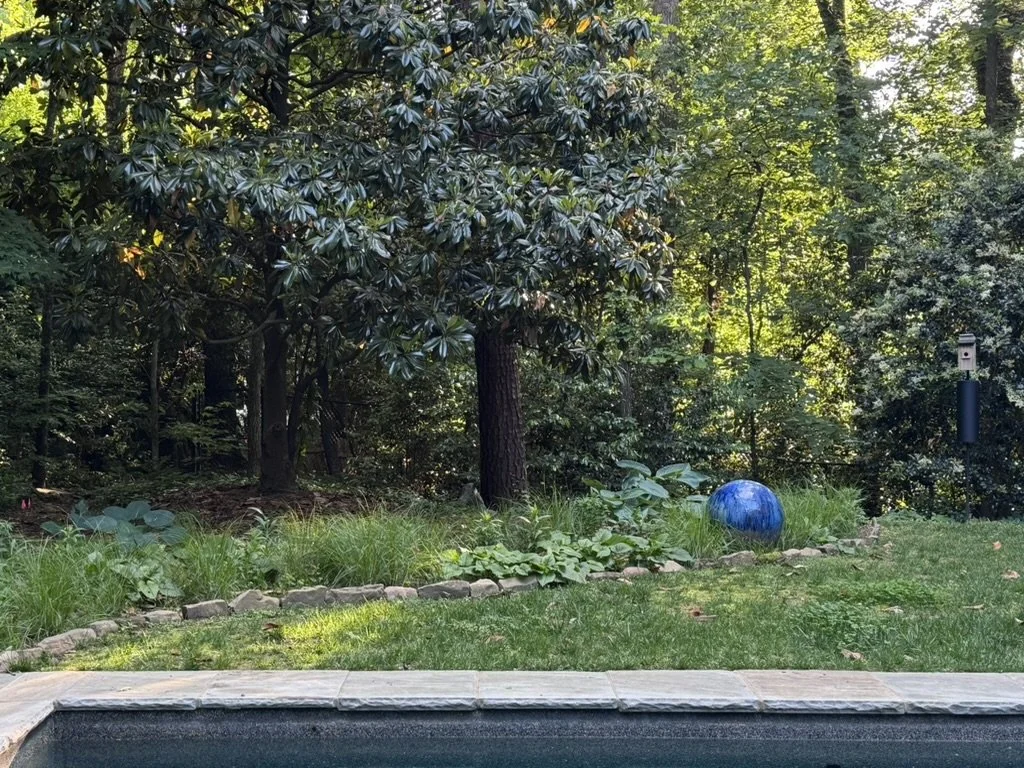
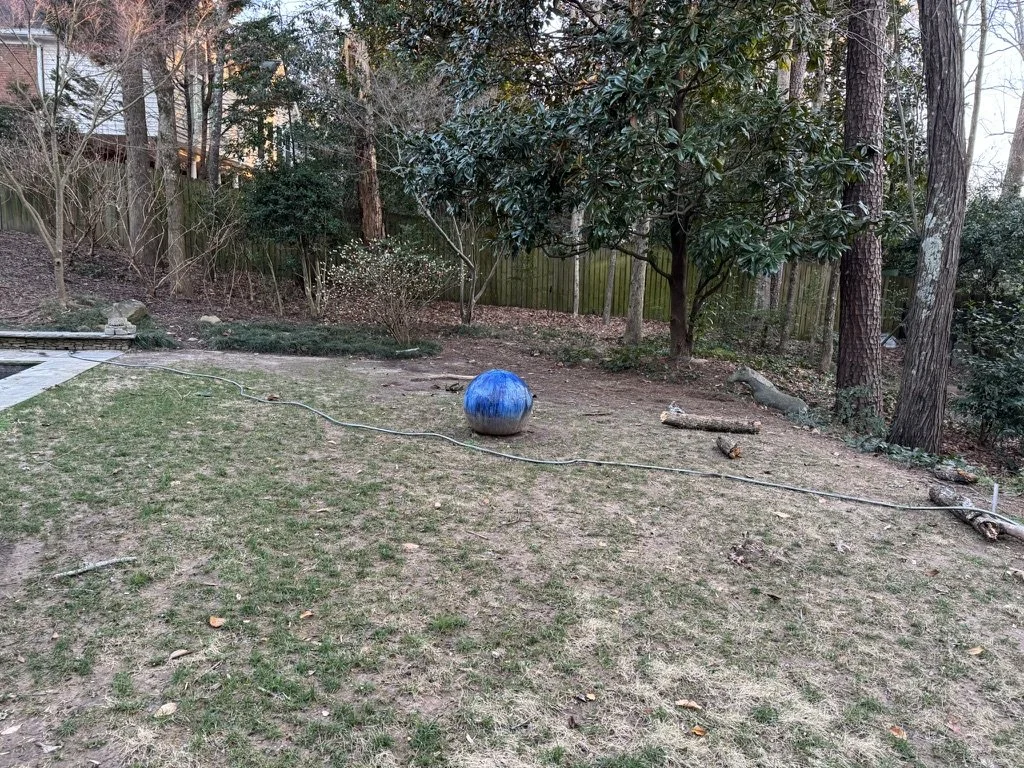
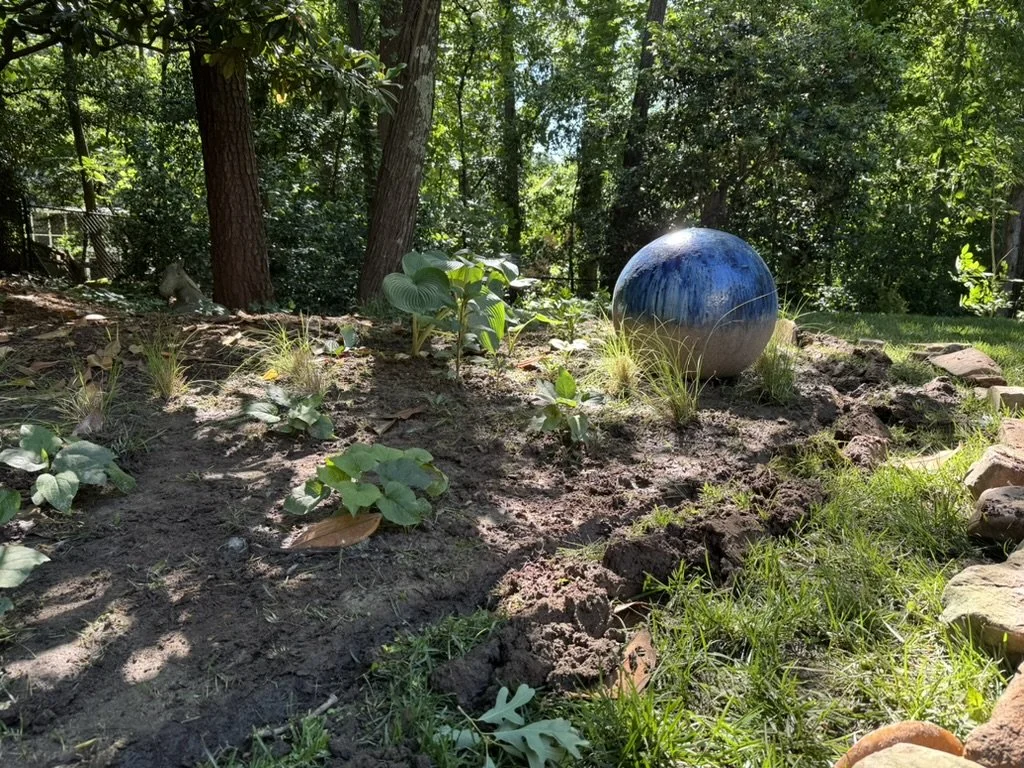
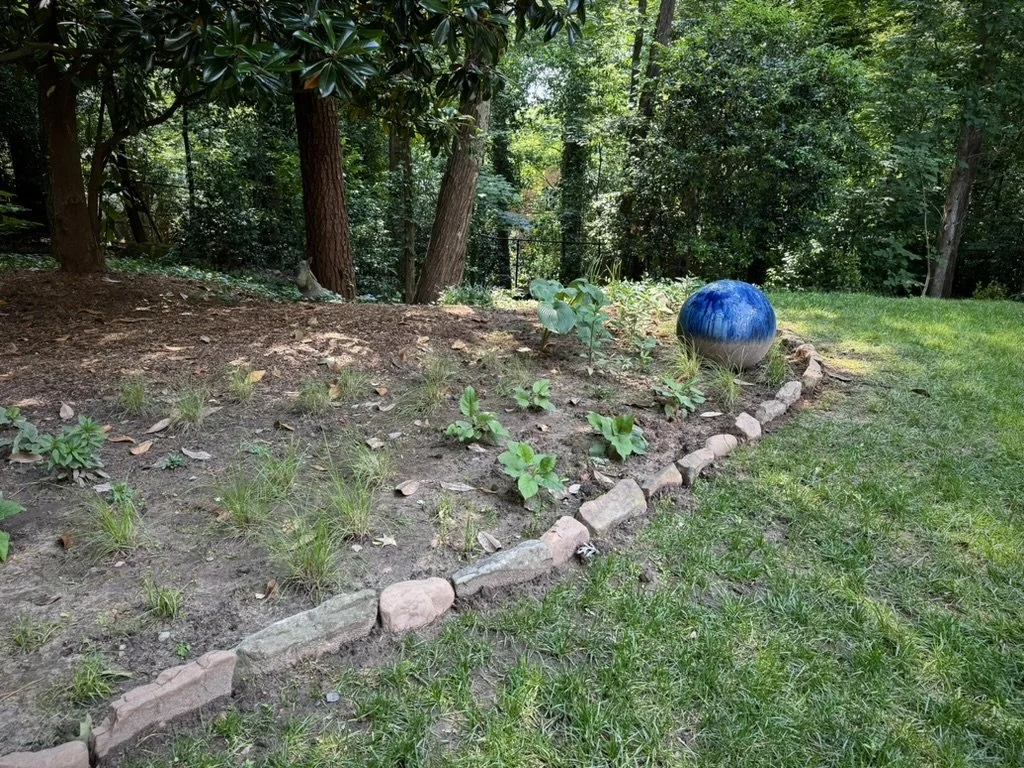
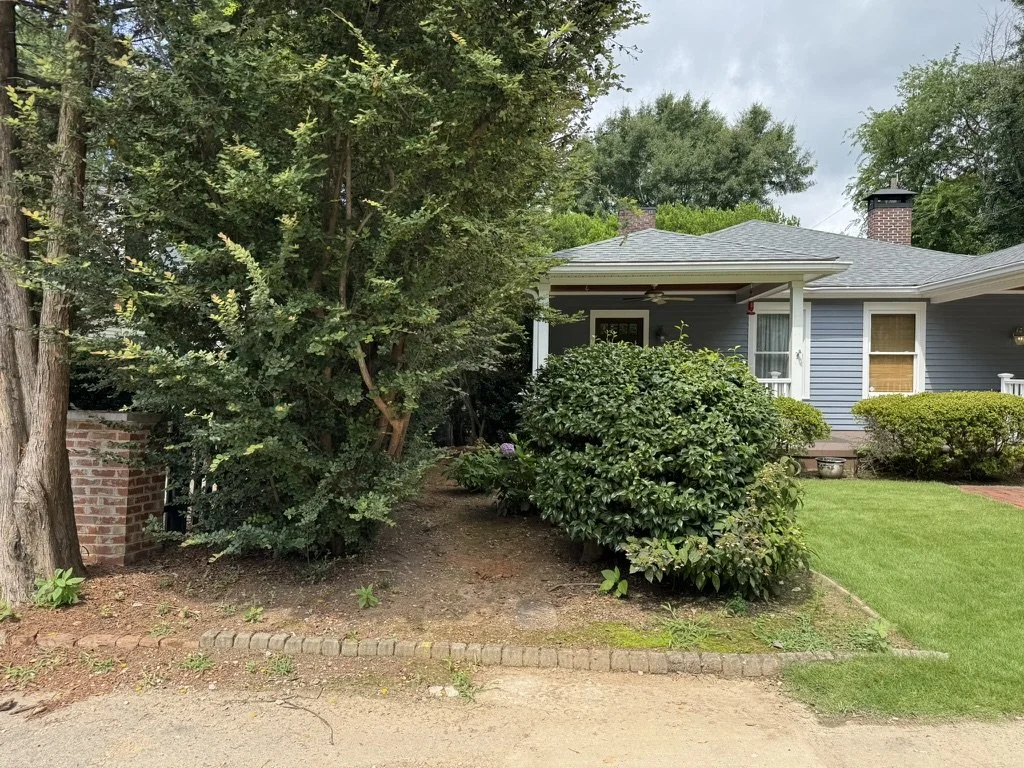
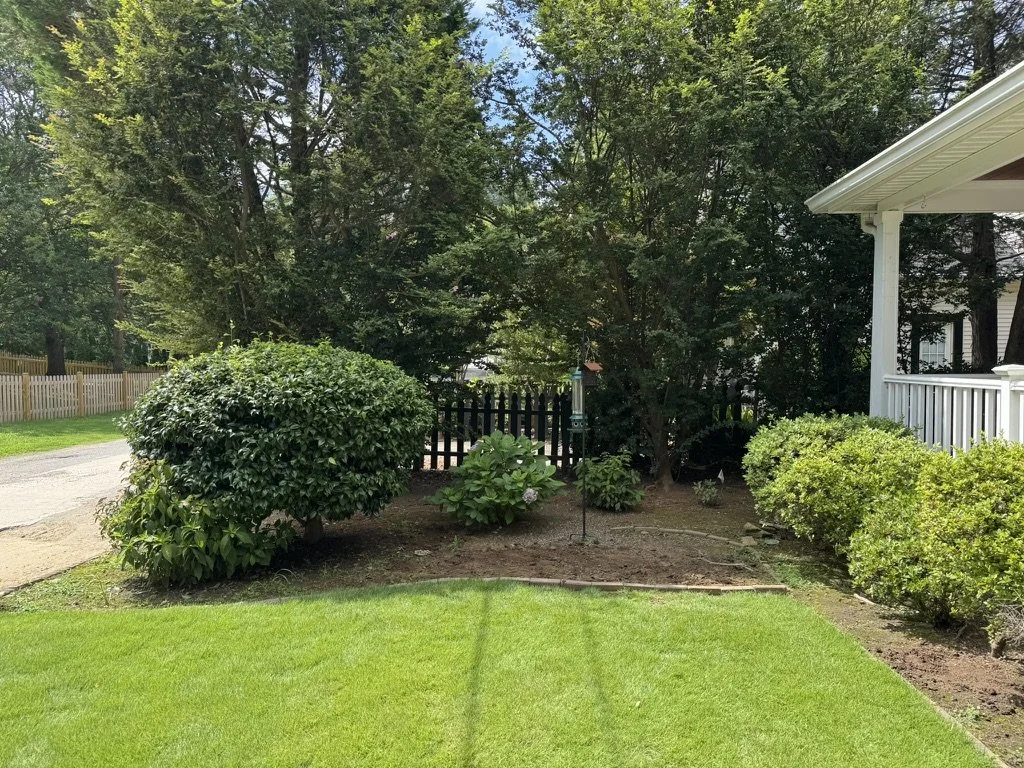
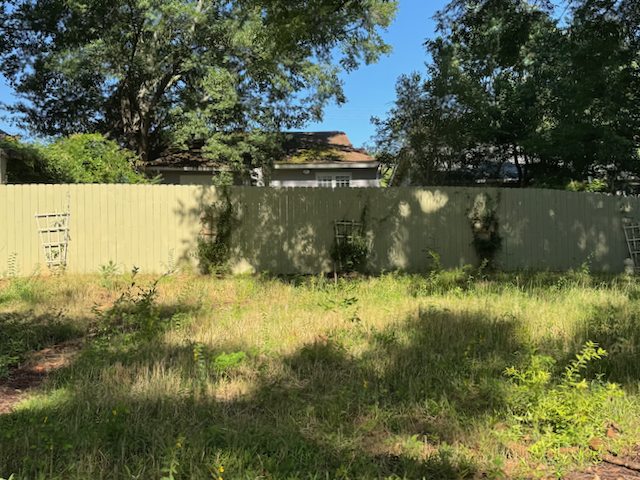
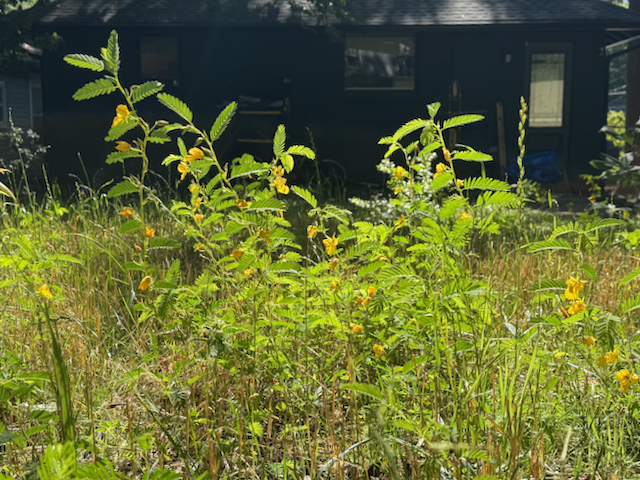
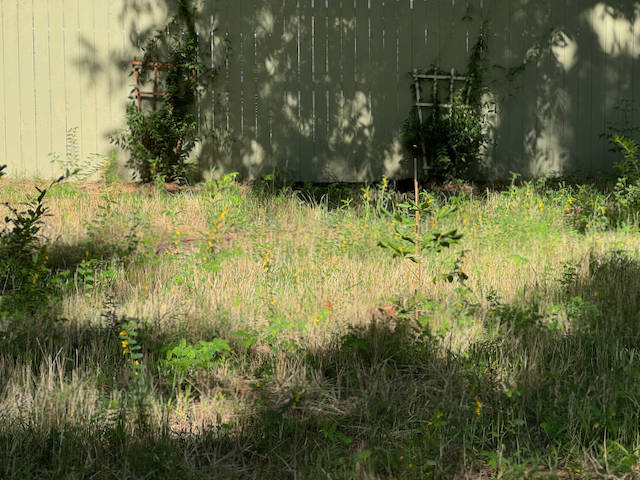
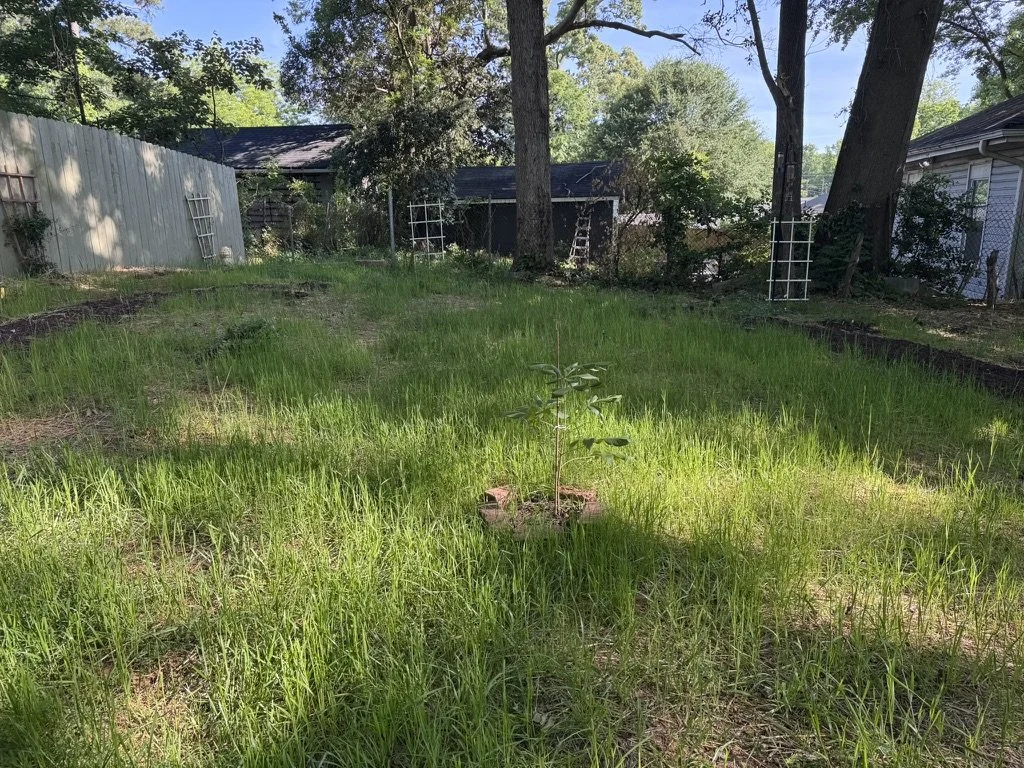
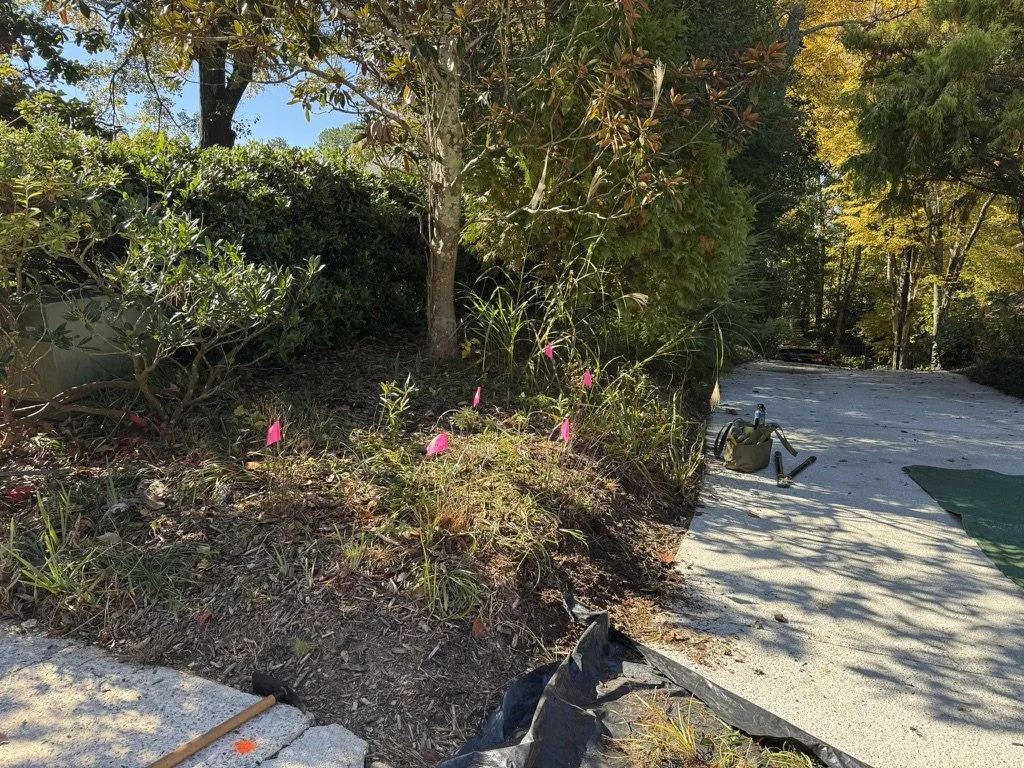
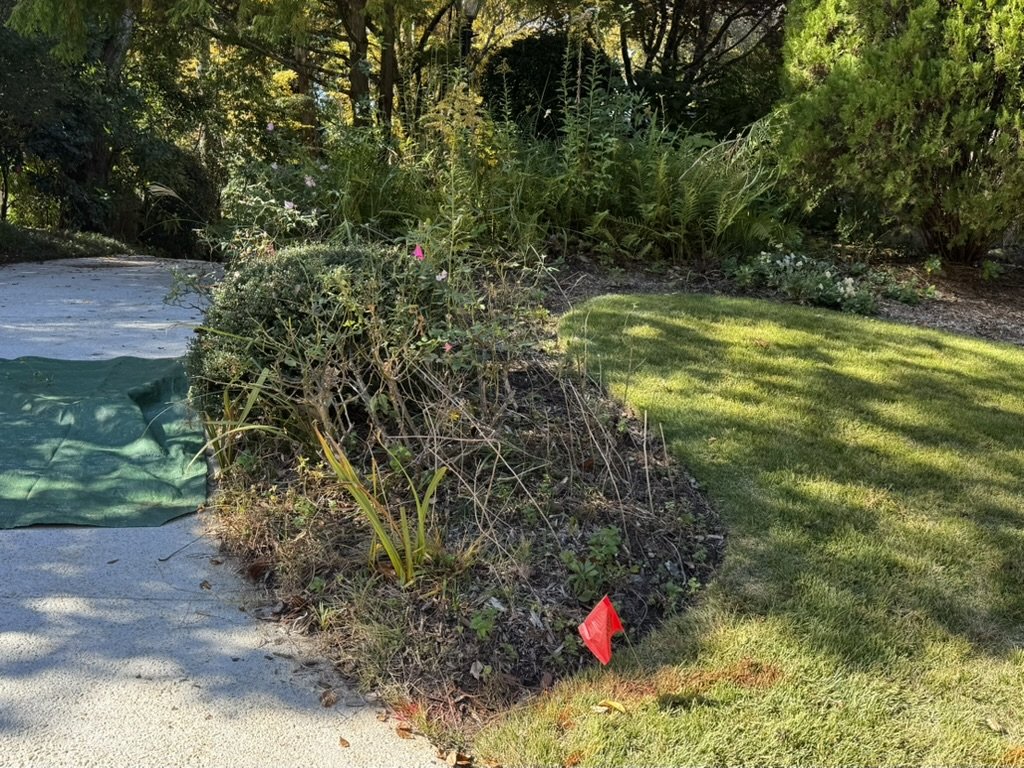
Upon discussion of this small site and its potential, the clients were understandably frustrated. Located down a slope and composed of silty clay, this soil would get inundated with stormwater and wouldn’t drain. Two decades ago, a French drain was installed there (under a layer of soil), but that didn’t solve anything. The shade is strange: there’s no canopy directly overhead, but there is significant shade due to nearby trees, especially a Magnolia grandiflora that blocks out afternoon light. Traditional garden plants, even shade-loving species, didn’t take hold (except liriope, a highly aggressive plant that outcompetes everything in its path). The nearby fescue turf grass barely crept in, but what little grew wasn’t enough to cover the ground. Everything they attempted made sense to try from a traditional approach, but just wasn’t working. Dappled sunlight and mucky, exposed clay that cracks in dry spell are not traditional gardening conditions.
The conditions are, however, similar to naturally occurring places here in the Outer Piedmont, like riparian areas or shaded creeks and bogs. There’s a beautiful, broad range of native species that do well with muddy feet and sparse light.
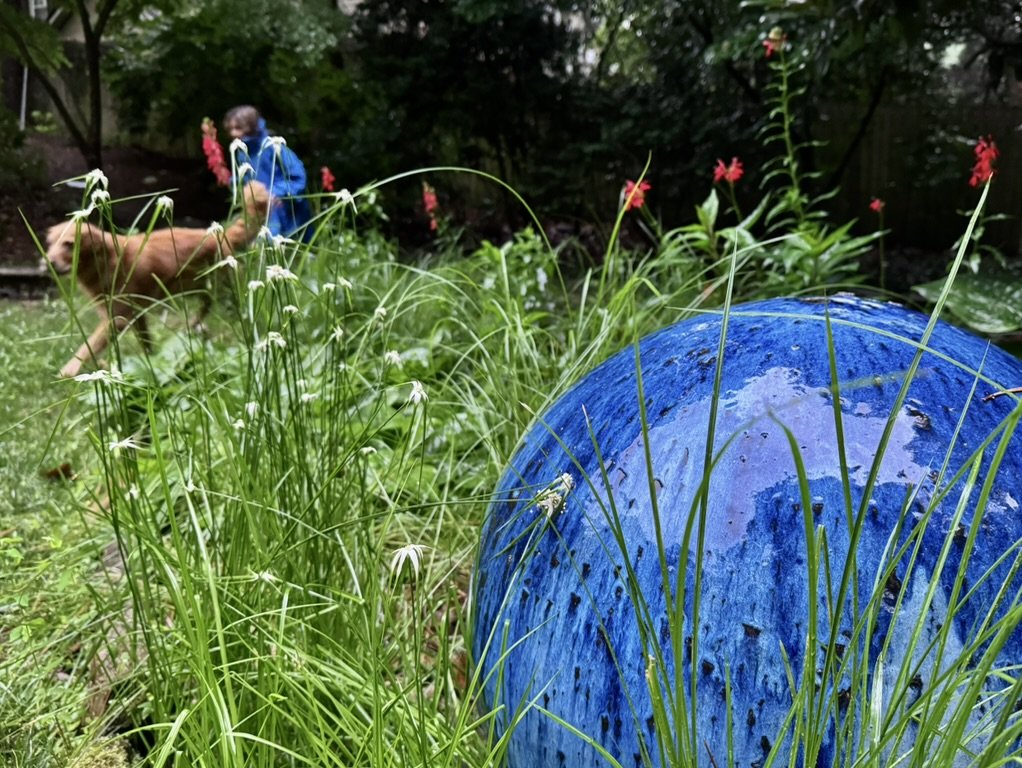
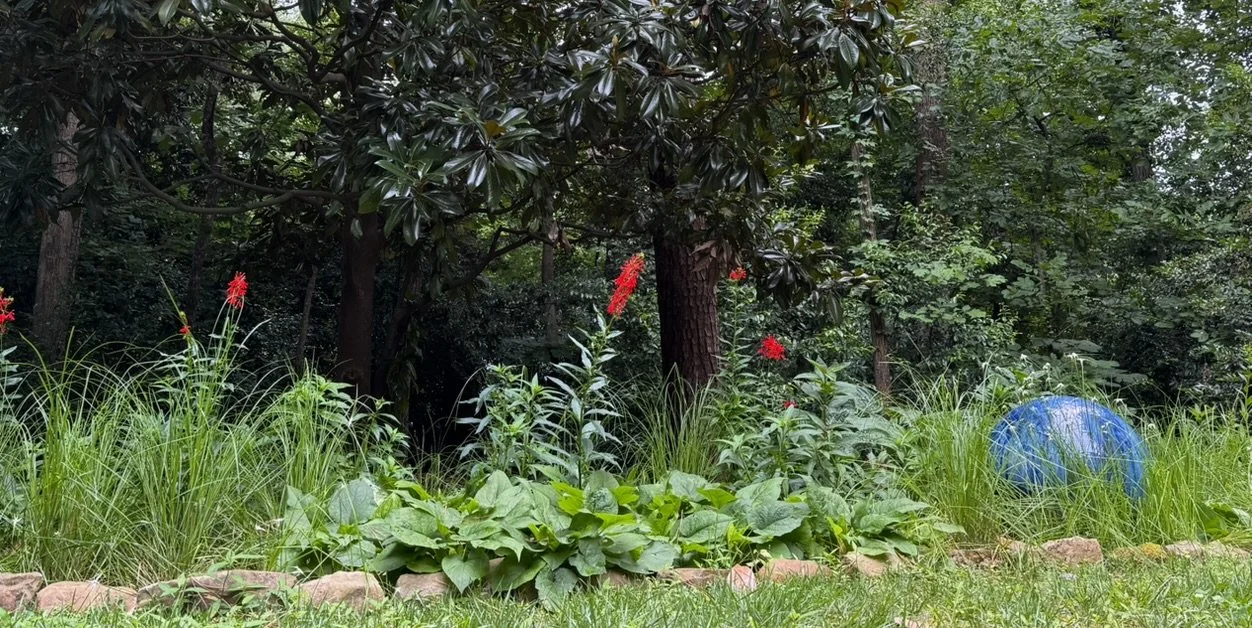
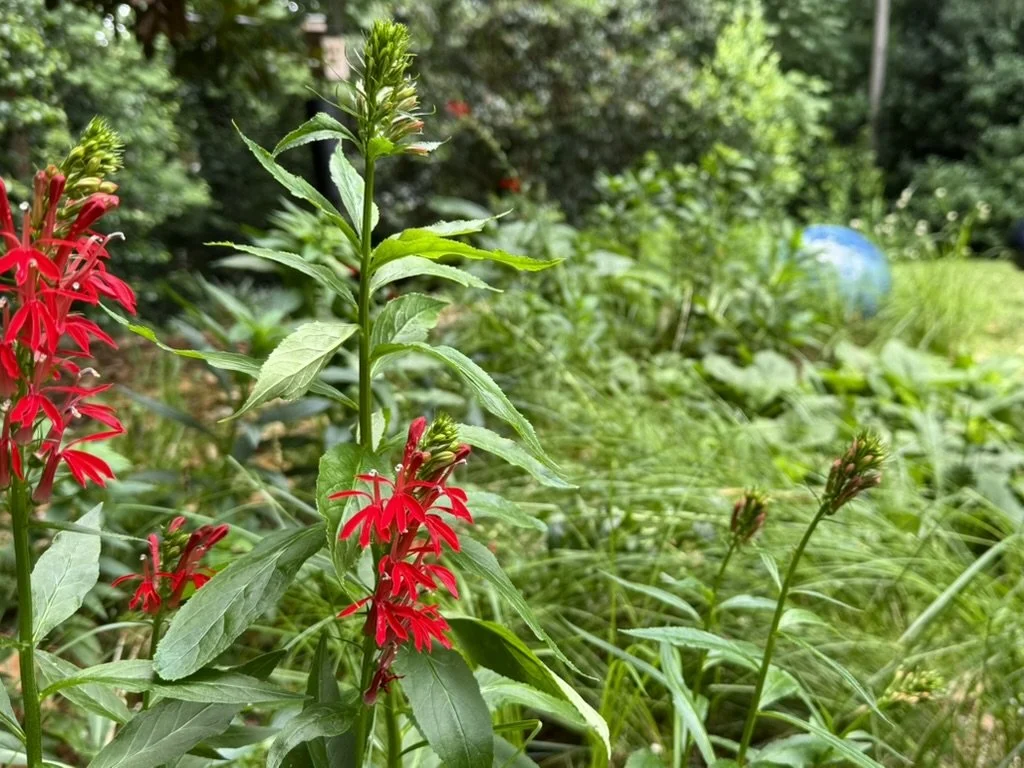
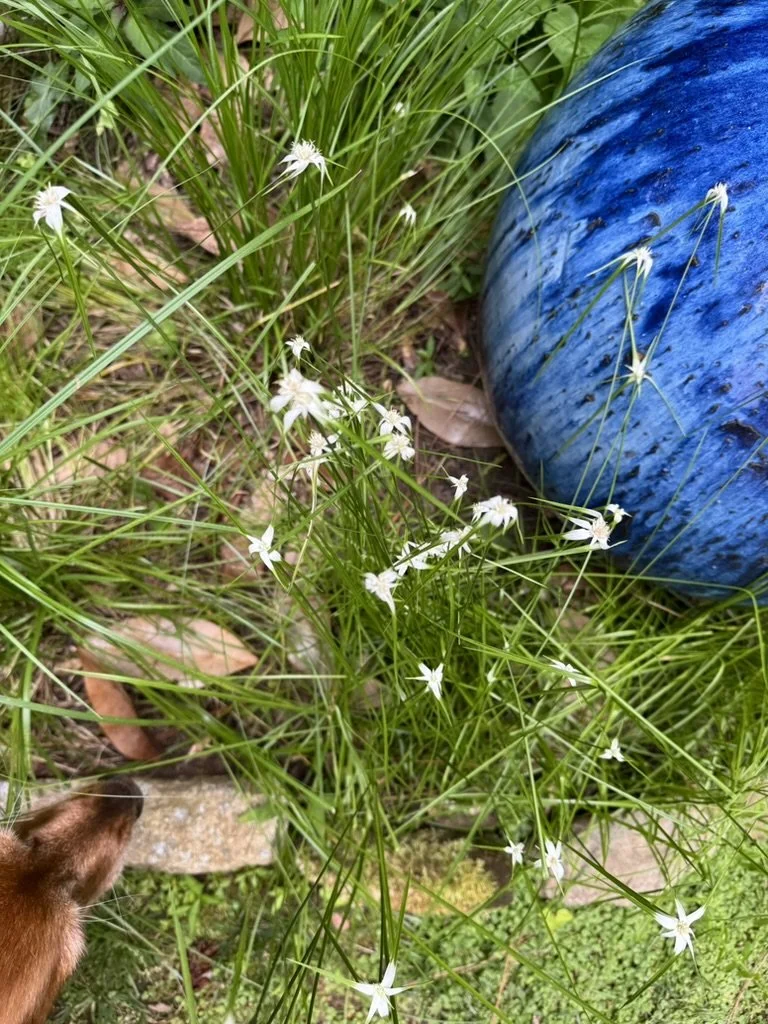
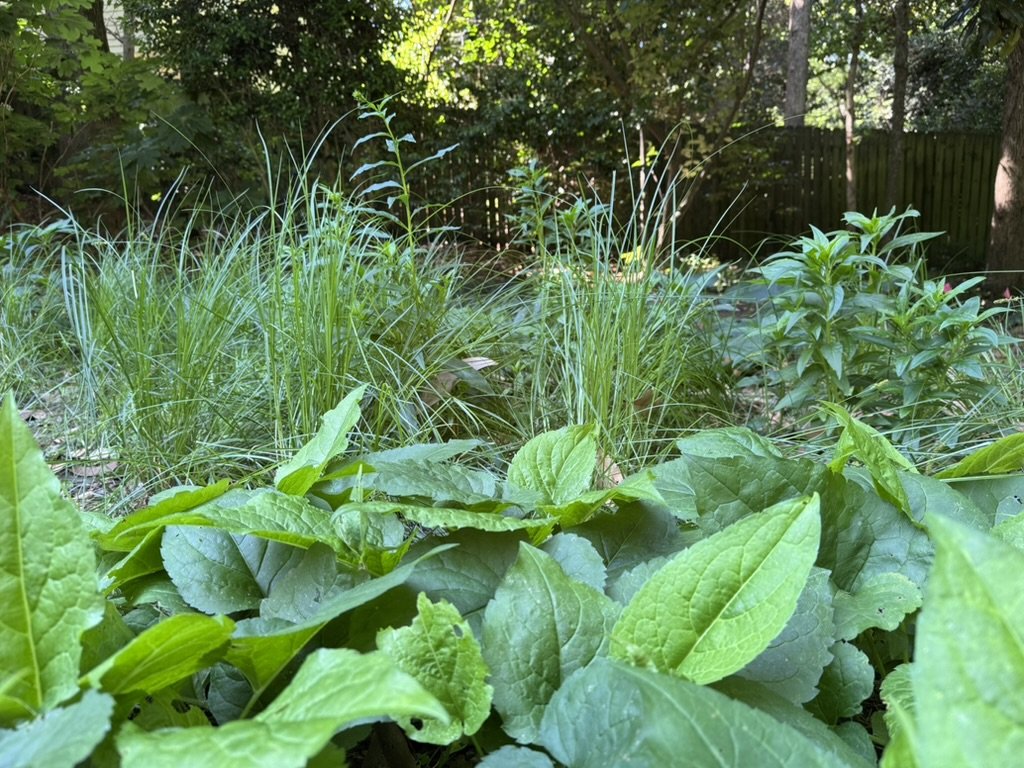
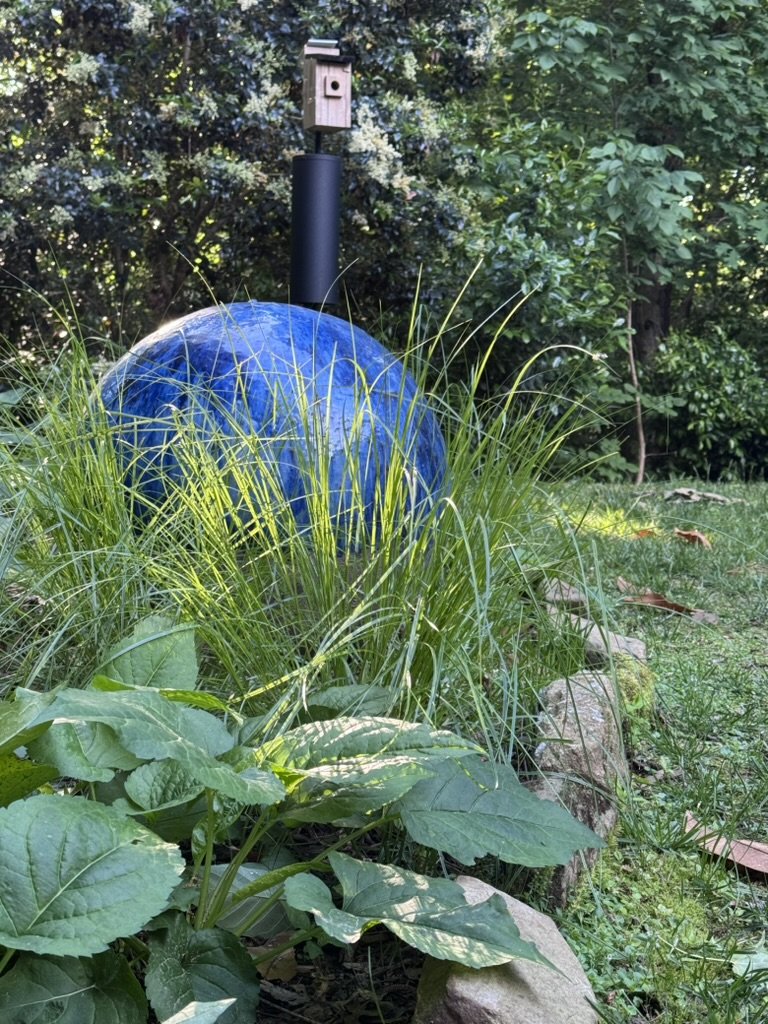
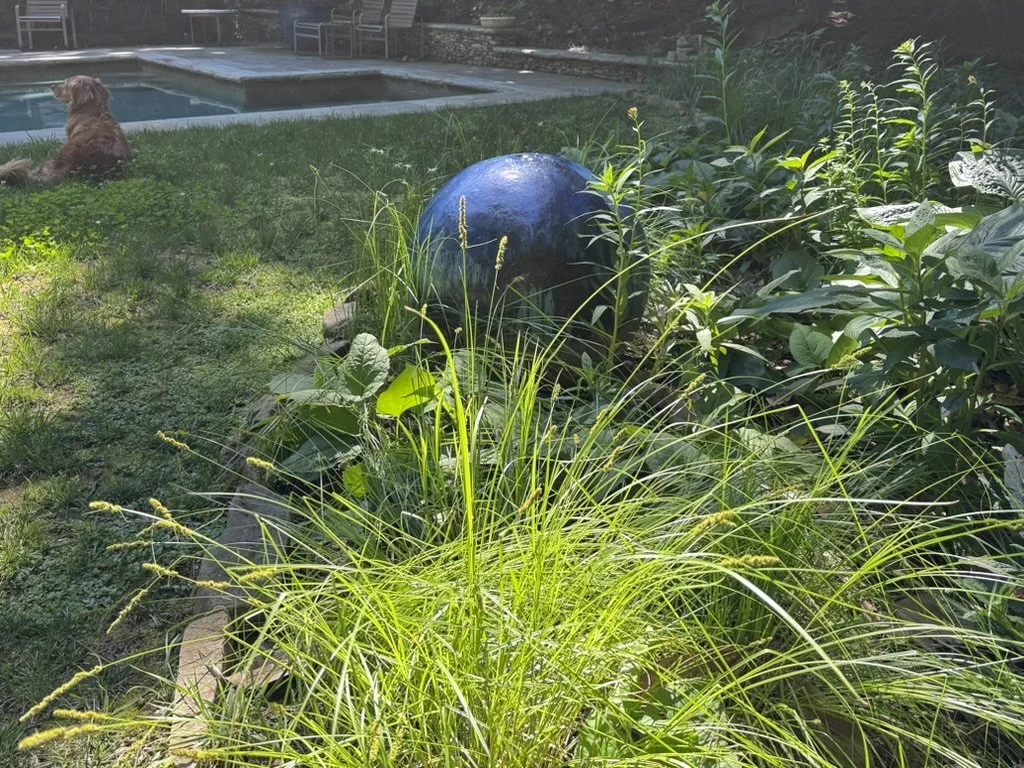
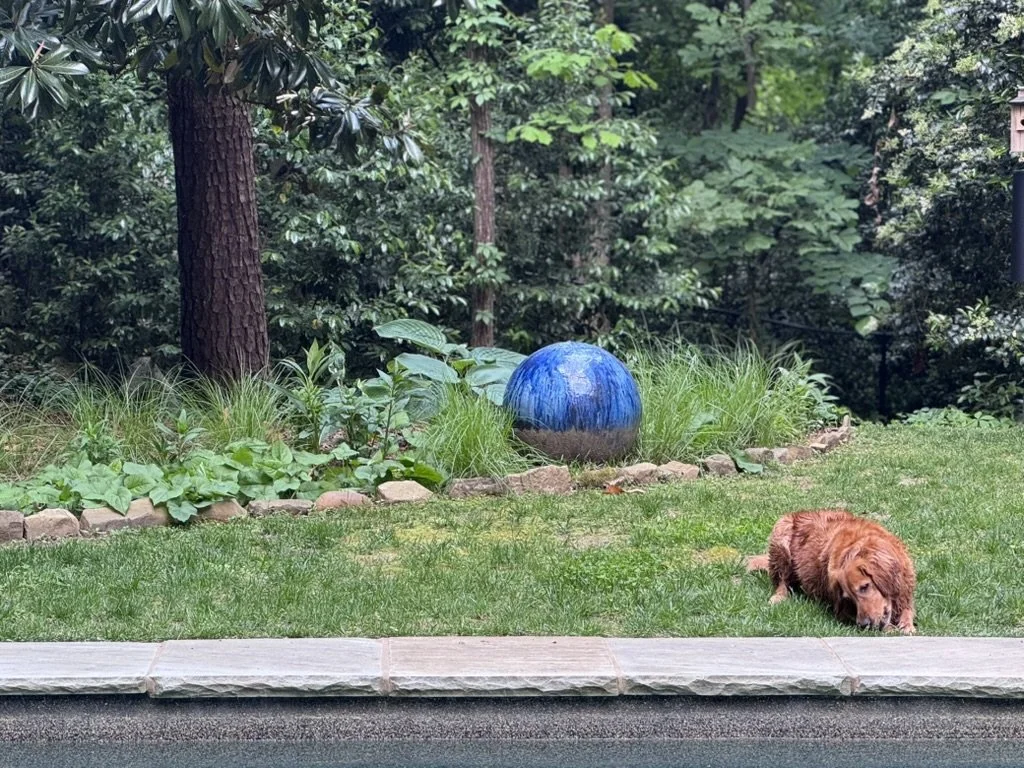
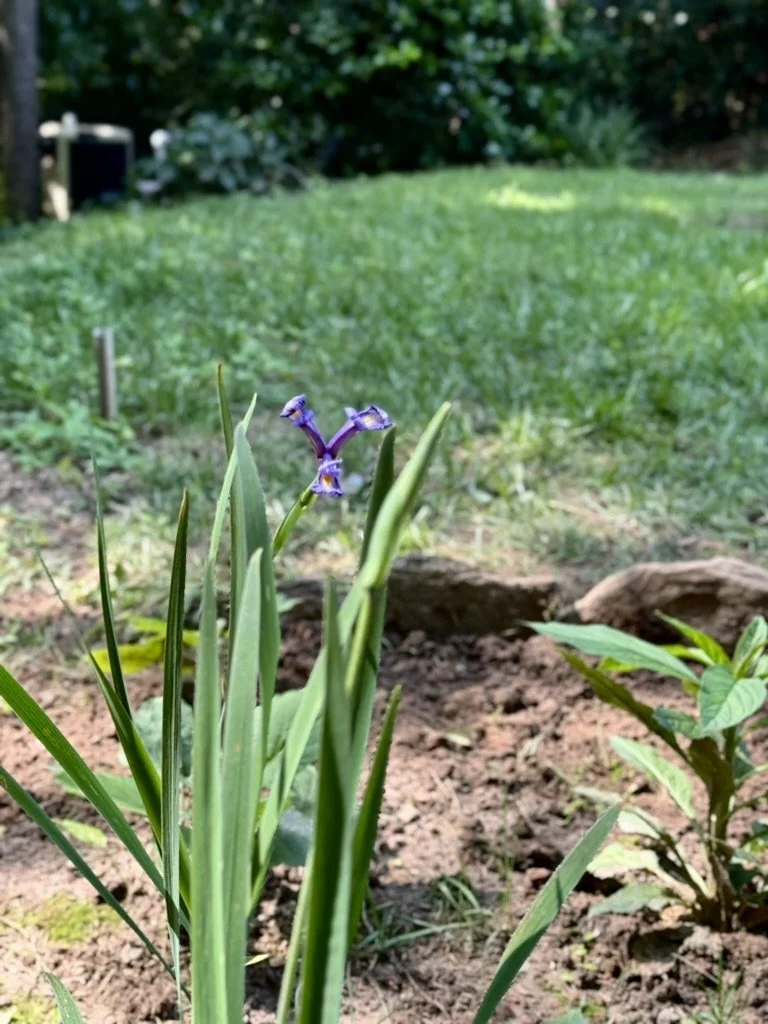
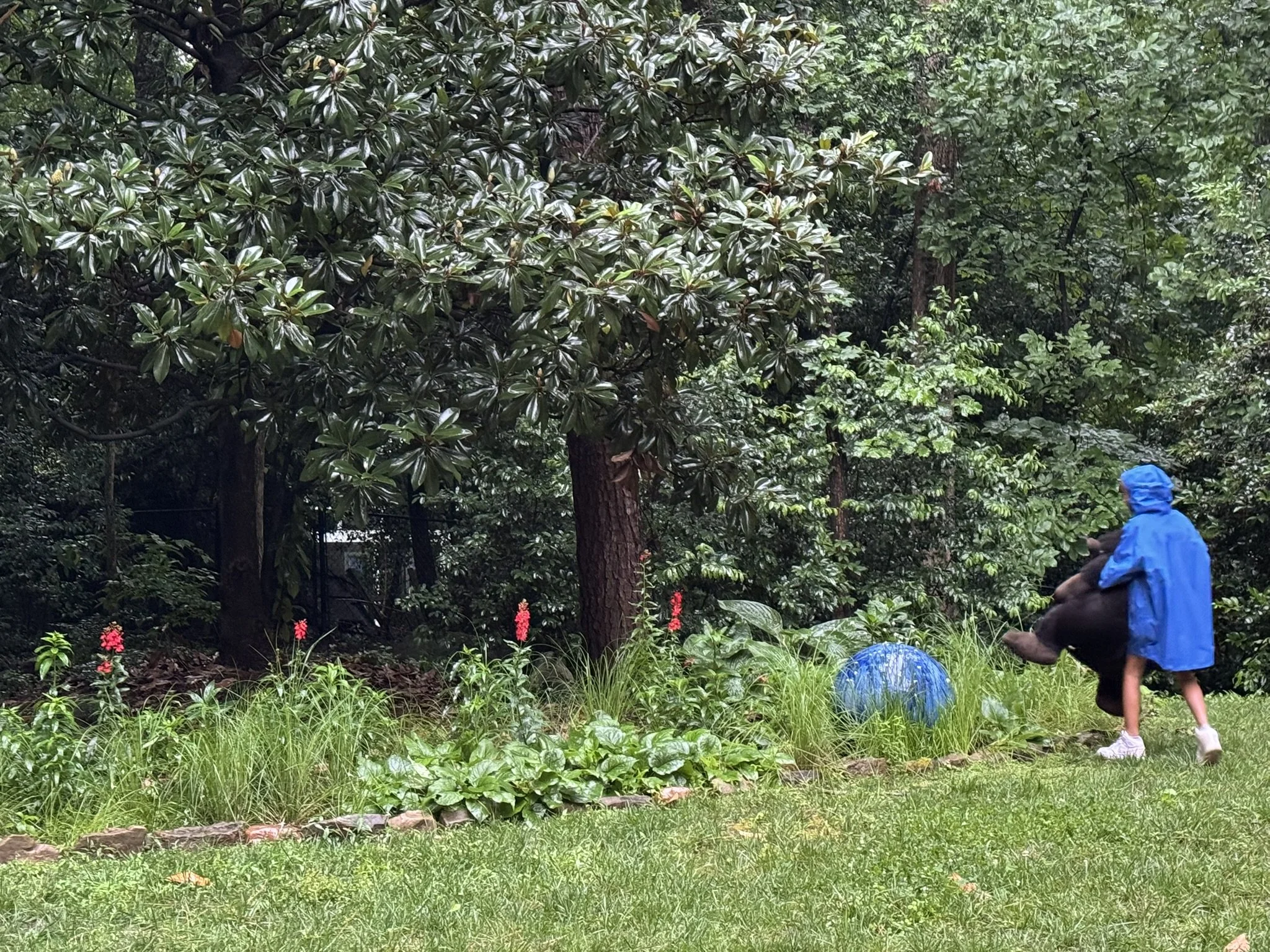
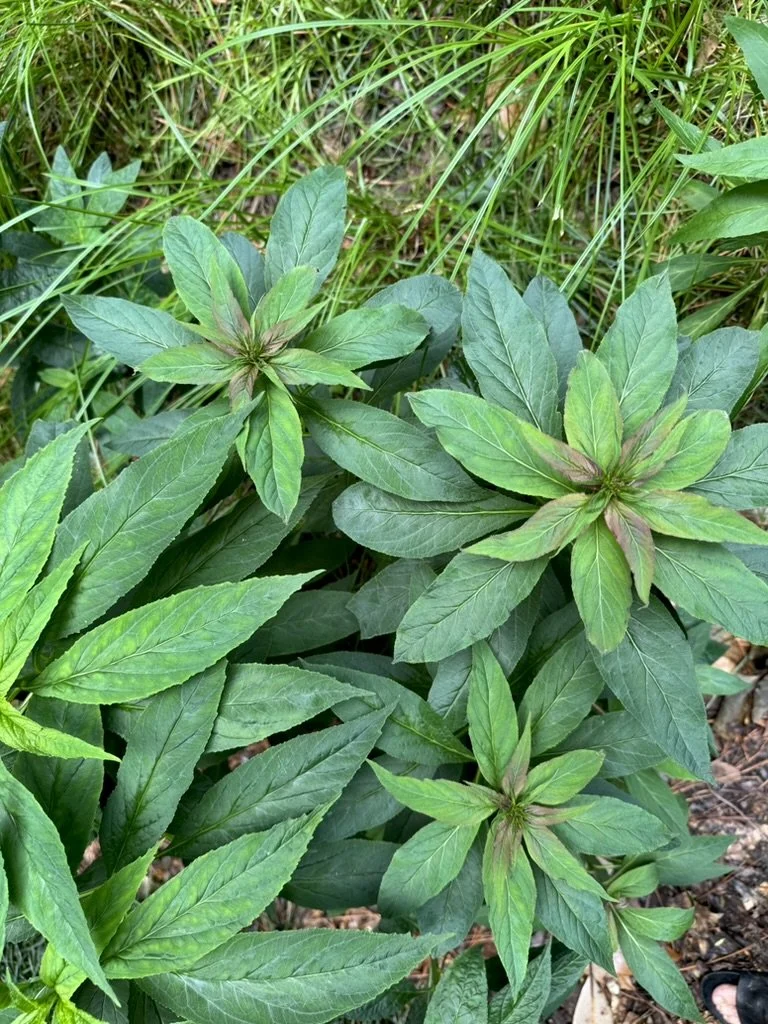
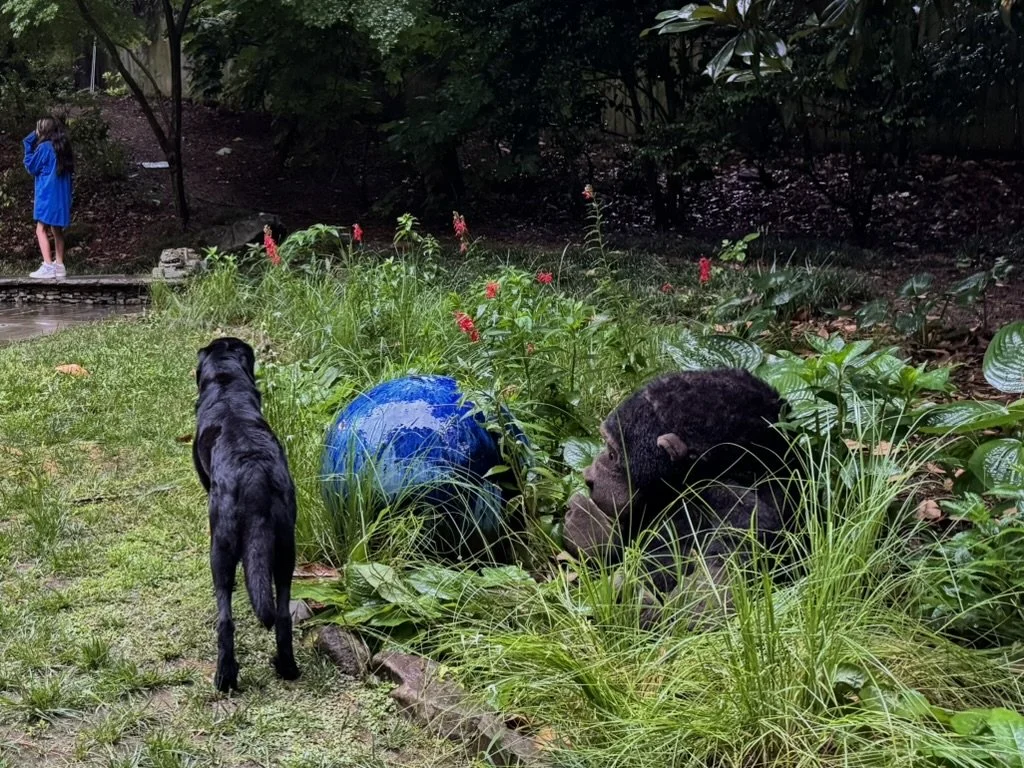
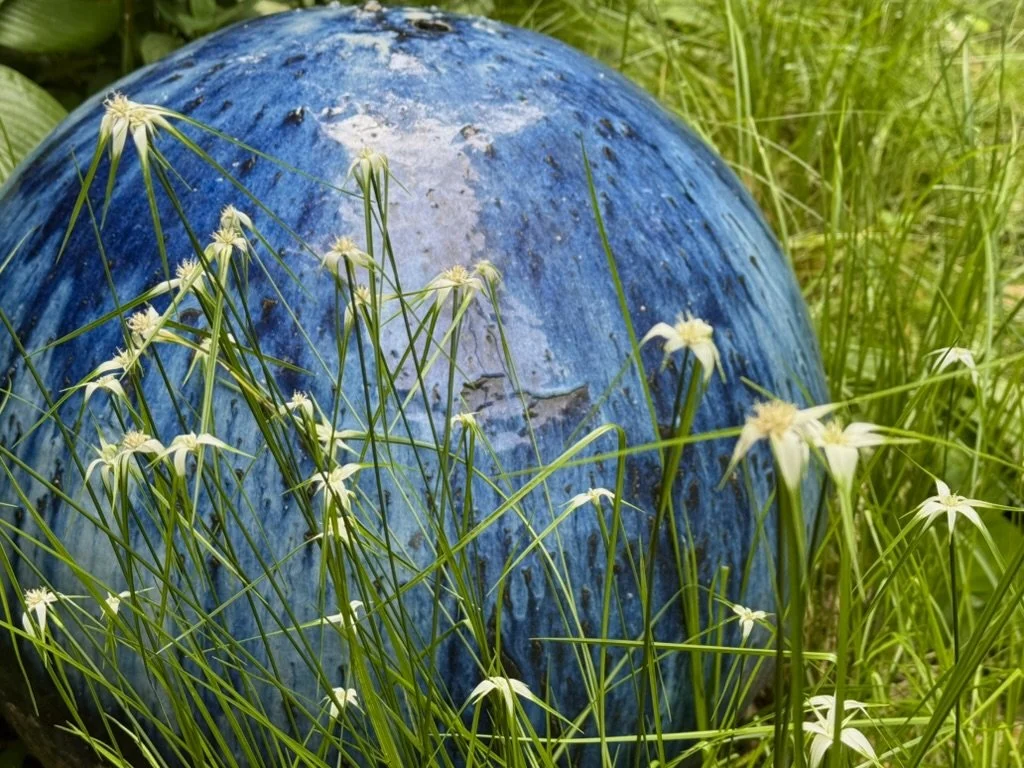
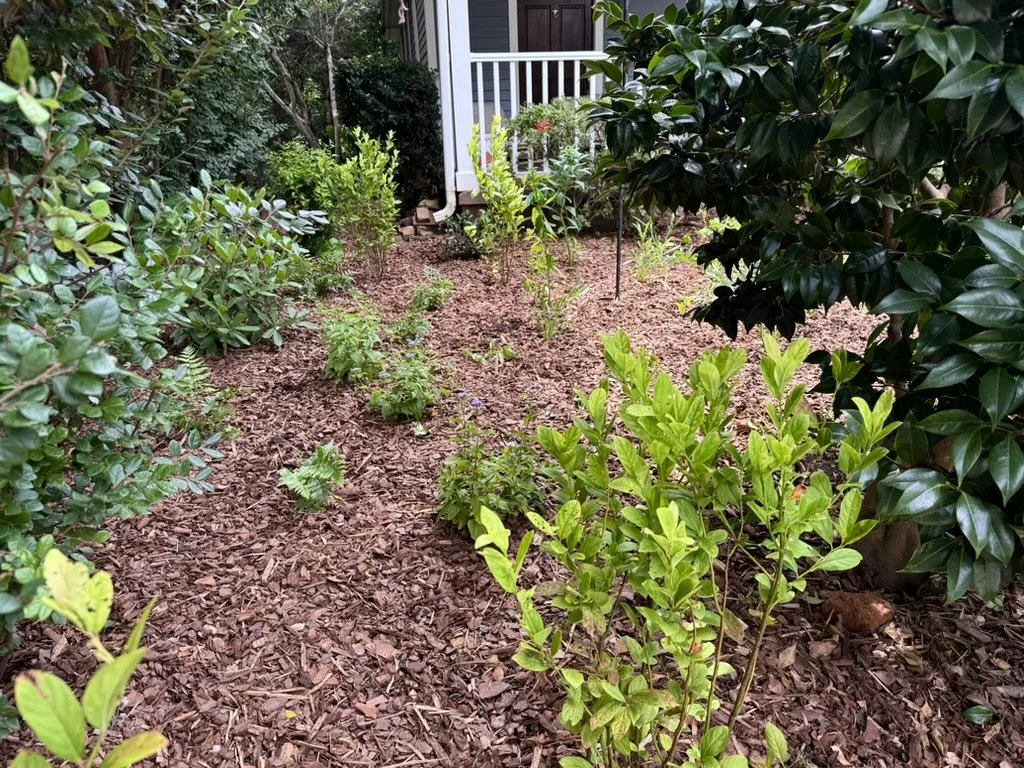
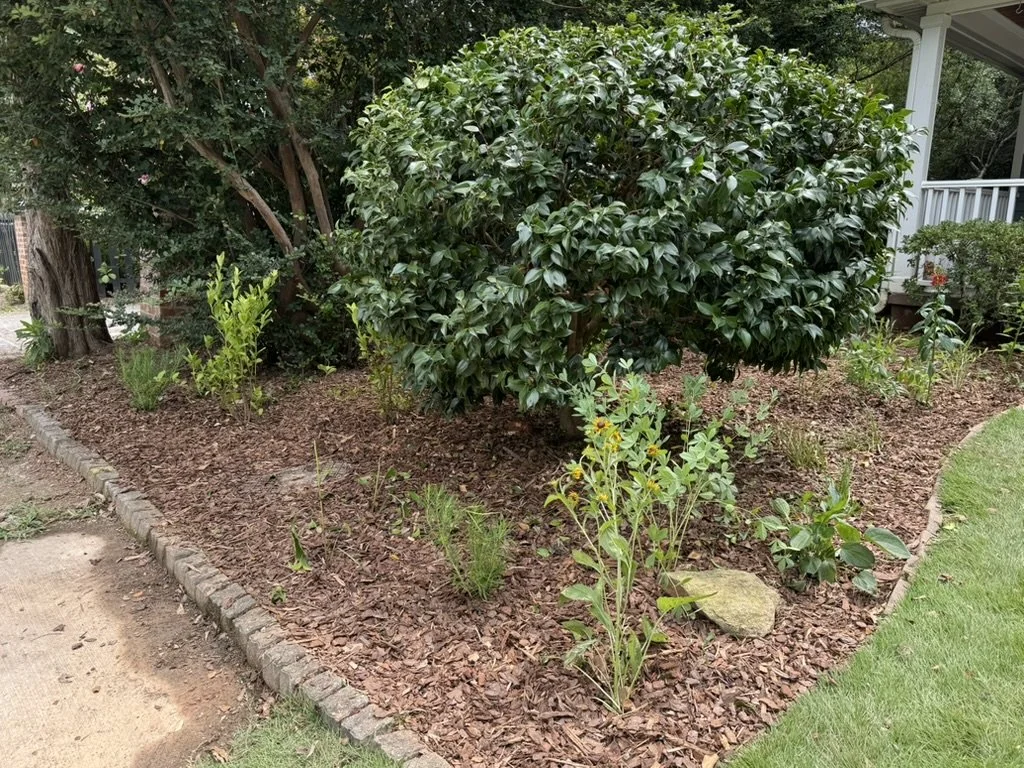
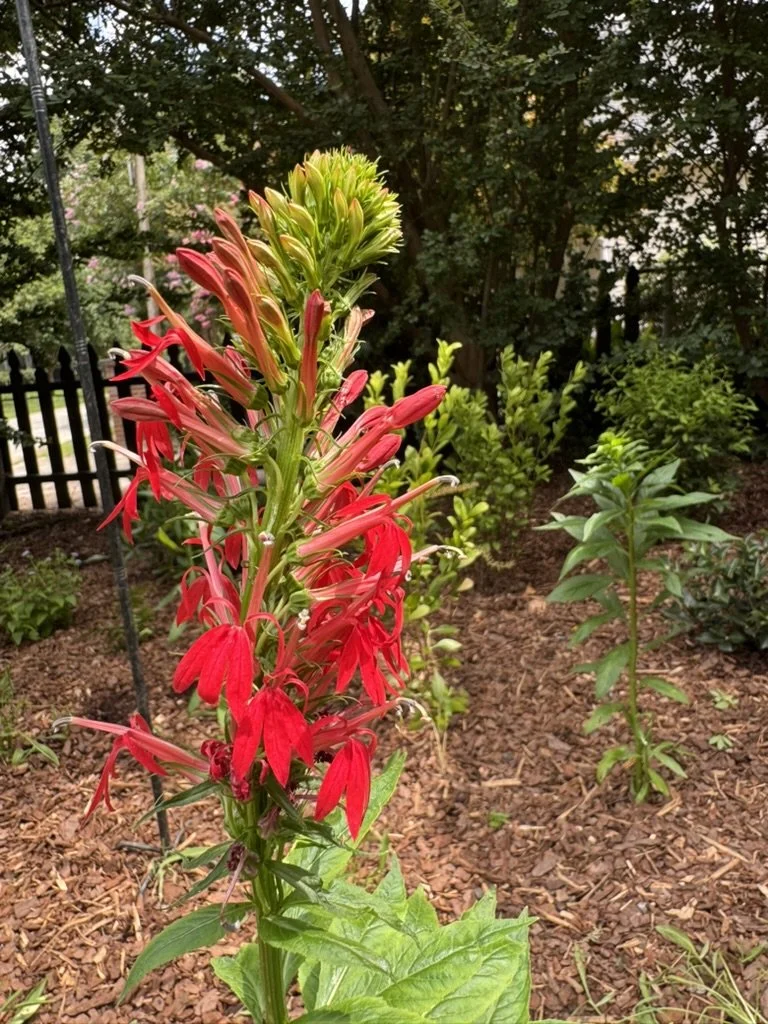
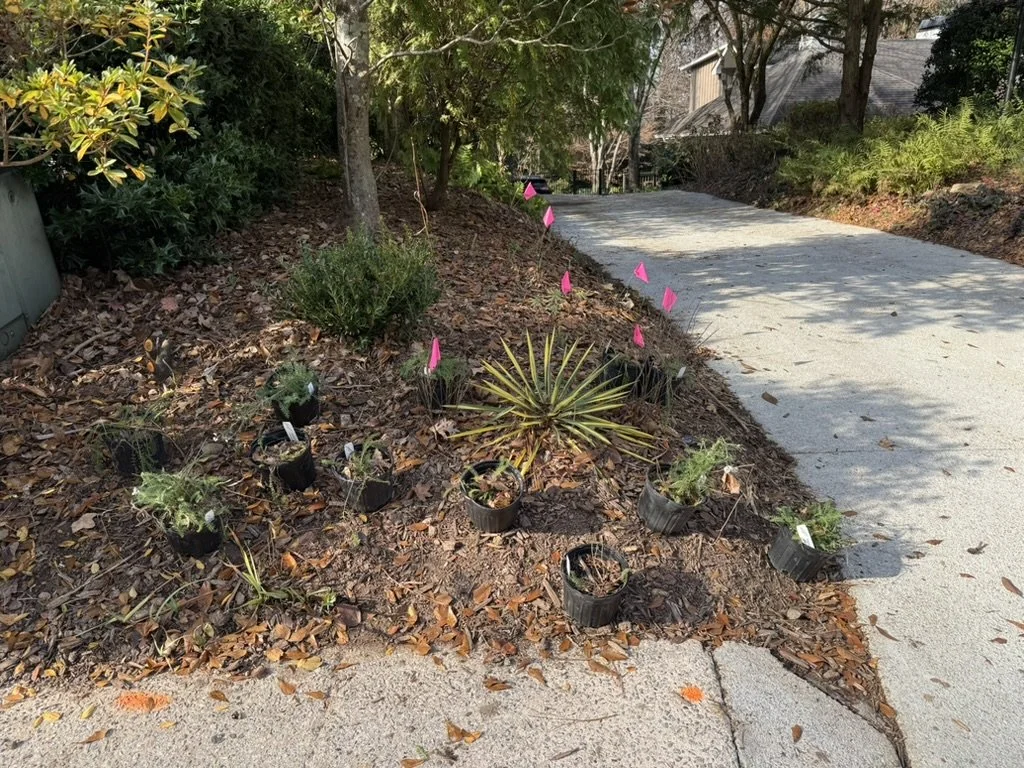
The final design was anchored around the clients’ request for horsetail: beyond matching the conditions of the site, the plants needed to be socially compatible with a species that, while architecturally gorgeous and intriguing with its Beetlejuice-esque color pattern, can get aggressive. To match this, a plant palette comprised of strong clump-forming and colonizing plants that can handle a range of shade, all with competitive root systems, was needed. There’s fox sedge, a relatively big and fluffy sedge with strong, fibrous roots that thrives better in moisture than most local sedges. Hostas, already onsite and fitting the palette, but needing an intentional location, were divided and transplanted into the bed. Star rush sedge, also called white-topped sedge, is known for growing in roadside ditches. It has incredibly charming white bracts that look like starry flowers, and it spreads and slowly by rhizomes across the soil fills in open gaps. On the other side of the planting, big leaf aster will fill the spreading role. Resources list it on the average to dry condition range, but I have it at home in clay that stays moist, and it’s so happy there. It sends out rhizomes and can fill areas up with round clusters of heart-shaped leaves that will cover the soil and keep it from drying out. Cardinal flower has a sturdy taproot and can bloom in less light than a lot of other plants. Its red flowers are so bright that they appear to glow. And, its basal, purple-ish green foliage remains evergreen.
The design offers a range of textures and a little pop of color in a sea of green with lots of evergreen cover. All of the plants’ roots will aerate the soil and help with drainage, but they also like having a lot to drink and will get plenty from the slope’s runoff, so it should be a good time for everyone.
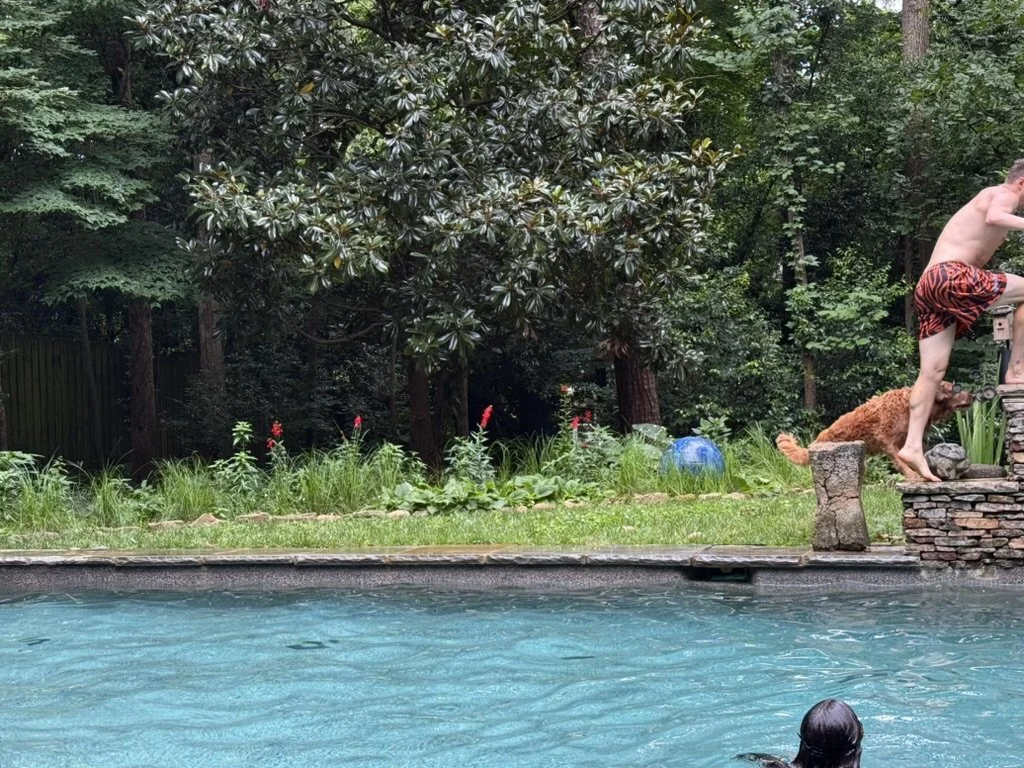
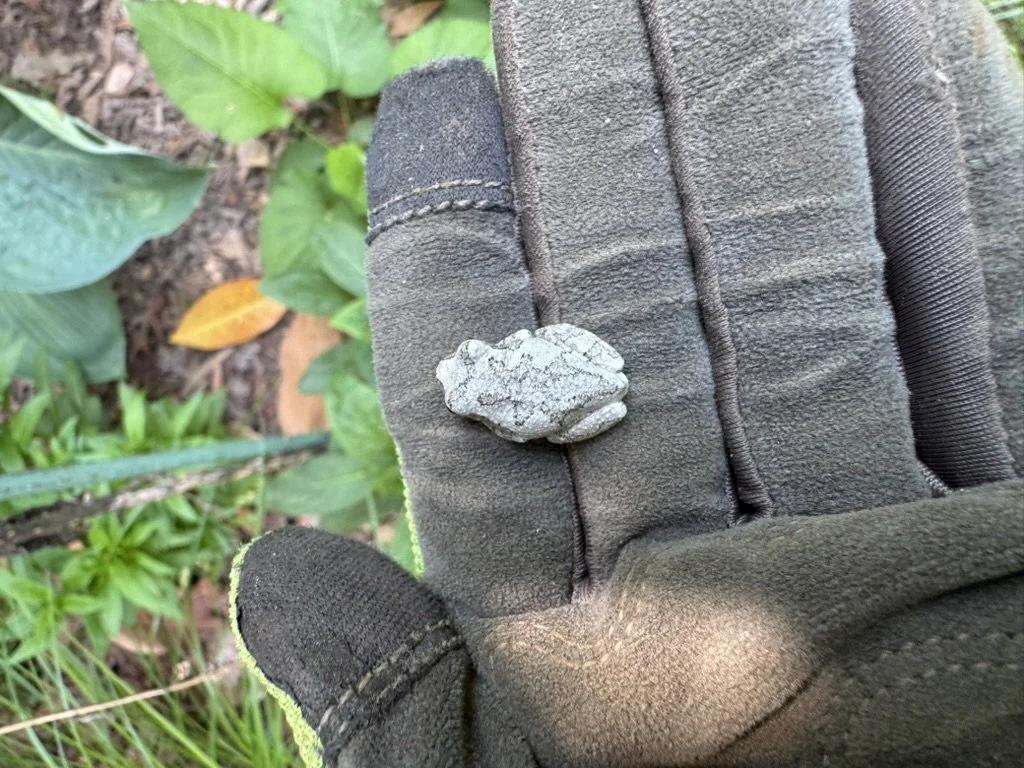
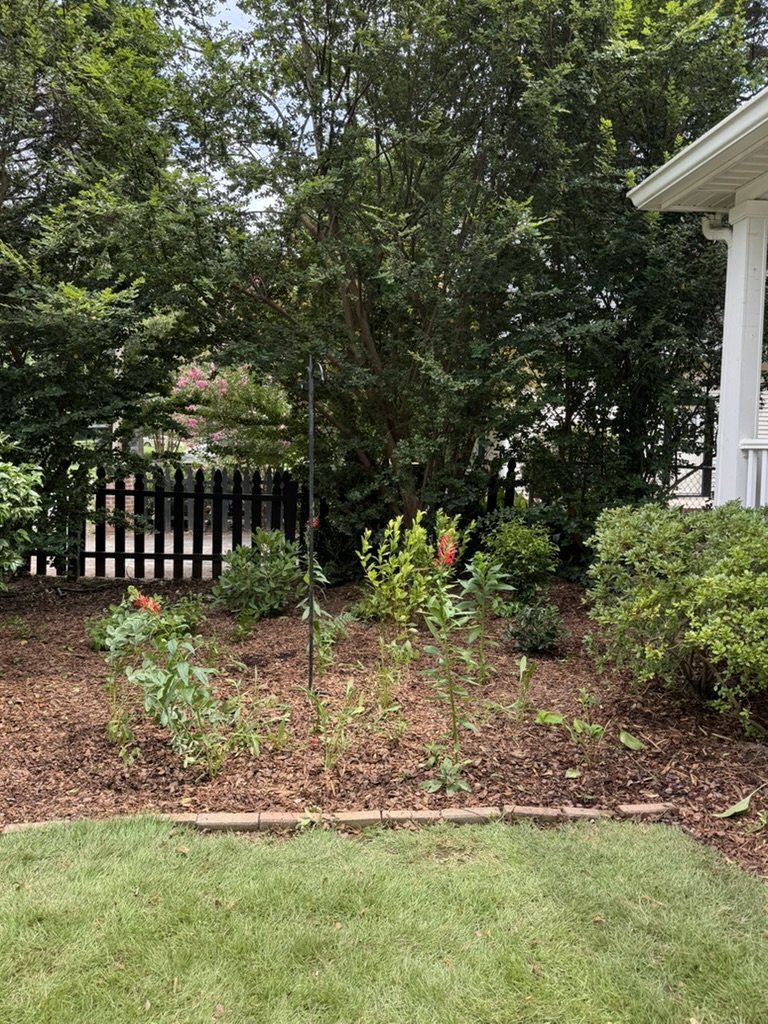
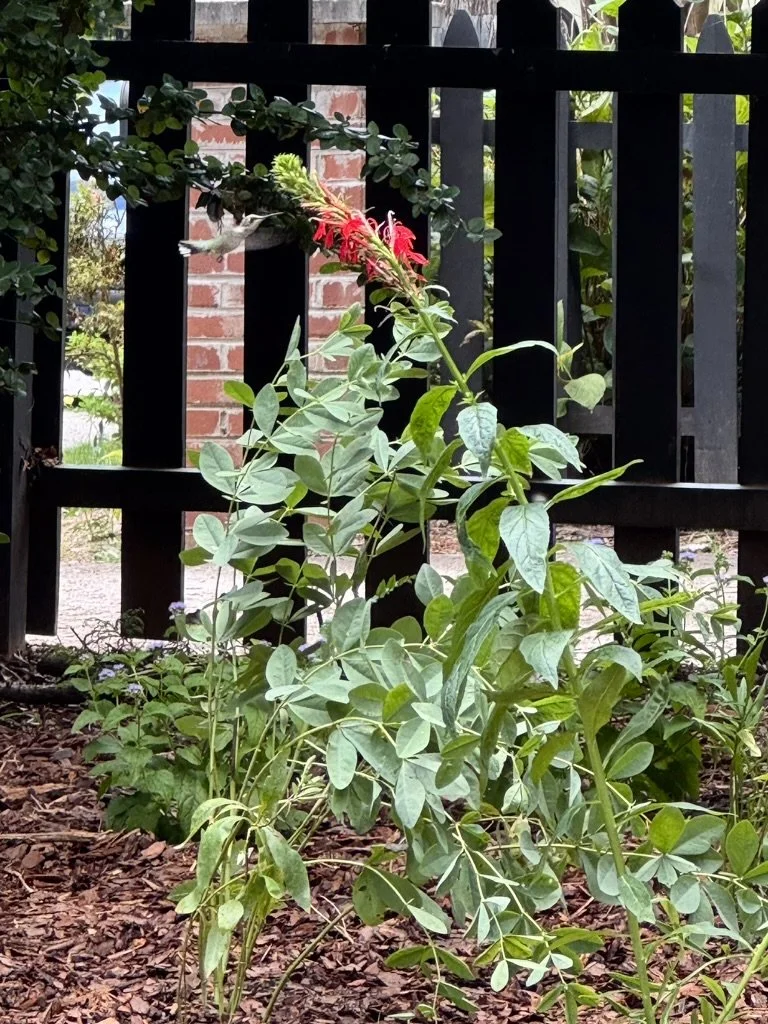
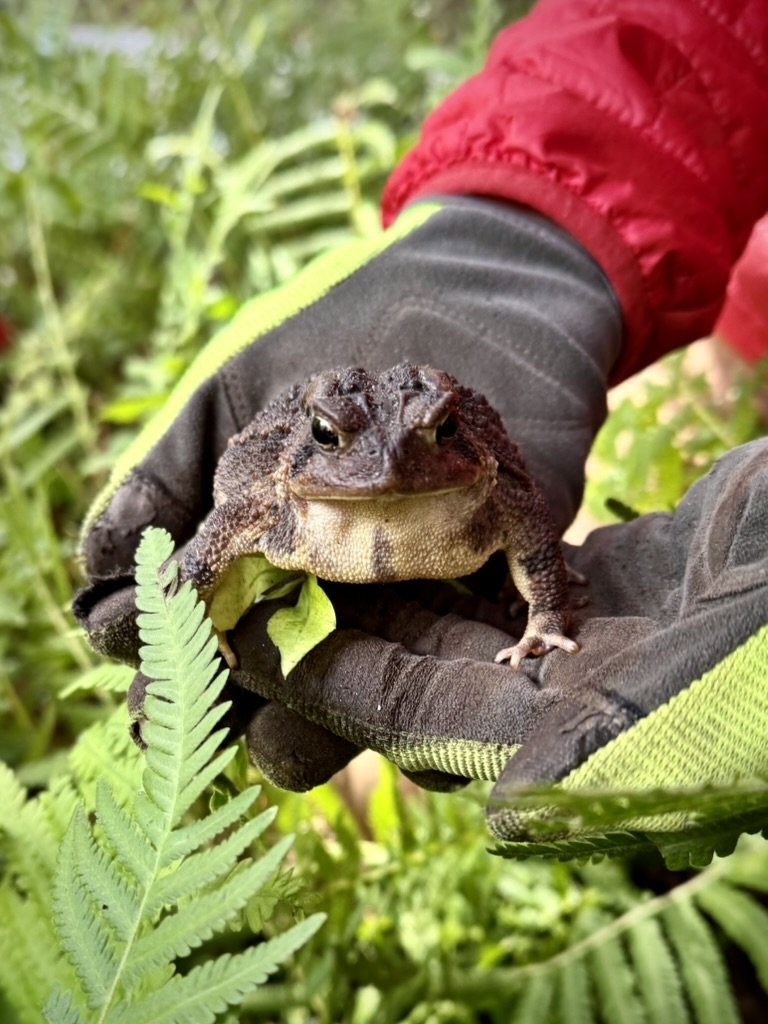
It turned out even better than I had hoped, growing much faster than anticipated. There is now wildlife cover where there was none. There are host plants, and there is some food for wildlife too. Because traditional approaches failed, this small space is now much more ecologically inclusive than it ever would have been. Providing these important things for the frogs, lizards, and salamanders I’ve seen onsite is a point of pride.
-
narrative

-
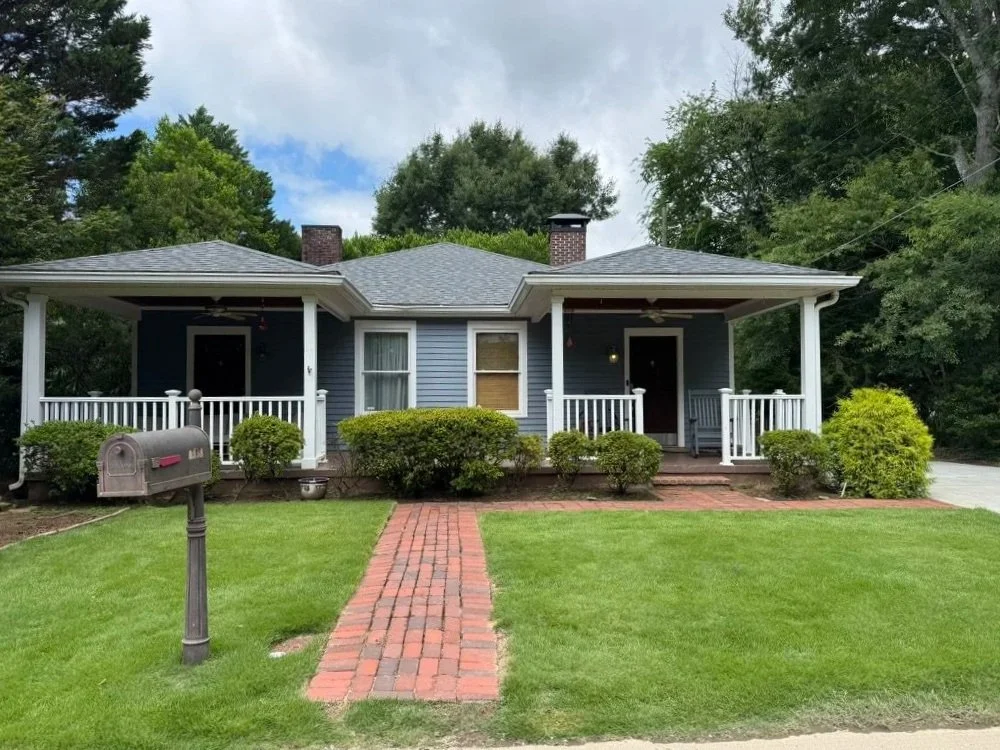
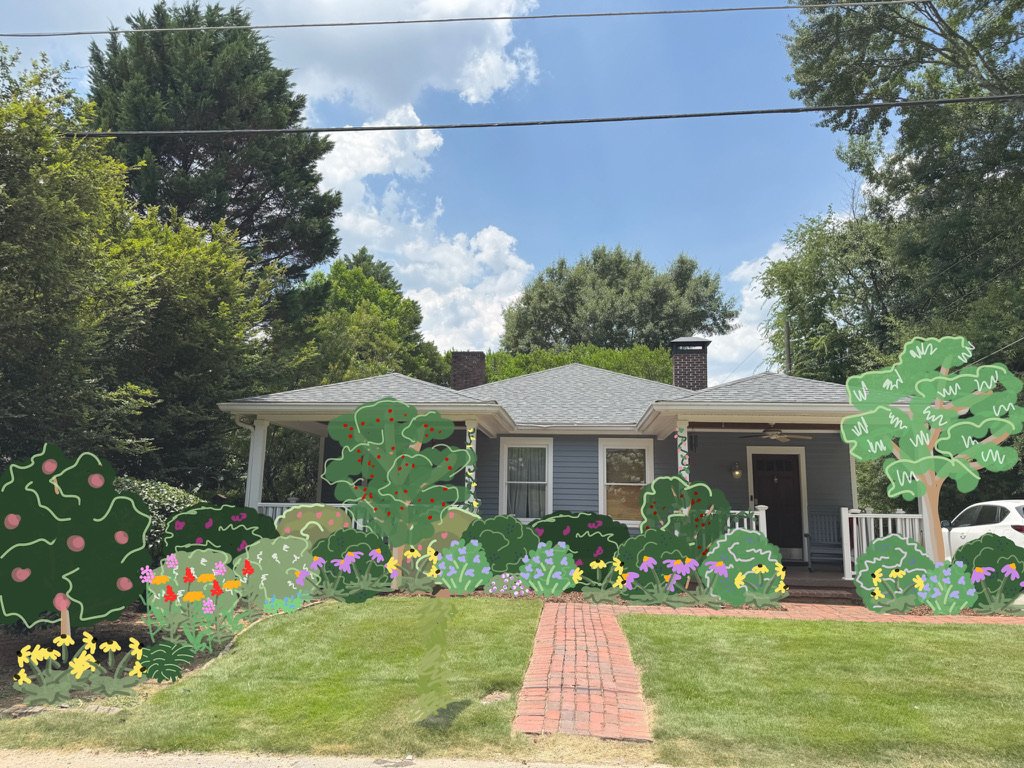
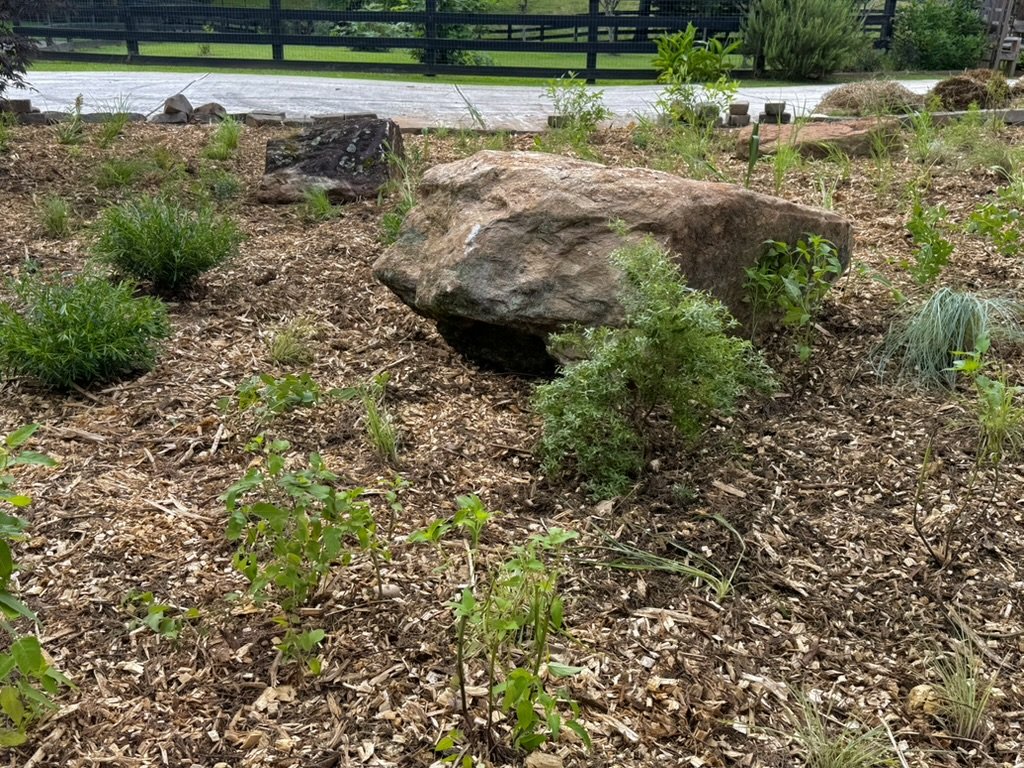
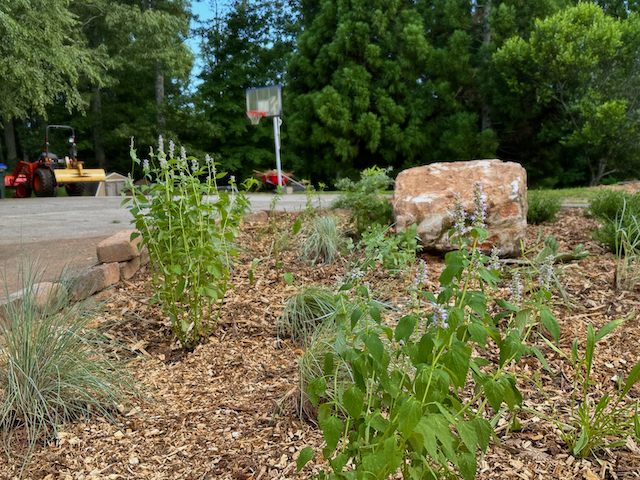
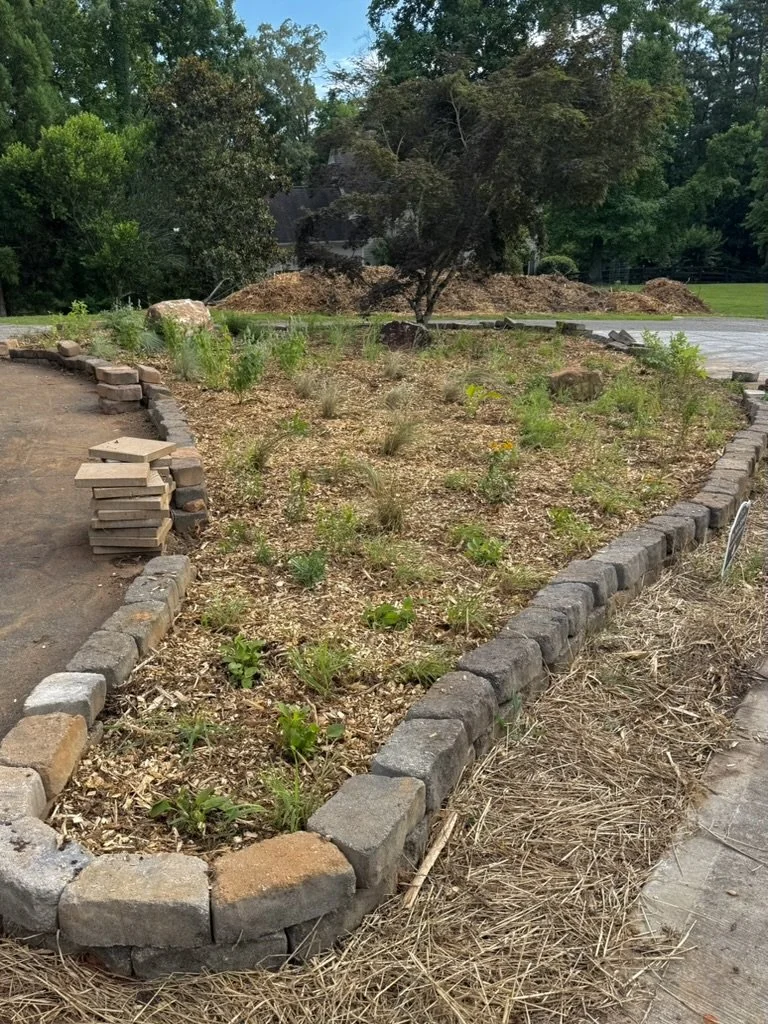
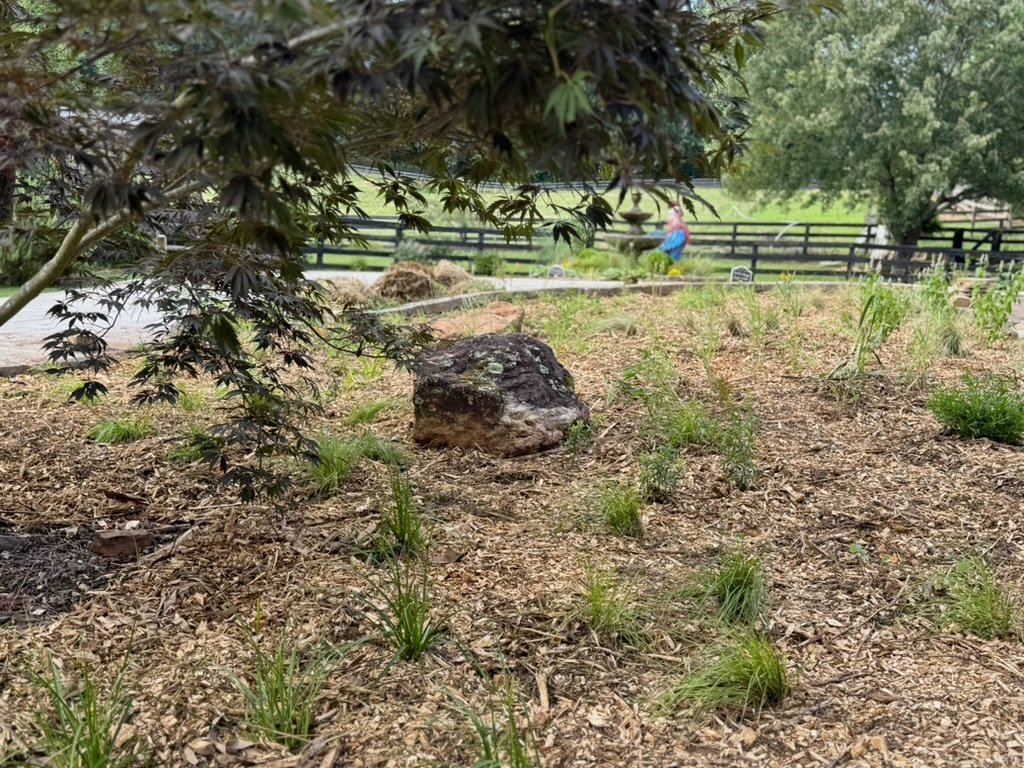
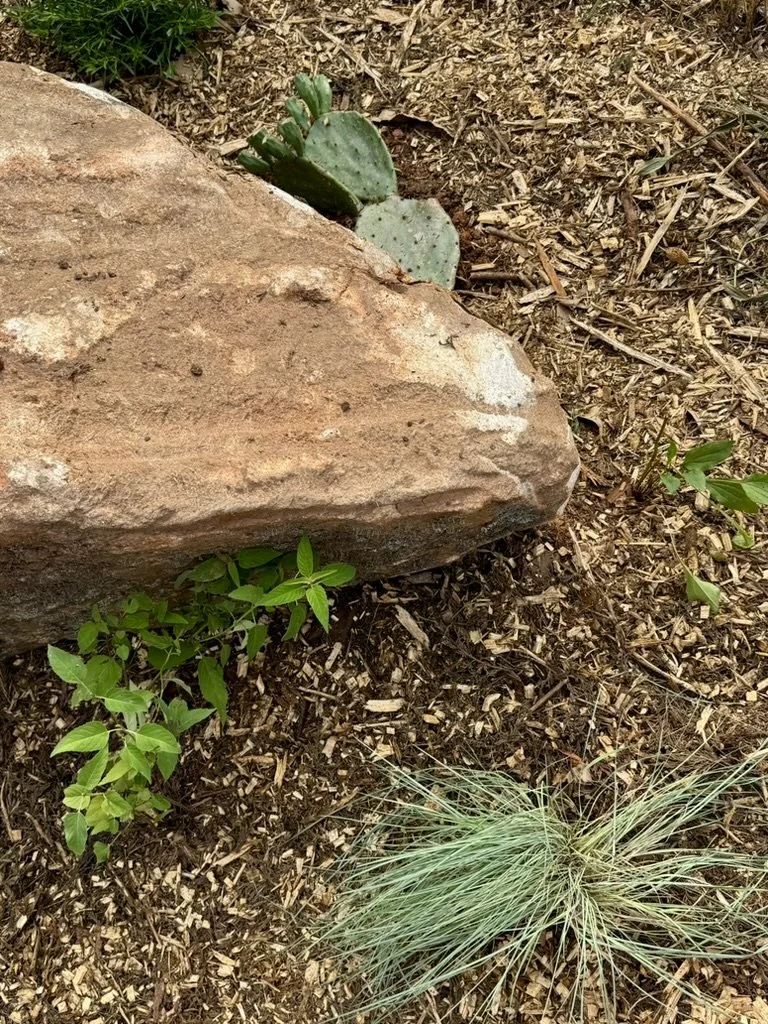
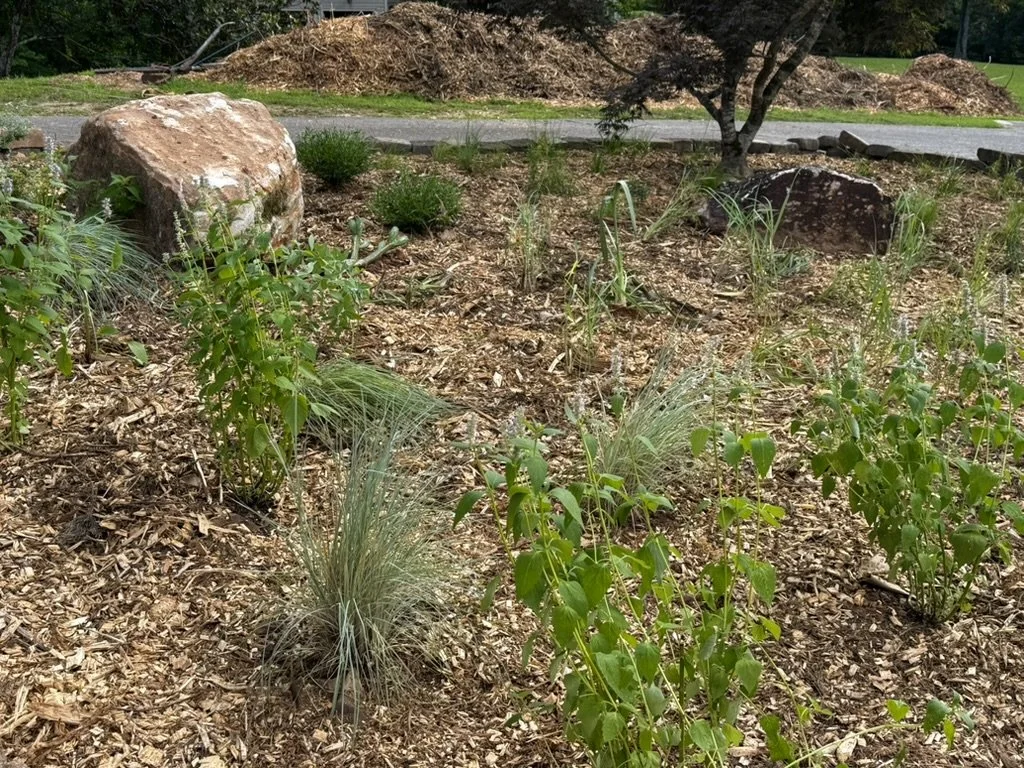
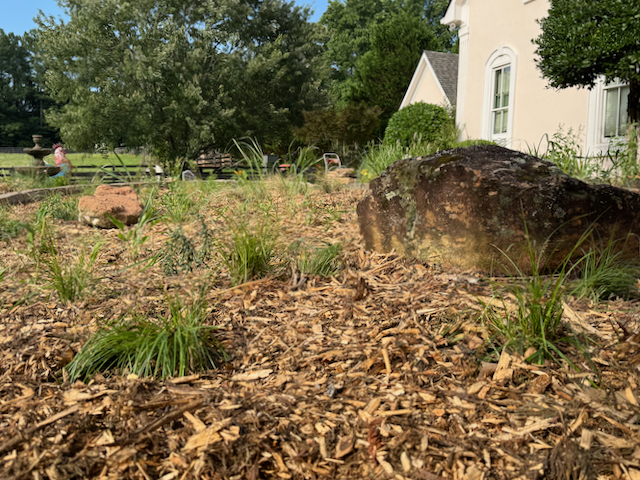
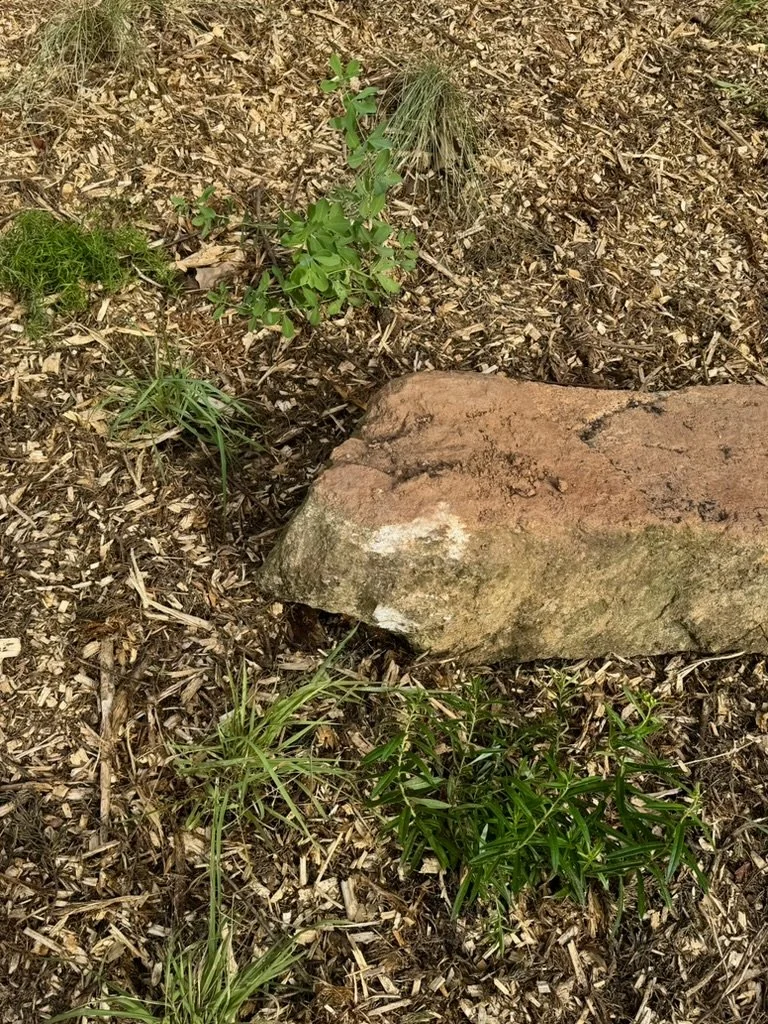
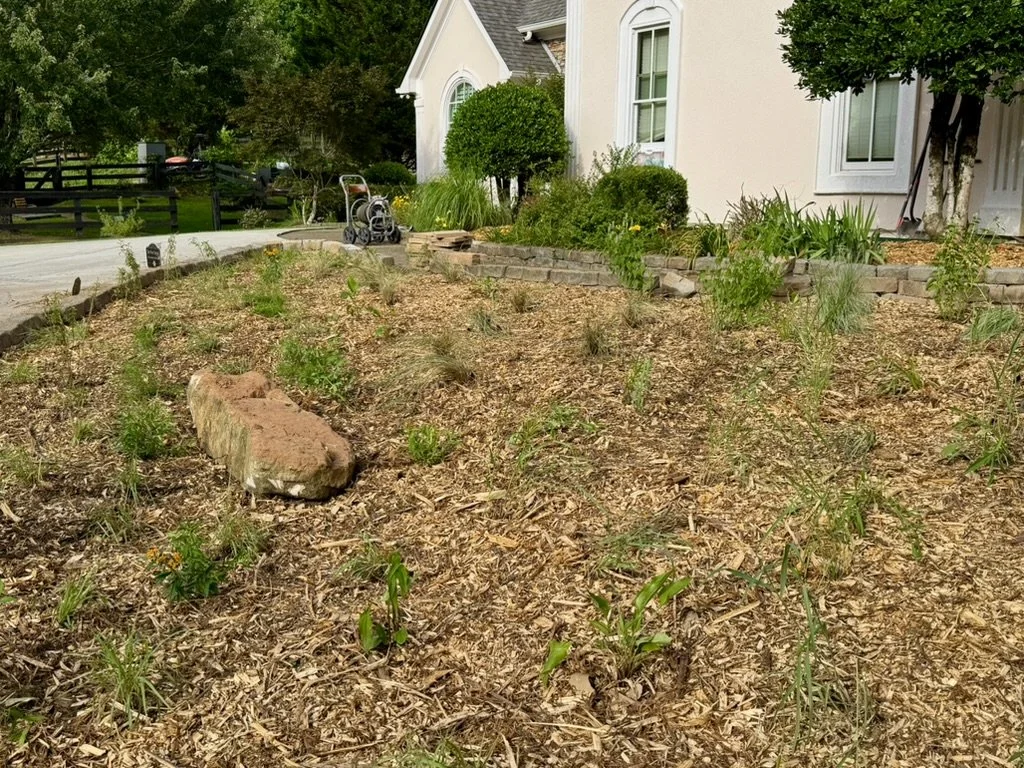
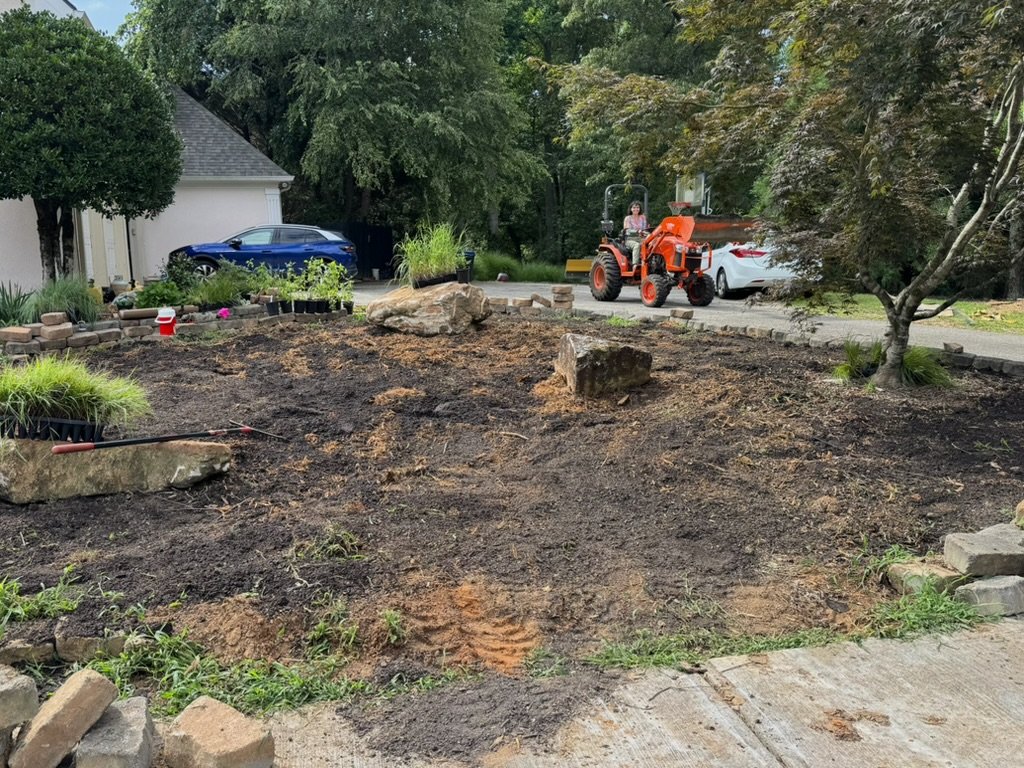
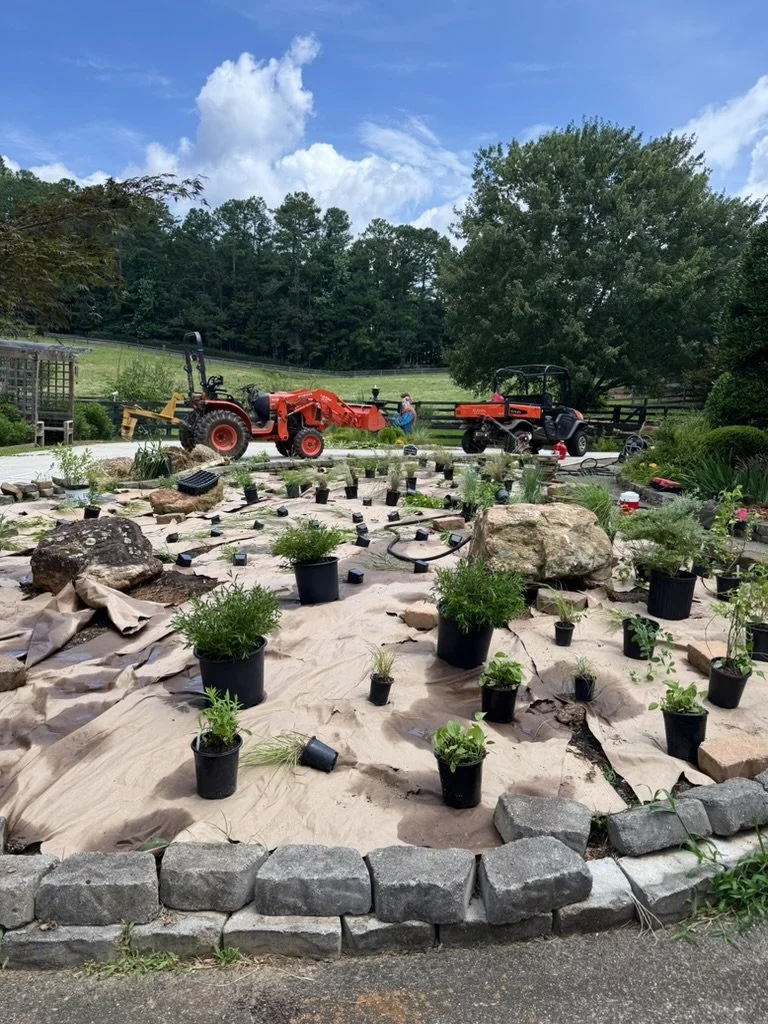
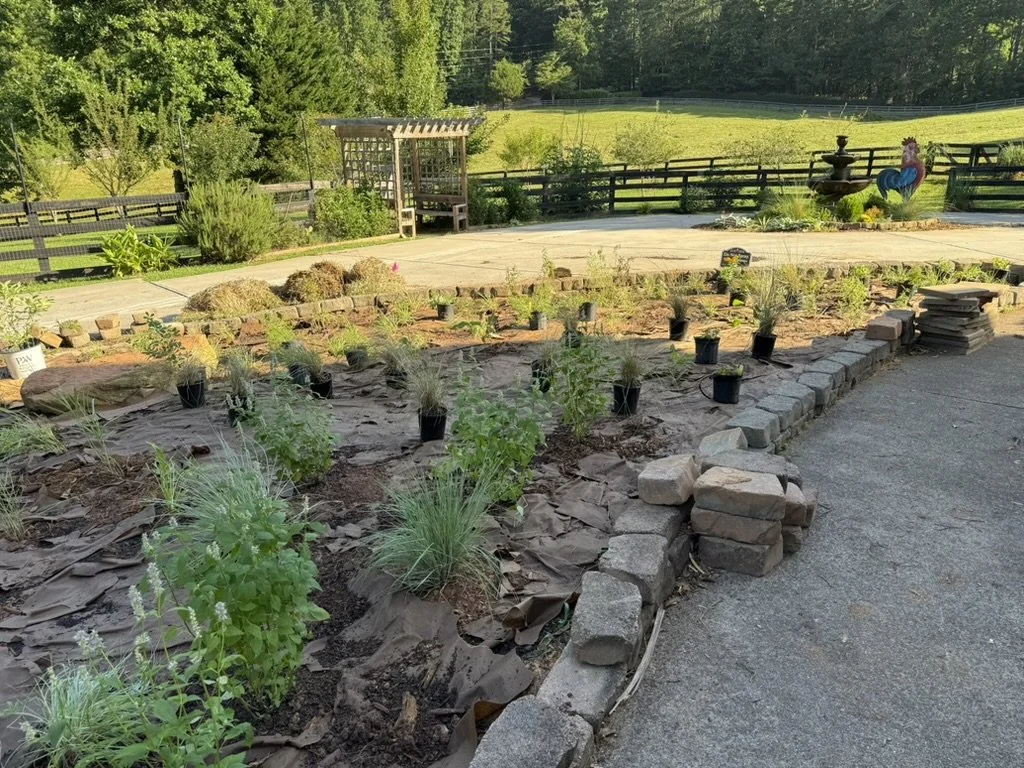
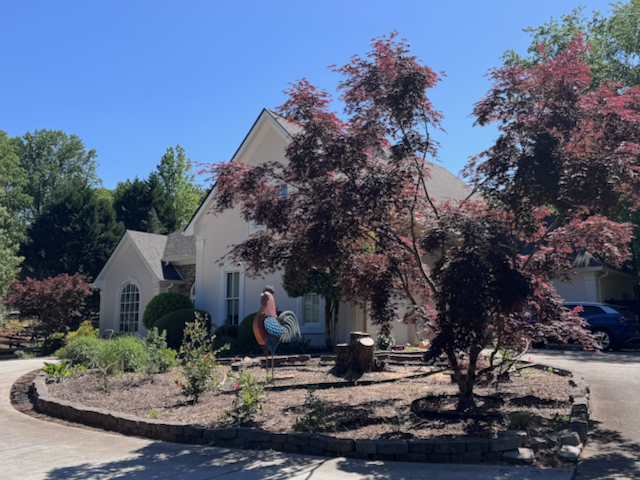
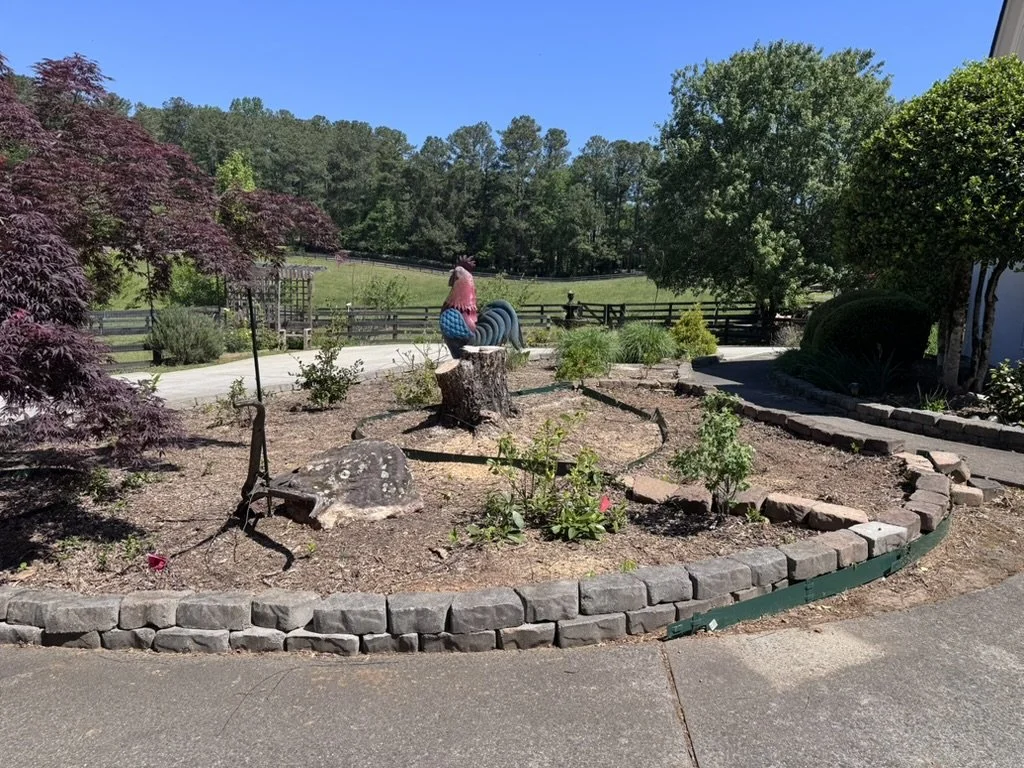
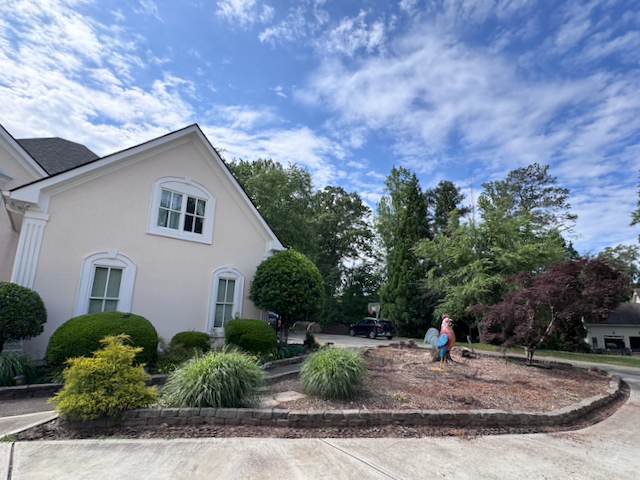
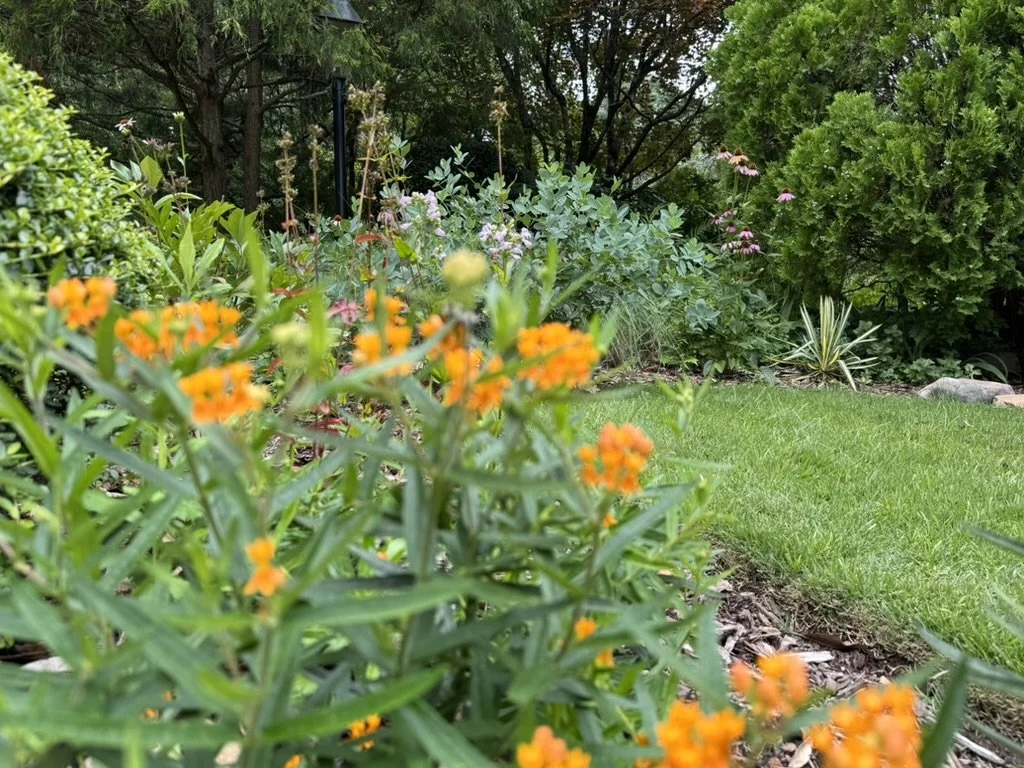
In thinking of English and French influences, with a desire for something a bit more wild, I decided to make a design that will have flowers throughout the season, along with lots of movement and texture from grasses and sedges. I started organizing this design according to the different viewsheds of this garden space: there's the view from the arbor that you like to sit under, the view as people drive up to your home, and the view as you walk from the garage turnaround to the front door. These viewsheds are anchored in grass and sedge (greener, part-shade tolerant, grass-like plants) plantings that create large drifts that host many smaller drifts of color and interest throughout the year. Grasses and sedges are the unsung heroes of the garden. They provide flow, connection, rich visual texture, and so much wildlife value. And, planted en masse, surrounding flowering plants, they create their own spectacle in summer and fall with seas of purple, pink, rust, and light green blooms.
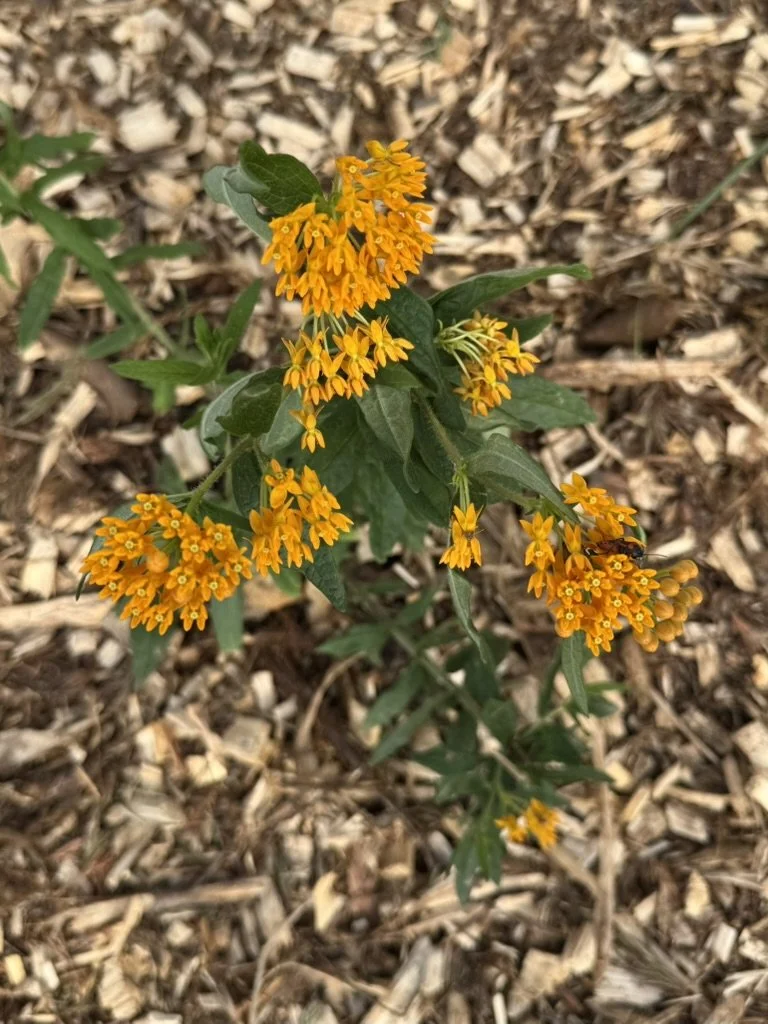
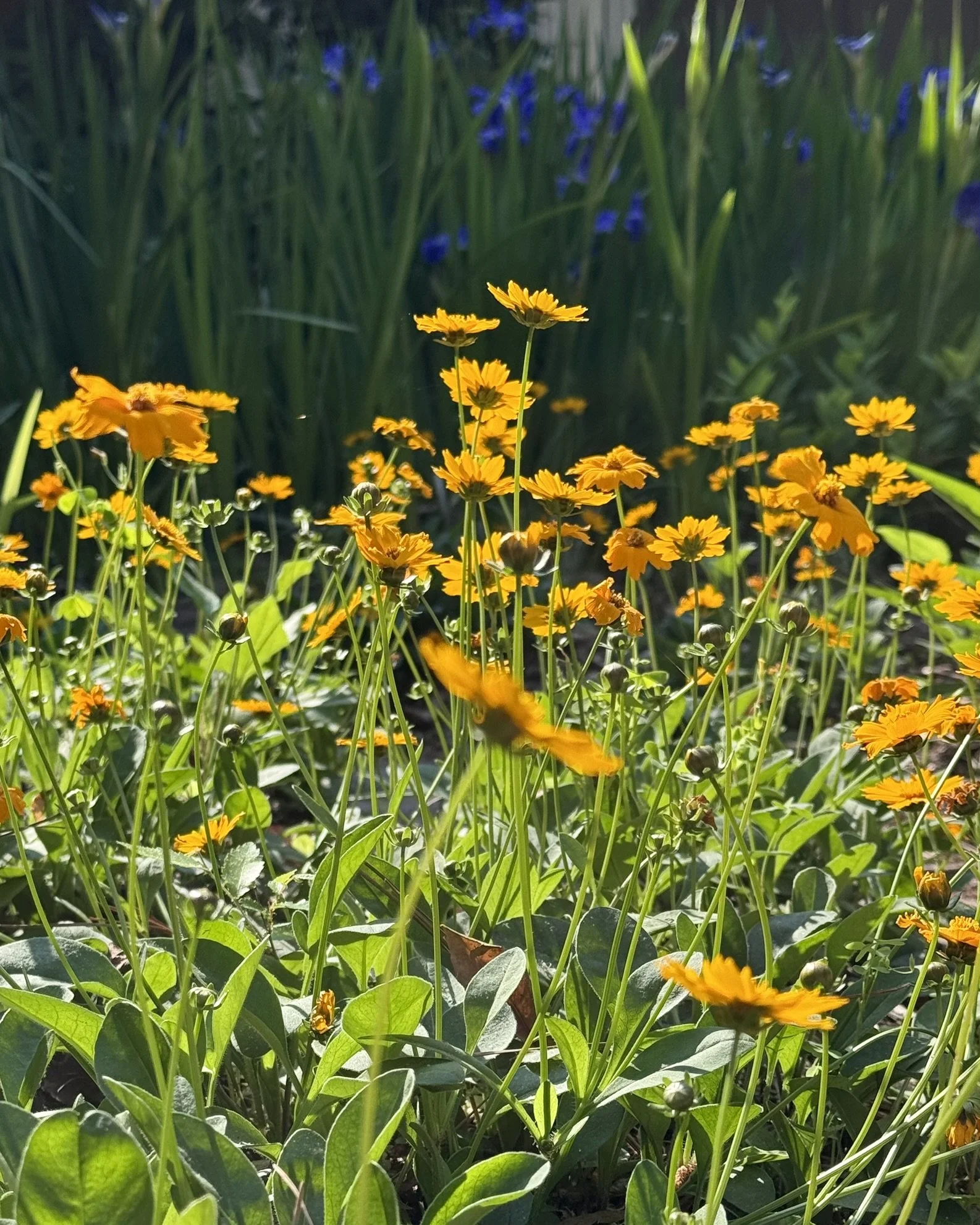
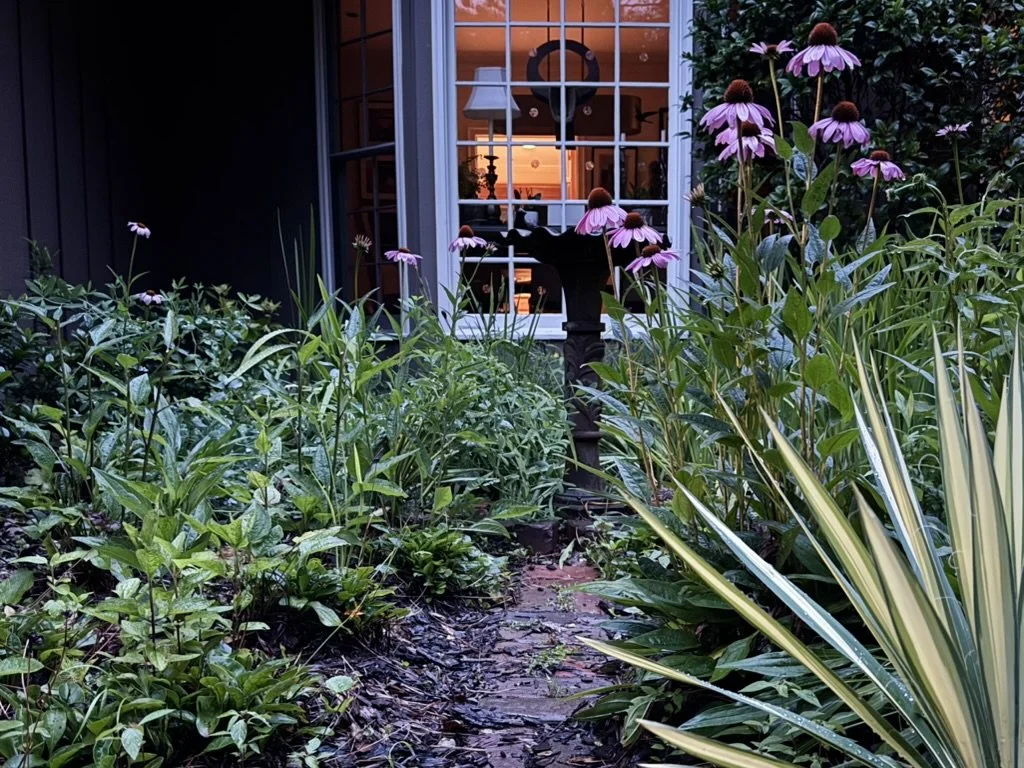
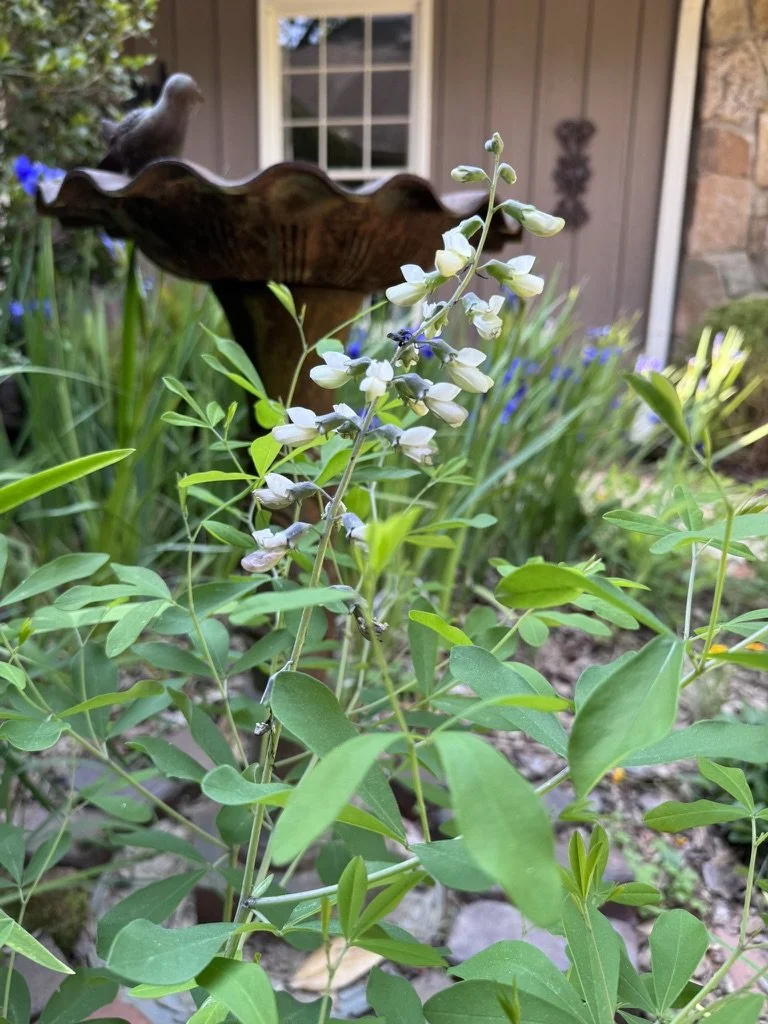
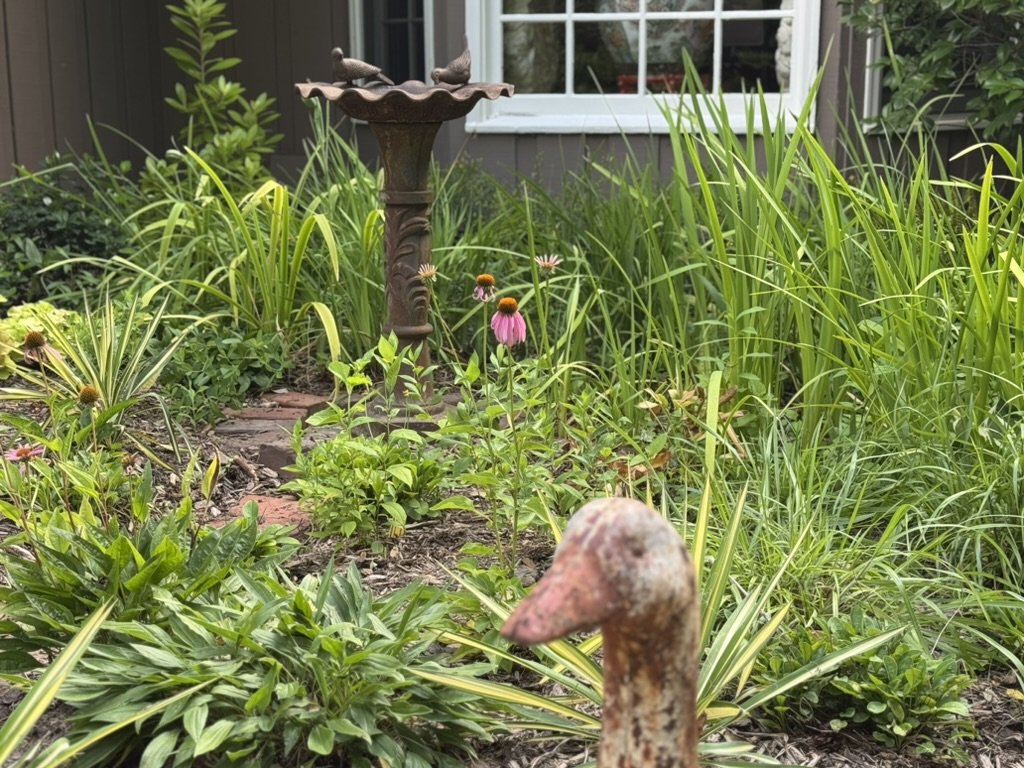
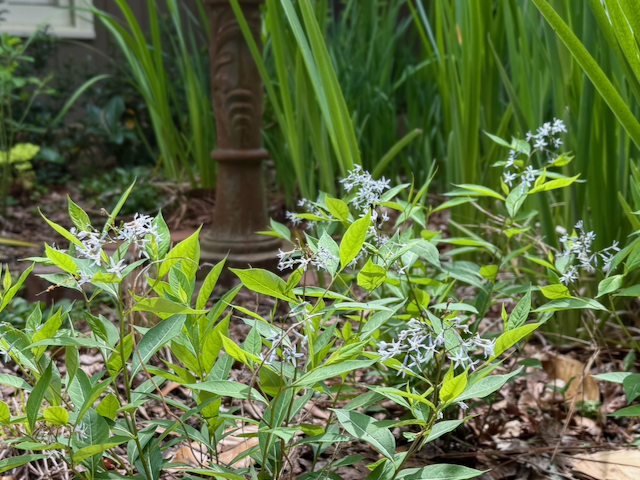
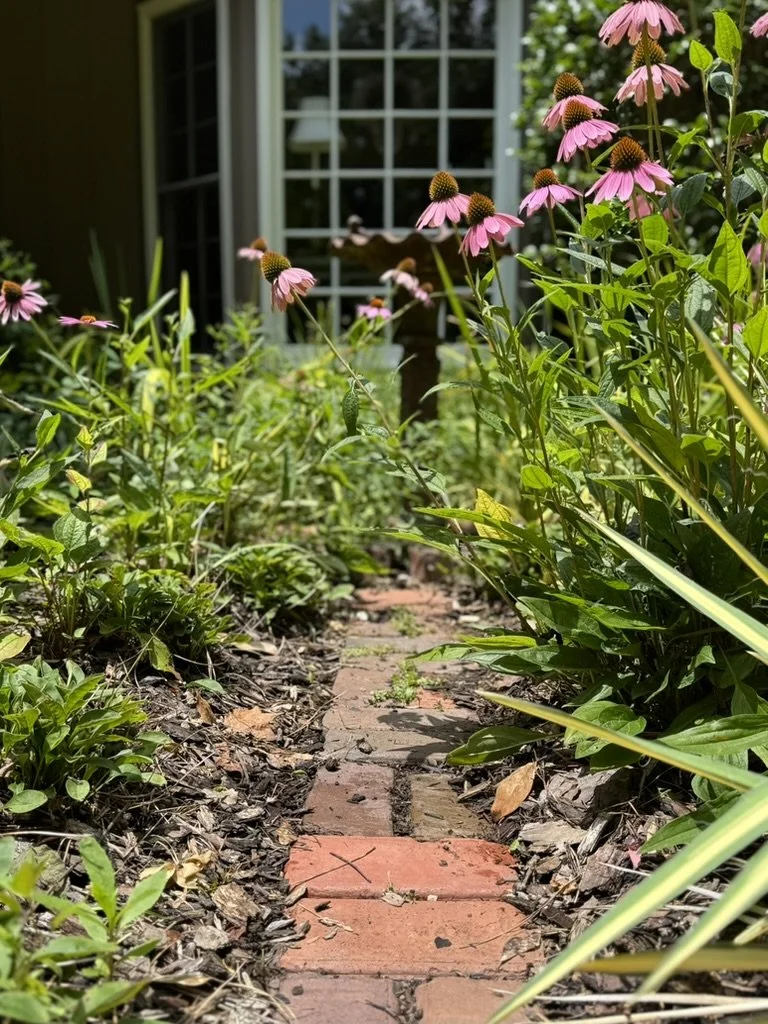
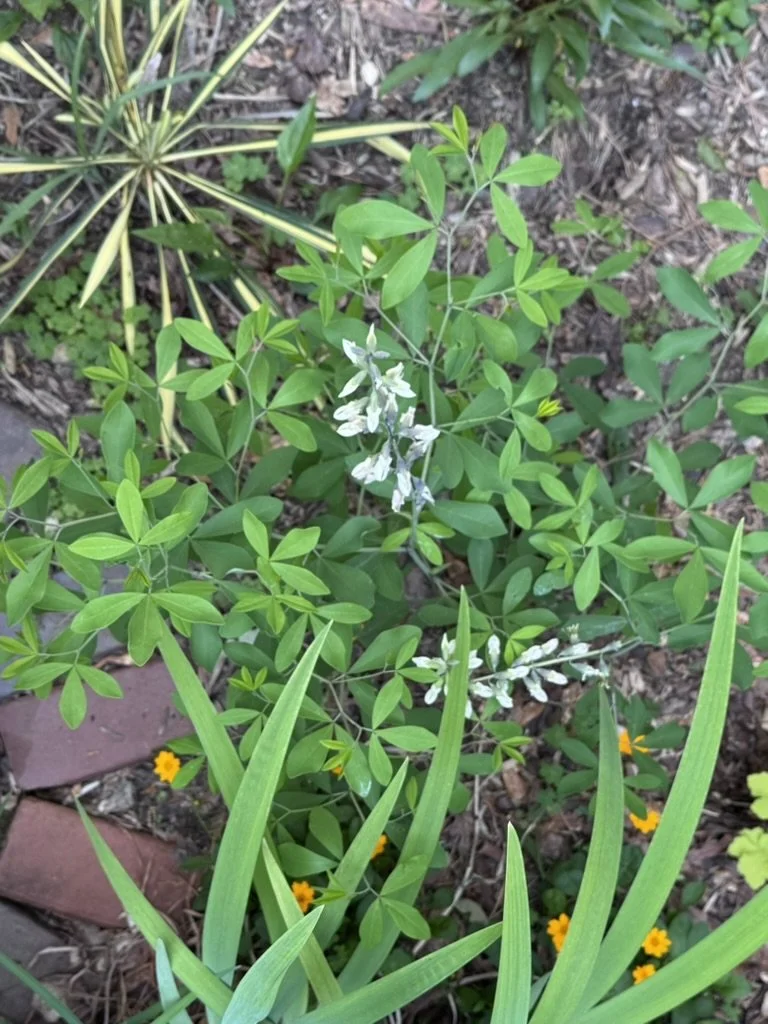
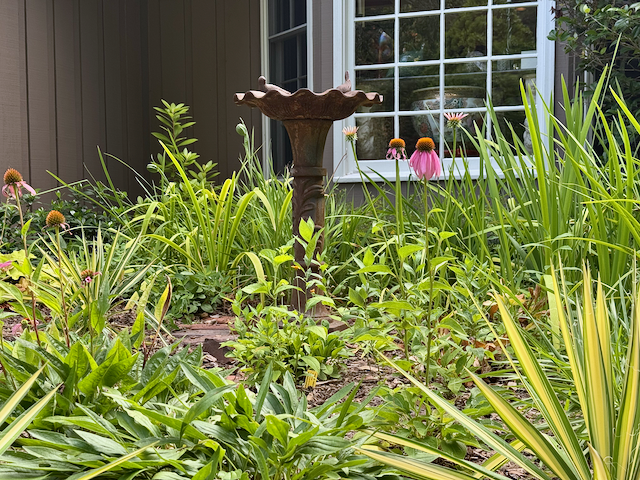
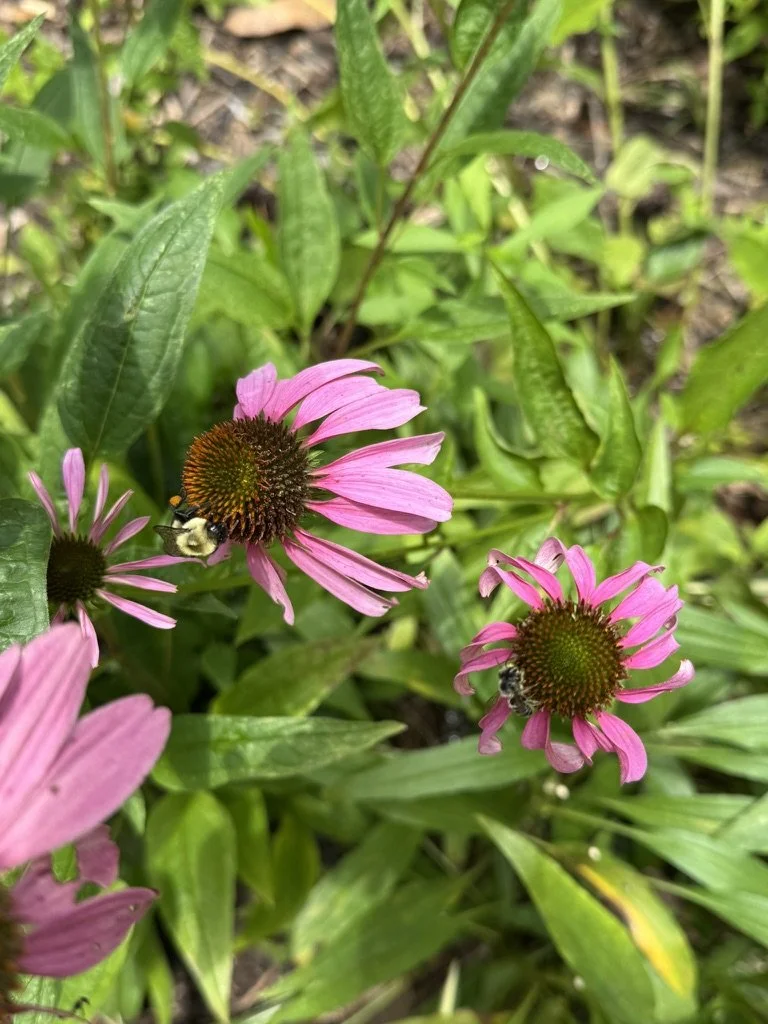
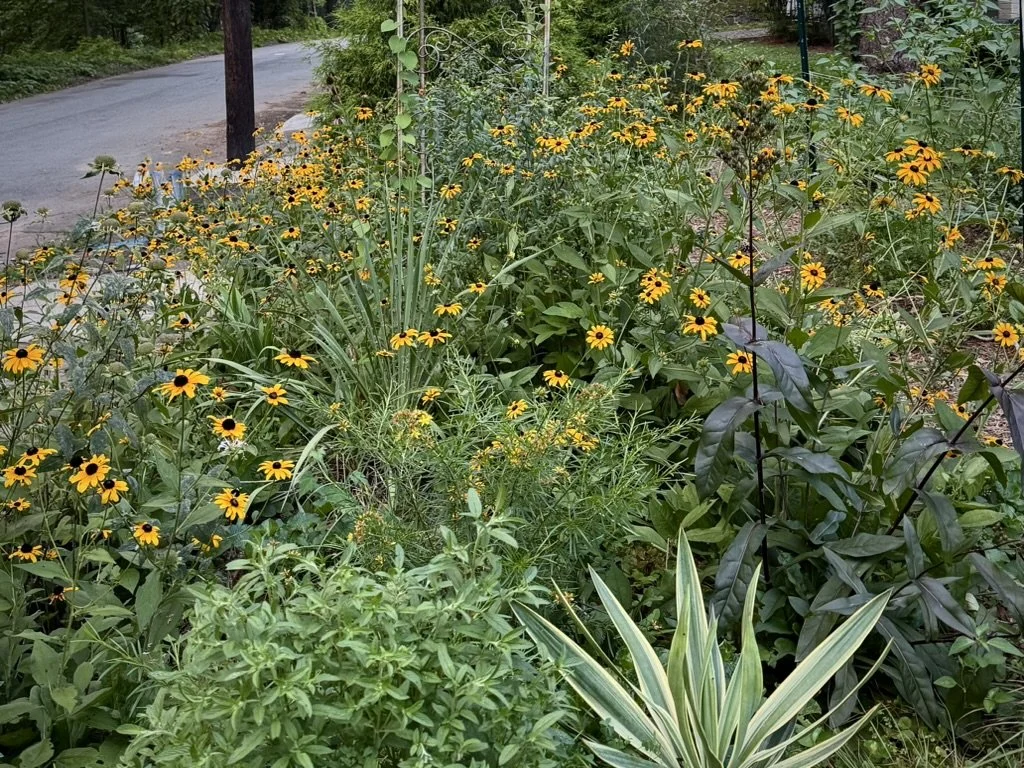
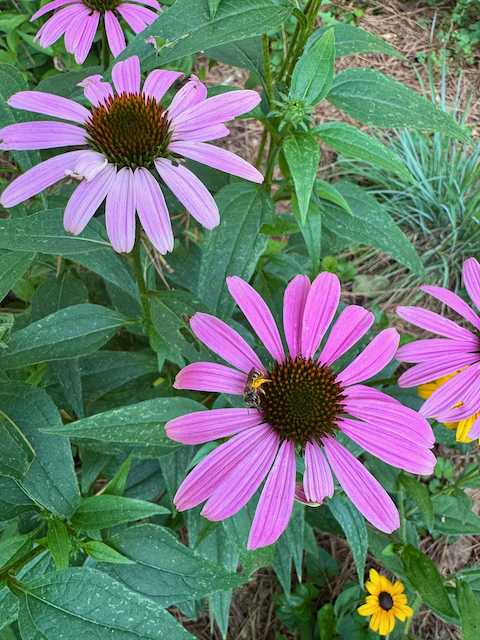
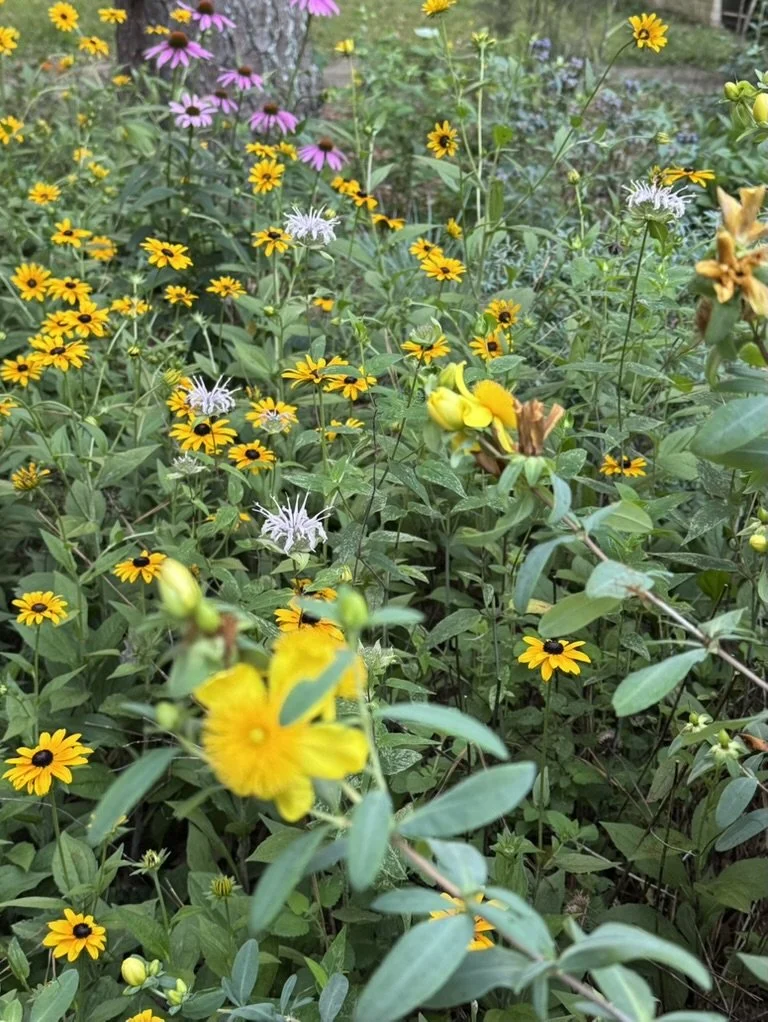
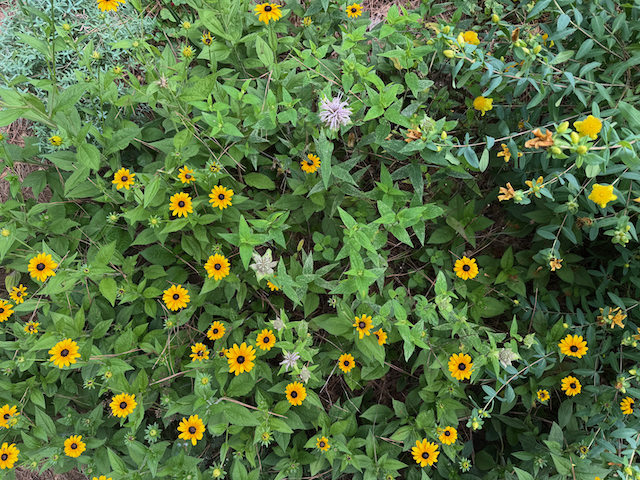
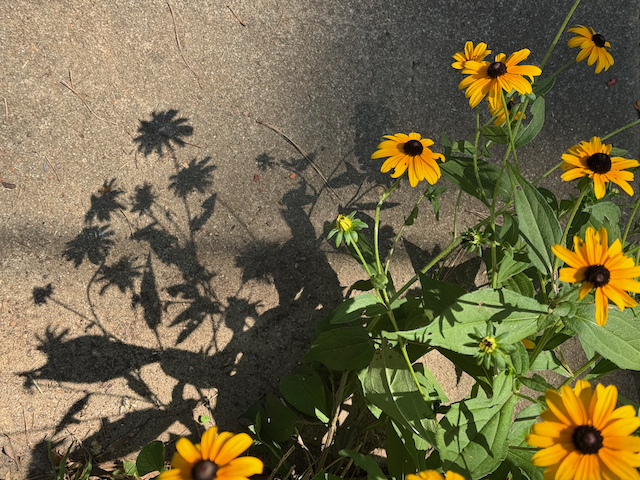
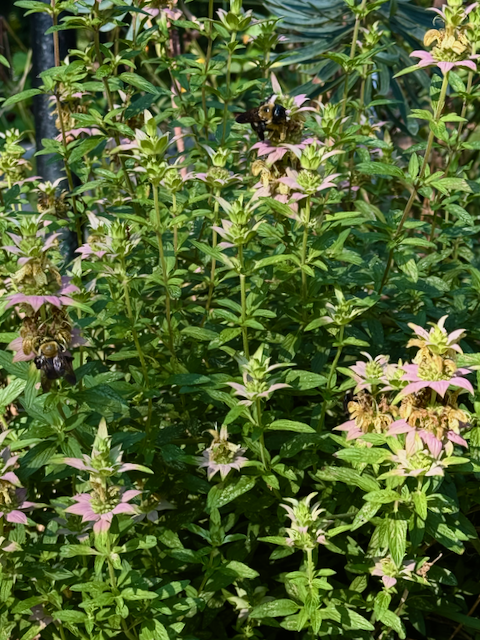
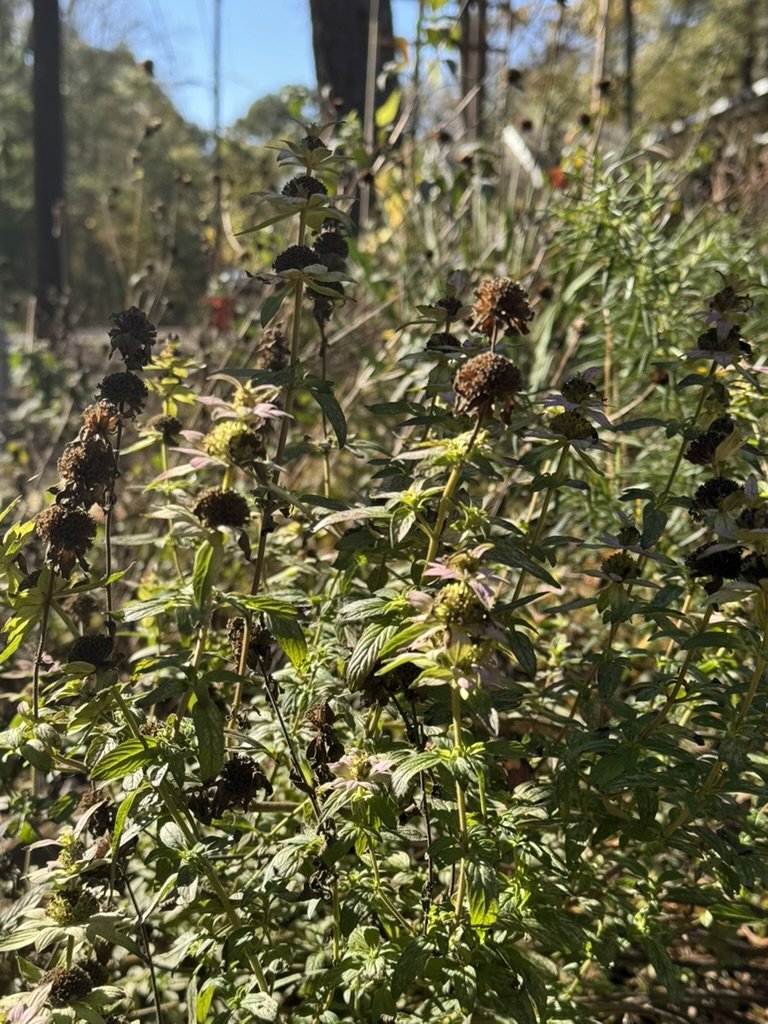
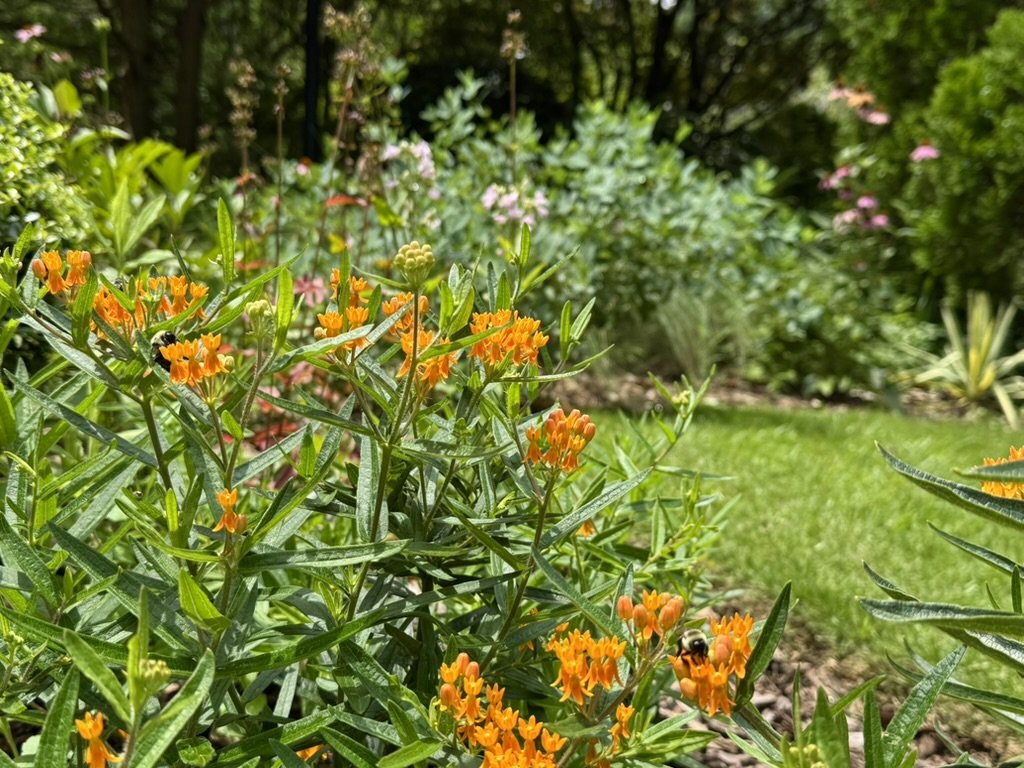
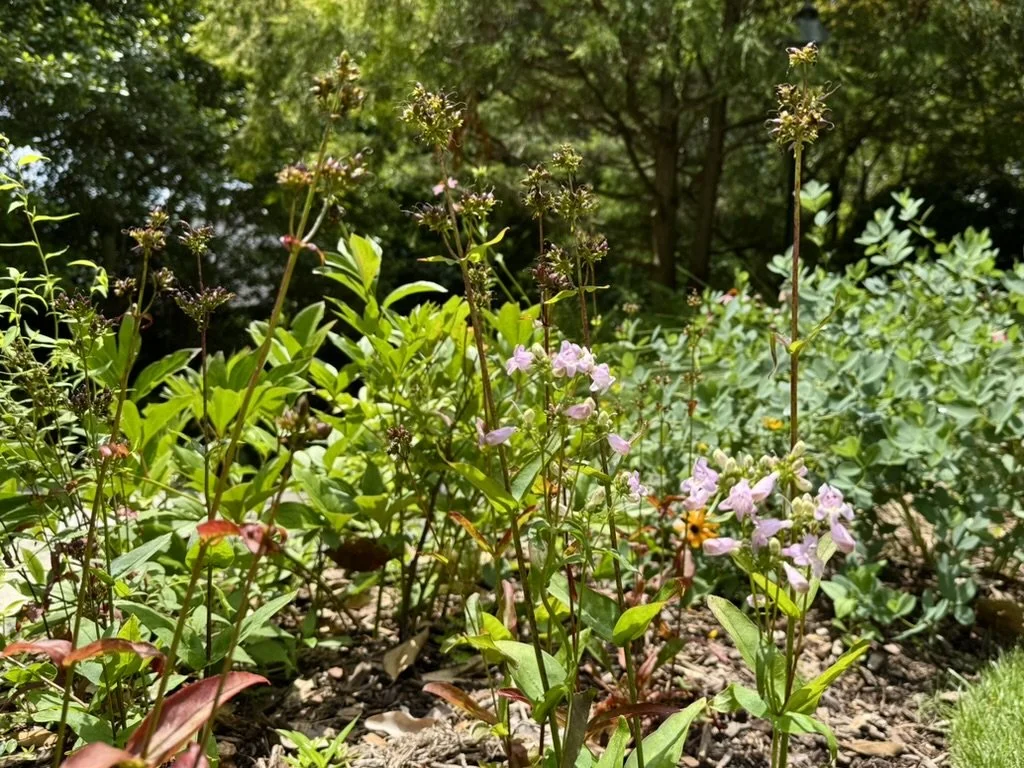
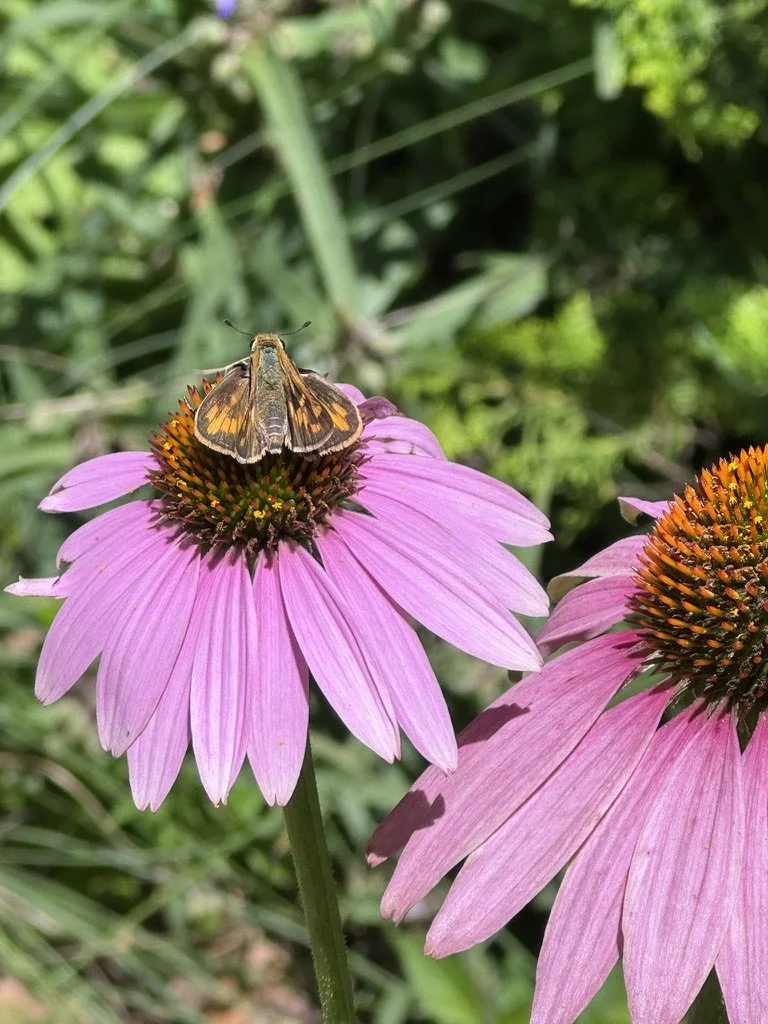
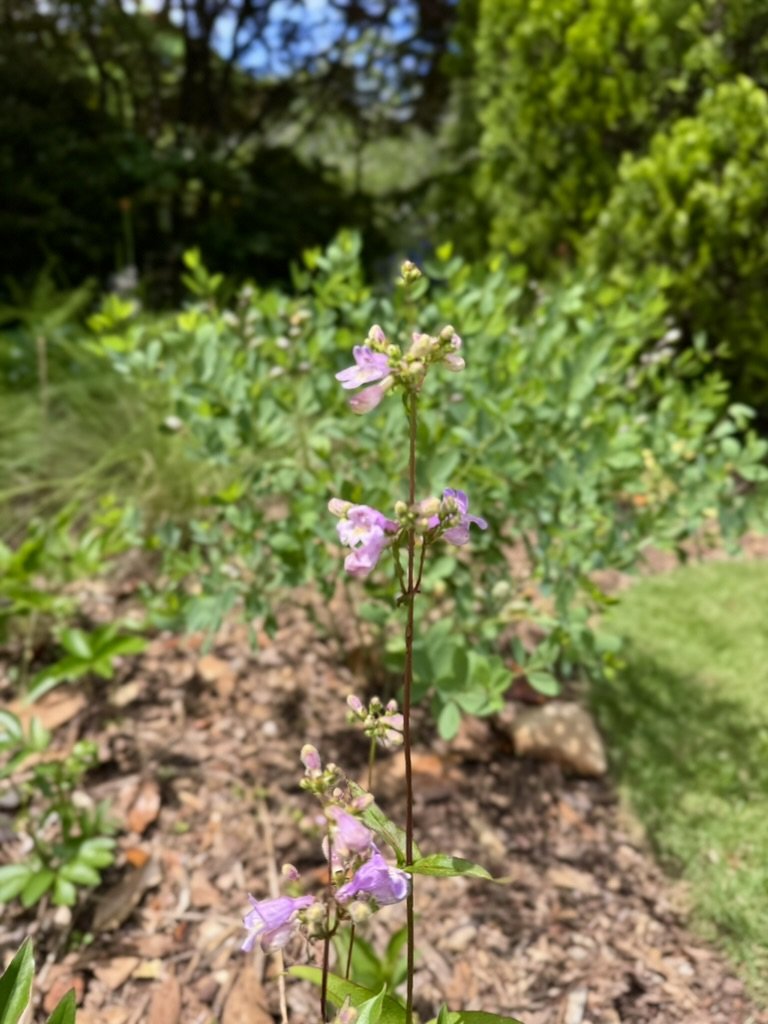
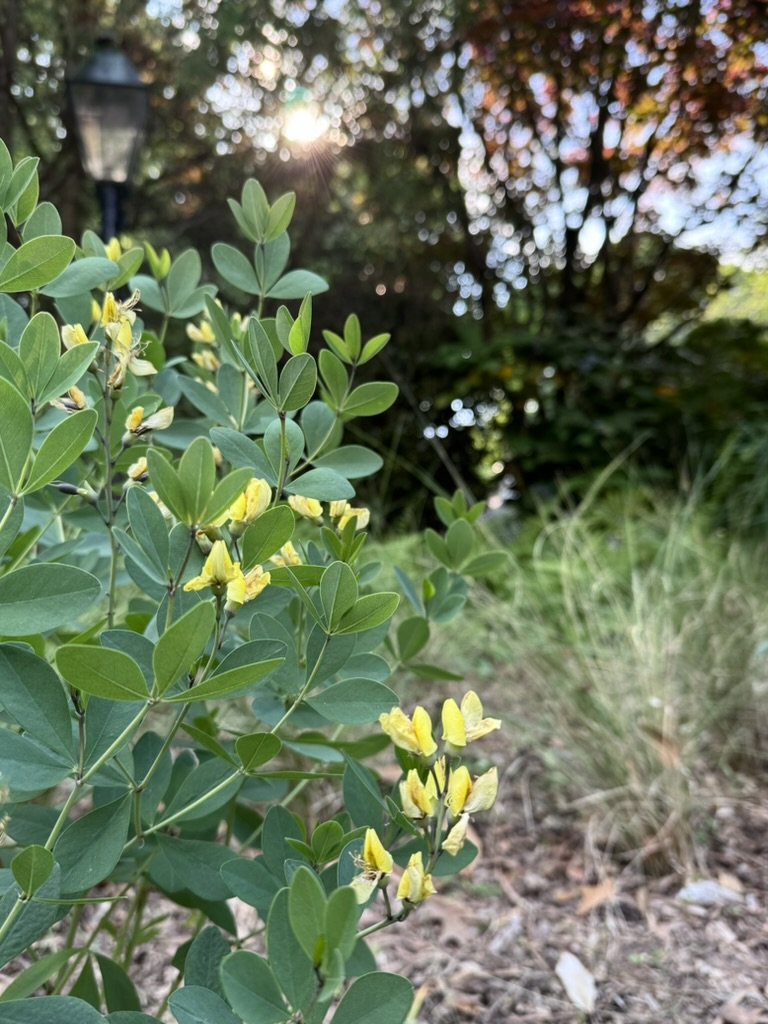
For example, looking from the arbor, in spring, eastern bluestar and then foxglove beardtongue will bloom among green, short grasses while the wild indigo will draw your eye as it blooms, peaking out from behind one of the rocks. In early summer, brown-eyed susans and purple coneflower will bloom in drifts while butterfly milkweed provides orange accents and the grasses start to form buds. In late summer, the purple love grass will bloom a deep purple color that will flow around everything as light green mountain mint shows off its white, pollinator-loving flowers and the butterfly milkweed starts forming big seed pods. Spotted horsemint will shine this time of year with its pink and green, heat-loving stacks of flowers. In early fall, dried butterfly milkweed seed pods will open up, freeing their graceful, fluffy seeds, and the purple grass blooms will change to a deeper rust as the pink muhly grass and switchgrass behind it start to show off. In late fall, drifts of bright yellow foliage from the eastern bluestar will sit next to deep purple Georgia aster. Over the winter, everything will provide texture and food to birds, but the structure from the center of the garden, with taller grasses and architectural rattlesnake master, will provide a beautiful backdrop.
In addition to planting drought- and heat-tolerant and relatively deer-resistant species, this design offers year-round, dynamic interest. The plants are all of similar sociability, meaning, they're all relatively competitive and while they'll move around a bit over time, nothing should take over. Similarly, because there's a good diversity in root types and reproductive strategies, you'll end up with a nice mix of plants that self-seed and spread by surface-level roots, which will help fend off weeds in the coming years and provide more resilience for the entire garden. This design will require mulch in the first year (included in your installation), maybe the second (time will tell), and likely none in following years. There will be ample food for songbirds, pollinators, and butterflies, along with nesting sites for caterpillars (a critical source of food for baby birds).
-
narrative
-
narrative
-
narrative
-
narrative
various designs